Crafting Subplots
 Happy Saint Patrick's Day
Think about St. Patrick's story, son of a Roman father, kidnapped by Irish pirates and enslaved in Ireland. If we were writing a novel about him, might we not have a subplot, perhaps about the people with whom he'd been enslaved, and what happened to them when he returned to Ireland? But why would we do this?
 In Building Better Plots, author Robert Kernan rather thoroughly discusses the use of subplots. I’m using his ideas, but also inserting my own thoughts.
Purpose of subplots
 Subplots provide diversion or relief
In our main plots, we try to build the tension to keep the readers turning the pages, but readers also need some breathing room, some relief from the tension we’ve created. Subplots are perfect for this. At a point of high tension, turning to the subplot not only provides that “breathing room” but still keeps the pages turning to get back to what is going to happen in the main plot
Subplots as context or background – to enlarge tone
One of the ways to bring our setting to life, our time period, the “world” we are writing about is to use the subplot to show more of the place, the culture, to reinforce the tone of the story. In the case of a Regency historical, subplots can show more of what life was like in that era. In stories like Maureen’s Mossy Creek novellas, subplots show more about life in Mossy Creek.
Subplots as backstory
This is a special sort of subplot—flashbacks illuminating characters’ backstories, subplots about the main plot, sorta. Flashbacks and backstory can enrich the main story by illuminating your characters motivations, increasing reader sympathy, or in the case of a reunion story, showing the origins of the romance.
Subplots to tell concurrent or parallel stories
One type of subplot I love in a romance is a secondary romance. What could be better for a romance reader than two romances in the space of one book? You can use these sorts of subplots to either strengthen the theme of the main plot, show a variation on the theme, or show a complete contrast. Sometimes fiction uses a Parallel stories structure. This is where the stories of several characters are told, one after the other or a little bit at a time. The stories are connected in some way, especially at the end.
Subplots to develop Characters
Showing your main characters in the subplot gives an opportunity to show them in a different context. You can show them reflecting on the main plot or put them in a situation that shows a different part of their personality. You can show their strengths and weaknesses. Sometimes in using subplot this way you can foreshadow something important, like that first scene in Raiders of the Lost Ark foreshadowing Indie’s fear of snakes.
Placement of subplots
 The most important thing to keep in mind in choosing where and how to place your subplots is to make certain they do not detract from your main plot. Subplots can be shown in one scene (like a flashback) or several, but it is important to establish the main story first. Use logical entry points and try not to interrupt the flow of the main plot. Kernan says to wrap up the subplots before the crisis begins, but I think you can vary this a little, especially if you have woven all the threads of the plot and subplots together. The subplots should be resolved before the main plot, so as not to distract from your big ending, though.
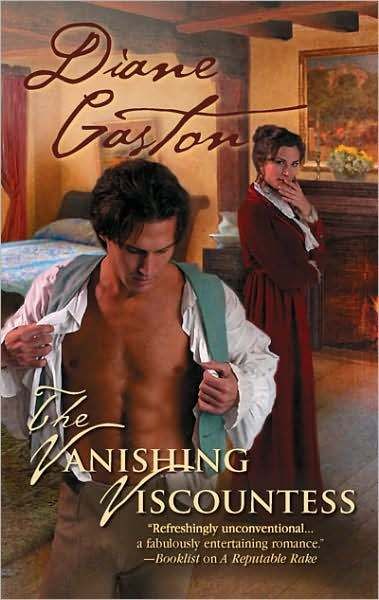
We’ve often discussed what to do when we get stuck. One more thing to try is a subplot. If I am agonizing about what sort of scene to write next and can’t think up enough scenes to get me to the end of the book, sometimes it is because my story needs a subplot. In my latest book, The Vanishing Viscountess, that is how the secondary romance was born and I had fun thinking of ways to weave it in to the main plot.
What are some of your ideas about subplots?
Do you have examples of subplots done well? Some of your favorites?
Come to my website and enter my contest for a chance to win one a signed copy of my The Mysterious Miss M and How to Seduce a Duke from Kathryn Caskie, celebrating the release of Kathryn's How to Propose to a Prince.
Labels: How to Write, Subplots
posted by Diane Gaston @ 12:08 AM
12 comments