Going from Idea to Story When an Editor Sets Parameters

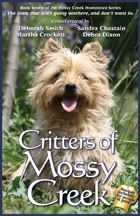
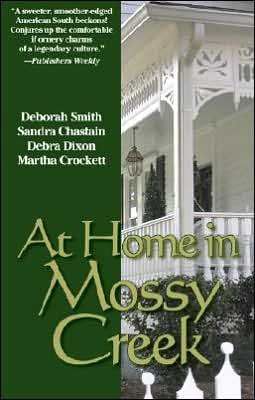
From time to time, people complain that guidelines stifle creativity. I don’t buy it. Most commercial fiction, whether authors admit it or not, requires some adherence to publishing house standards and basic rules of grammar. I have found that if you look at parameters as a jumping off point, you can be as creative as someone starting with her brain alone and a blank screen. Here’s how I go from idea to story when my BelleBooks editor provides parameters, and she usually does. If she didn’t, it’d be a whole lot harder weaving the different stories into one of the collective novels in the Mossy Creek series.
1. Print or jot down the guidelines you need to follow. Refer back to those guidelines periodically to ensure you haven’t veered. If your story is supposed to be 25 pages long, turn in a story that’s 25 pages long. If the story is supposed to encompass a long weekend, don’t start your story five months prior to that weekend. If the story is supposed to be a romance, make it a romance.
2. If you have any questions about whether an idea you have fits the parameters, ask. Better to ask than to work through several ideas that get nixed in the end. You’ll save yourself and your editor time and, in the long run, sanity.
3. Who is your intended audience? What are their expectations? For the Mossy Creek series, readers like funny or heart-warming stories, or a combination of the two. Many readers want to live in the quirky town BelleBooks founders created. They don’t want townspeople they’ve come to know to act out-of-character unless there’s some good motivation for it. They want to recognize themselves or their friends and family members in the stories. So the story must have a small town feel. New characters have to be likeable.
4. If you need to use certain characters who have already been developed by another writer, get permission, then peel those characters’ onion layers. For example, when I was asked to develop a Christmas story, I started with what I knew about Christmas that could work--a mother’s perspective. I scanned through the Mossy Creek bible looking for a mom. But she needed to be a mom that readers were somewhat familiar with so they’d be interested in reading the story. I thought the perfect character would be Patty Campbell, and I had to ask Deb Dixon, who created her, if I could use Patty, her husband Mac, and her newly adopted son Clay. She said yes, thank goodness. I then proceeded to figure out what I already knew about Patty. How could I add to her, yet preserve what Deb had done? I focused on how I thought the character would feel. As a mom, I try to make Christmas special for my daughter. How much more important would it be to have the “perfect” Christmas for the mother of a little boy who’d just been adopted and who probably hadn’t ever received much from his biological father, who’d neglected and abandoned him? Patty could be the type of mom who wants the Norman Rockwell holiday.
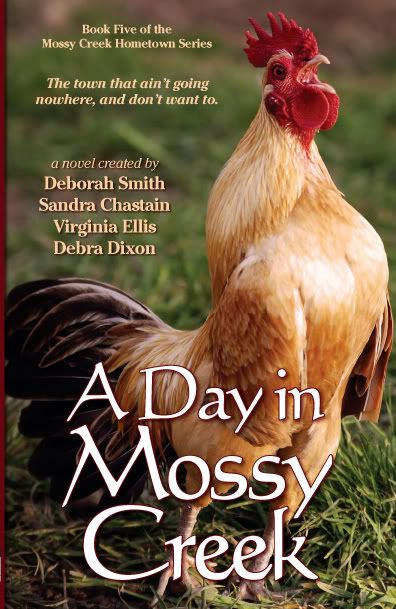
5. List different conflict possibilities based on the parameters set and the characters you’d like to use. With “A Very Mossy Christmas,” I knew the setting and the main character I wanted to use. So what could cause havoc to a woman who wants the perfect Christmas for her newly adopted son? How about a little snow in the North Georgia mountains where Mossy Creek nestles, something rare these days, yet plausible. How about enough snow that the UPS truck with the special gift that’s been on back order can’t get through? How about enough snow that her lovable yet irritating aunt, who stops in on her way to her perfect daughter’s house, has to stay longer than planned? Another example of setting coming into play with potential conflict ideas, worked for me with “Resolutionary War” in A Day in Mossy Creek. The setting is one day in January, cold and sunny, and Mossy Creek’s police officers are getting tons of calls. What do people do in January? Make Resolutions. So how can making resolutions cause conflict? What if the small town gossip columnist prints everyone’s resolutions in the paper and then outs those who haven’t stuck to them? What if one character in particular is worried about failing and being outed in her resolution to lose weight and lower her cholesterol? You can see how this works.
6. Pare your ideas down to what you think are the best two or three.
7. Develop a story with a beginning, middle and end for two or three ideas. Take this story idea and boil it down into a paragraph. Write and rewrite this paragraph until it shines. If a snappy title hits you, include that with the paragraph you send back to the editor for the okay.
I also use similar methods in developing ideas totally from scratch. Once I have the characters and setting figured out, I brainstorm potential conflicts (which are much bigger in a novel), pare those ideas down, and develop the beginning, middle, and end of my story. The only real difference is that after I get the paragraph polished, I expand it into a longer synopsis.
How about you? Do you find sticking to specific guidelines hinders your creativity?
1. Print or jot down the guidelines you need to follow. Refer back to those guidelines periodically to ensure you haven’t veered. If your story is supposed to be 25 pages long, turn in a story that’s 25 pages long. If the story is supposed to encompass a long weekend, don’t start your story five months prior to that weekend. If the story is supposed to be a romance, make it a romance.
2. If you have any questions about whether an idea you have fits the parameters, ask. Better to ask than to work through several ideas that get nixed in the end. You’ll save yourself and your editor time and, in the long run, sanity.
3. Who is your intended audience? What are their expectations? For the Mossy Creek series, readers like funny or heart-warming stories, or a combination of the two. Many readers want to live in the quirky town BelleBooks founders created. They don’t want townspeople they’ve come to know to act out-of-character unless there’s some good motivation for it. They want to recognize themselves or their friends and family members in the stories. So the story must have a small town feel. New characters have to be likeable.
4. If you need to use certain characters who have already been developed by another writer, get permission, then peel those characters’ onion layers. For example, when I was asked to develop a Christmas story, I started with what I knew about Christmas that could work--a mother’s perspective. I scanned through the Mossy Creek bible looking for a mom. But she needed to be a mom that readers were somewhat familiar with so they’d be interested in reading the story. I thought the perfect character would be Patty Campbell, and I had to ask Deb Dixon, who created her, if I could use Patty, her husband Mac, and her newly adopted son Clay. She said yes, thank goodness. I then proceeded to figure out what I already knew about Patty. How could I add to her, yet preserve what Deb had done? I focused on how I thought the character would feel. As a mom, I try to make Christmas special for my daughter. How much more important would it be to have the “perfect” Christmas for the mother of a little boy who’d just been adopted and who probably hadn’t ever received much from his biological father, who’d neglected and abandoned him? Patty could be the type of mom who wants the Norman Rockwell holiday.
5. List different conflict possibilities based on the parameters set and the characters you’d like to use. With “A Very Mossy Christmas,” I knew the setting and the main character I wanted to use. So what could cause havoc to a woman who wants the perfect Christmas for her newly adopted son? How about a little snow in the North Georgia mountains where Mossy Creek nestles, something rare these days, yet plausible. How about enough snow that the UPS truck with the special gift that’s been on back order can’t get through? How about enough snow that her lovable yet irritating aunt, who stops in on her way to her perfect daughter’s house, has to stay longer than planned? Another example of setting coming into play with potential conflict ideas, worked for me with “Resolutionary War” in A Day in Mossy Creek. The setting is one day in January, cold and sunny, and Mossy Creek’s police officers are getting tons of calls. What do people do in January? Make Resolutions. So how can making resolutions cause conflict? What if the small town gossip columnist prints everyone’s resolutions in the paper and then outs those who haven’t stuck to them? What if one character in particular is worried about failing and being outed in her resolution to lose weight and lower her cholesterol? You can see how this works.
6. Pare your ideas down to what you think are the best two or three.
7. Develop a story with a beginning, middle and end for two or three ideas. Take this story idea and boil it down into a paragraph. Write and rewrite this paragraph until it shines. If a snappy title hits you, include that with the paragraph you send back to the editor for the okay.
I also use similar methods in developing ideas totally from scratch. Once I have the characters and setting figured out, I brainstorm potential conflicts (which are much bigger in a novel), pare those ideas down, and develop the beginning, middle, and end of my story. The only real difference is that after I get the paragraph polished, I expand it into a longer synopsis.
How about you? Do you find sticking to specific guidelines hinders your creativity?
Labels: Writing guidelines vs. Creativity
posted by Mo H @ 9:49 AM
8 comments