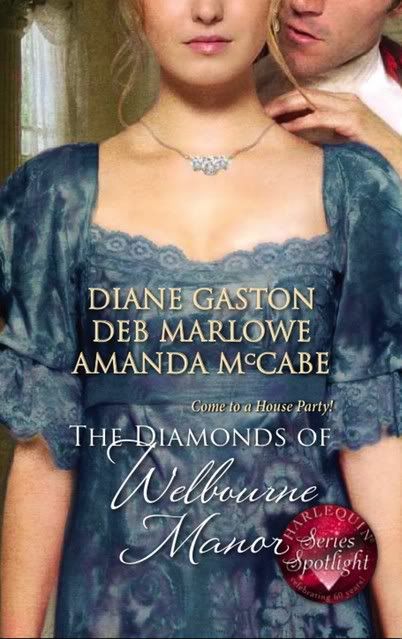
The Golden Heart Historical Categories

Your first task in entering the Golden Heart is to make certain your manuscript is entered in the correct category. The categories are fairly clear this year: Regency Historical Romance (“Romance novels in which the majority of the story is set against the Regency period of the
Don't overthink this. If you believe you wrote a Regency Historical, enter it in the Regency Historical Romance category. If you believe you wrote a Historical-that-is-not-a-Regency, enter it in the Historical Romance category.
You do have some other possible choices, however. Would your entry fare better in Romantic Suspense? Perhaps it would if you have a very strong suspense plot that obviously overtakes the historical aspects. Does your entry have strong paranormal elements? It might fare better in the Paranormal category, especially if it is a time travel, which is sorta a historical hybrid. If you have written a historical inspirational, you definitely will fare better in the Inspirational category, because it usually has fewer entries and less competition. If you have written a historical that is not a romance, but has romantic elements, it could belong in the Strong Romantic Elements category.
Most times you are safest with the Historical categories, but we can discuss any gray areas.
The elements of a good Historical Golden Heart Entry are nearly the same as a good Historical manuscript and are often a balance between “too much” and “too little.”
1. Make your time period and setting clear.
This is extremely easy to do. Put the date (month optional) and the location under (or above) “Chapter One” and at the left margin. For Miss M, it was “
You may or may not decide to use this “Place, Date” format in your finished manuscript, but for the purposes of the contest, it immediately eliminates any judge being confused about where or when the story takes place.
2. Use specific sensory detail that evokes the time period.
Here again, it is a balance. You want the reader to “feel” she is transported to the time period right away. The sights, sounds, smells, and tactile details you include are the vehicles that take the reader on that journey. But you do not want to use so much description that the reader is distracted from the characters. Don’t make a simple crossing of the street seem like a travelogue.
3. Make your characters accurate to the time period.
Paint a historically accurate picture of them with your historical detail, but, again, do not overdo it. “He adjusted his neckcloth” may be enough and “He adjusted his white muslin neckcloth, brushed lint off the coat of black superfine tailored for him by Weston, and kicked a stone away with his Hessian boots made by Hoby” is probably too much detail, unless you have a clear reason for using it.
4. Use words that are true to the time period.
I’m not advocating going back to Middle English if your book is set in 1400 (Chaucer, anyone?), but try to keep modern words out of the manuscript, even in your narrative. Make the language another tool to evoke a different time, a different place. For example, use the terms for parts of a castle: palisade, turret, porticullis, making certain the reader will understand them in context. (You don’t want the judge-or a future reader-to have interrupt her reading to look in a dictionary) On the other hand, don’t use words that are too inaccessible to the present day reader. For example, it may be better to just say “beer money” than to use the term “byrban.”
Don’t use words that are historically accurate but mean something else in today’s use of language. For example, don’t say, “He emerged from the camera;” say “He emerged from the workshop.”
Avoid anachronisms. No “ego trips” for anyone whose story is set before 1969. Or more subtle, no one should be “mesmerized” before 1829. To check a word’s origin use the etymological dictionary online. If it says the word came into being in 1842, don’t worry if your book was set a few years earlier. It doesn’t have to be that exact.
5. Dialogue
Make certain the dialogue evokes the historical period. For example, my Regency characters might say, “That is the outside of enough” rather than “Enough, already.”
Go sparing on dialect. My editors allow me to get away with very little dialect; you’d be surprised. One or two “thees” and “thous” are permissible, but very very few.
Contractions are permissible. Jane Austen used contractions, after all. On the other hand, if you like how your dialogue sounds without contractions, that is perfectly okay.
6. Don’t ignore history
Don’t set your story in
It is my personal bias that characters should be true to the time period in their thoughts, desires, values, but many historical authors do very well with characters who reflect modern thinking.
7. No information dumps
It is important to show history, but not to necessarily show your knowledge of history. I might be able to tell you a lot about the politics of the Corn Laws, but the reader only wants to know enough to make sense of my using them in my story.
Don’t try to sneak in an information dump in dialogue. It is highly unlikely that my hero and heroine would sit around debating the pros and cons of the Corn Laws, and it would be boring for the reader if they did. Brief comments about historical matters do add to that historical “feel,” though.
8. Use your synopsis to explain
If you have historical detail that the judge might misinterpret, explain it in your synopsis. The synopsis is for telling not showing, so use it to tell what you need it to tell. In the synopsis you are explaining the story to the judge or editor or agent, not the reader, so it is perfectly okay to explain some historical detail that might otherwise be misinterpreted.
Have I forgotten anything?
What do you think of the new Historical categories?
What, if anything, is worrying you about entering your historical in the Golden Heart?
Labels: Diane Gaston, Golden Heart, historicals
posted by Diane Gaston @ 9:14 AM
31 comments