Sex and Conflict -- Keeping it Real
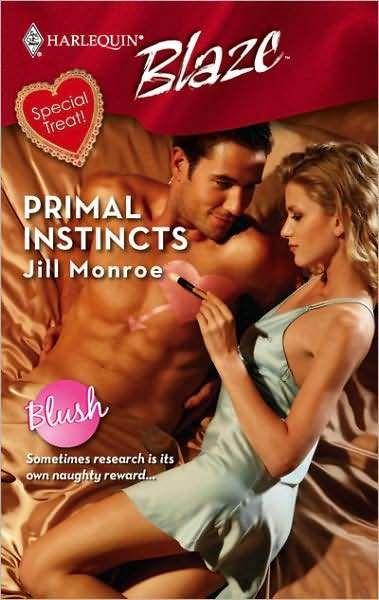
Today we welcome guest blogger Tawny Weber, fabulous Harlequin Blaze author. Take it away, Tawny...I’m a strong believer in conflict, since it’s through watching characters overcome challenges a reader gets drawn into the story. And I love all of the posts on conflict this month, which have explored how important this is to not only move a story, but to allow our characters to grow stronger as they achieve their goals.
But... here’s the thing. I write for Blaze, which means my characters have to have all that great conflict – both external and internal – and still have lots and lots of sex... or at the very least, lots and lots of sexual tension. So how can I get fulfill the sexy hook while maintaining a strong enough conflict to engage the reader from page one to happy ever after?
I think it’s important to choose an external conflict that allows for believable sexual tension. Whether you write hot or not, that rising tension adds a layer of intensity to the conflict. Every time your characters come together, their awareness of each other intensifies and the tension rises. In many stories, that and a few kisses are enough to maintain that sexual awareness and convince the reader that, yes; these two are hot for each other.
In a hotter story, such as a Blaze, the question at hand isn’t how far will they go to relieve that sexual tension during their quest to solve their conflict? The question is how you keep the sexual tension strong after they’ve already done the deed... because they usually do it pretty early in the story.
The answer? Conflict! How does having sex intensify their conflict? How does it ratchet up the tension, intensify the risk and push all their internal conflict buttons?
I mean, we all know sex complicates things. And in fiction, the more complicated the better! Know your characters issues with sex. Use their fears and sexual hang-ups against them. Better yet, let the other character push them to overcome those fears and hang-ups.
If there is ever a choice between writing a sex scene or holding back to raise the tension and intensify the story conflict... hold back! Sometimes it’s what isn’t written that tells the most about our characters.
Can sex and conflict be done wrong? Of course. Gratuitous sex is always bad. Who hasn’t read a story where the characters are at each other’s throats only to stop the hating to do the wild thing in an elevator, then go right back to spewing venom with no change or growth to show for the encounter. Or when the characters are on the run for their lives, the bad guys an hour behind and they stop to get nasty in the backseat of the car instead of setting a trap. Yes, the adrenaline rush might intensify the scene, but the reader is usually rolling her eyes and muttering why it’d be justified if the bad guys did catch them with their pants down (heehee).
What’s your take on sex and conflict? Do you think it intensifies the characters’ struggle for growth? What’re some good examples you’ve read recently?
Labels: writing conflict
This Week on the Wet Noodle Posse

This week we finish our discussion of conflict and start the topic of research. You can still increase your chance of winning a signed Jo Beverly novel by posting a comment by midnight April 30th.
Monday, April 28th: Guest blogger Tawny Weber "Sex and Conflict, Keeping It Real"
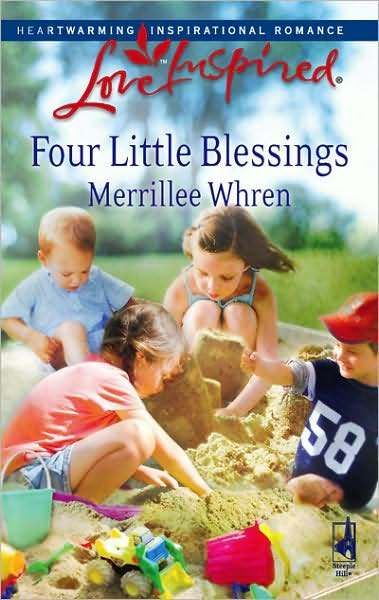
Tuesday, April 29th: Merrillee Whren "Using Personality Types to Find Conflict"
Wednesday, April 30th: Esri Rose (Topic TBA)
Thursday, May 1st: Janet Mullany "Introduction to month-long topic of Research"
Friday, May 2nd: Noodler New Releases for May
Labels: Esri Rose, Janet Mullany, Merrillee Whren, Tawny Weber, writing conflict
Writing internal and external conflict
Today, we're happy to have author Christie Kelley with us to talk a bit about how she approaches writing conflict, both internal and external. It seems Christie is like many of us -- while we hate conflict in real life, we don't mind giving our characters some big conflicts to overcome because we know it makes the story stronger and a more satisfying read.I hate conflict. Really, just ask my husband and he’ll tell you it’s true. Conflict drives me crazy, stresses me out and makes me want to hide under the covers for days.
And yet, I love writing conflict.
There is nothing more fun than taking two people and turning their lives upside down with just a little conflict. I know—I have a serious problem.
For me, writing conflict is easy. While I’m more of a pantser than a plotter, I always plot out my major conflicts for my hero and heroine and my antagonist.
I’m a big believer in Deb Dixon’s, Goal, Motivation and Conflict theory. For those of you who might not have heard of it, I’ll briefly describe it. You think about what your character wants more than anything (goal), and why it’s so important to them (motivation) and, here’s the fun part, why they can’t have it (conflict).
In my current release,
Every Night I’m Yours, my hero’s goal is to take the heroine away for two weeks and convince her to marry him. Why? Because he’s decided it’s time to marry and she fits his needs. So what’s holding him back? Ahh, the conflict…my heroine is fine with the going away part, but she saw the abuse her father gave her mother and wants no part of marriage.
So that’s conflict, right? Well, not completely. There’s internal and external conflict. What I described above is external conflict. It’s what moves the plot along at a good pace. The internal conflict is the root of the emotional impact of a story.
In the same story, I told you my heroine is afraid of marriage because of her parents' marriage. But the truth of the matter is, she’s terrified she has her father’s anger problem. So her internal goal is to never marry because she might abuse her husband or child. But the conflict comes in because the more time she spends with the hero, the more she comes to love him. Her fear is holding her back.
For true conflict, the reader has to know what’s at risk for both parties. Why it’s so important that the conflict be resolved, and what the consequences are if it’s not.
I’d love to hear what you all think about writing conflict. Is it fun? Easy? Or does writing conflict stress you out completely? I’m giving away a copy of
Every Night I’m Yours for the best comments.
Labels: writing conflict
Size Does Matter. How Big Is Your Conflict?

We live in a supersized world these days, but you may not want to supersize your conflict. Don’t get me wrong, all stories require conflict, but sometimes if a writer’s conflict is too big or too small, the story doesn’t work. It’s a lot like Cinderella’s glass slipper.
But how do you know if your conflict is being squeezed into too small of a shoe or if you need to try something in a size 4 narrow?
Check the recommended page count. Page count is a great way to help you determine if you’re Cinderella or one of her ugly stepsisters. Publishing houses and literary magazines give you a word count not only to keep down printing costs, but also to provide a target for writers. You can use that target to figure out what size conflict you need or how many different conflicts you can handle for the required amount of pages. If Susie Writer is working on a twenty page short story about a girl, she most likely does not have room to explore and resolve her heroine’s relationship with her distant father, to come to terms with her dog’s recent death, to get over her former best friend dumping her, and to figure out how to deal with her new neighbor, a cute yet jerky boy who is making her life even more of a living hell than it was before. With that much conflict, I’m thinking full-blown YA novel, not short story. If, however, a short story is this writer’s goal, she could focus on resolving just one of those conflicts—preferably one that can be settled reasonably in a short number of pages—or the writer can find a spot in this protagonist’s character arc and hone in on that one small section to resolve a particular conflict satisfactorily.
For my humorous short story “Hair Today, Gone Tomorrow” in More Sweet Tea (2005), I went with a small conflict—the protagonist is an elderly woman whose hairdresser dies. Lucille wants to be respectful and attend the “settin’ up,” but she can’t go with her hair looking bad. What does she do? This dilemma, while quite traumatic for reasons that don’t need to be explained to other women, especially those who frequent the hairdresser every week, isn’t big enough to carry a whole novel, much less a novella.
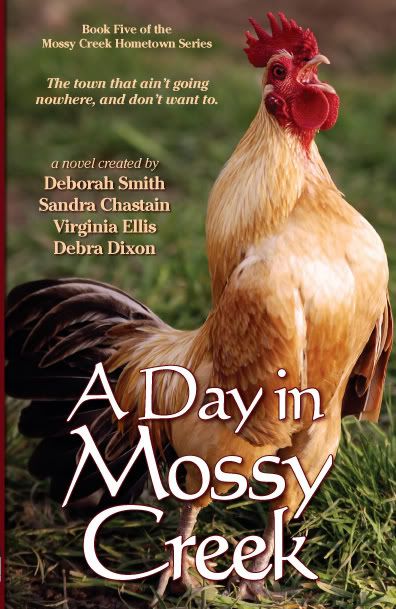
I’ve also narrowed the focus on one little segment of a character’s arc, climax to resolution. For example, in one of the stories included in A Day in Mossy Creek (2006) “Resolutionary War,” I had one sister sabotaging the other’s attempt to get healthy. For the story, I didn’t spend tons of pages showing the scenes of saboteur Spiva making her sister Pearl mad or the town trying to help the protagonist reach her goal. I went straight to the blow up between the sisters and the resolution. What led up to the climax was handled as back story, and I tried to make that back story as brief as I could.
List your conflict(s). All of them. Multiple conflicts, at times, can lead to an ill fit. If you discover that you’re writing a long list of conflicts that rivals the phone book, you may need to narrow your focus or perhaps save some of those conflicts for another book or story. The way to narrow down your list is to ask yourself—What is the most important conflict in this story? Which conflict, if removed, would make my story crumble? That’s your main conflict. Which other conflicts relate in some way to this main conflict? Those are probably keepers. Something else you should check, once you’ve written the story, is how much space you’ve spent on each of these conflicts. The main conflict should receive the most attention—most pages. And those conflicts that aren’t related in any way? Consider cutting them. Keep them in a file for potential use, much like your little darlings. If you figure out what conflict to keep before you write the scenes, you’ll have fewer little darlings to remove from your finished manuscript.
Estimate the number of scenes necessary to resolve the conflict(s). How many scenes do you think you’ll need to develop and resolve your story’s conflict or conflicts? If you think three or four should do it, you probably have the makings of a short story. If you think upwards of twenty scenes, you probably have a novella or novel.
Size matters. If it didn’t, would Cinderella have ended up with the prince?
Labels: writing conflict
Bickering is not conflict
Have you ever read a book where the conflict was so weak that it would be resolved if the two characters just sat down and had a conversation? Did you want to toss that book against the wall?
The reason we've all probably felt like this at some point is that sometimes an author will mistake bickering for conflict. But bickering is what a couple of two-year-olds do, not two adults who are attracted to each other but have some genuine obstacle standing in the way of their getting together. This obstacle won't disappear just because the two sit down and talk about it.
Let's look at the following scenarios to illustrate the difference.
Scenario 1 -- Cindy is a prison guard who likes Brad, another guard. But instead of letting him know and opening herself up to possible rejection (she doesn't see herself as pretty or feminine considering her job), she picks arguments with him so he won't guess how she really feels. He argues back, no matter what petty thing they're arguing about, and kicks himself for being attracted to her anyway. This is bickering. If they'd stop and just have an honest conversation, chances are they'd go out and possibly fall in love.
Scenario 2 -- Cindy is still a prison guard, but this time she falls for Jack, a prisoner incarcerated for murder, one he insists he didn't commit. Her attraction to him goes against everything she stands for and could cost her job, her friends and family, possibly even her life if he gets out and she's wrong about him. Jack, who is in fact innocent, understandably isn't too hot on getting close to anyone in a uniform at the moment. This is genuine conflict. Cindy and Jack can talk until they're blue in the face, and the obstacle of Jack's conviction and imprisonment won't go away.
When you're plotting a new story and searching for the true conflict between your hero and heroine, dig deep. Don't go with the first, most obvious "conflict" because this might not be a true conflict at all. It might be just a surface conflict and lead to that annoying bickering. Each time you write down a possible conflict, try to peel it back even more, go down another layer like you're peeling an onion. Keep asking the question "Why?" at each layer. You might be surprised to find a true, very complicated conflict five or six layers down, one that will throw obstacles in the path of your hero's and heroine's happiness together that will make even you, the writer of their story, wonder how in the world they'll ever find a way to be together. But they will in the end. You just have to figure out the winding path that takes them from impossible odds to happily ever after.
So, what are some of the best conflicts you've read in a romance novel? Ones that made you wonder how in the world the author would ever get the hero and heroine together for a happy life together? Were these some of the most satisfying stories you've read because of those deep conflicts?
Labels: writing conflict
This week on the Wet Noodle Posse

We continue our discussion about conflict with the following:
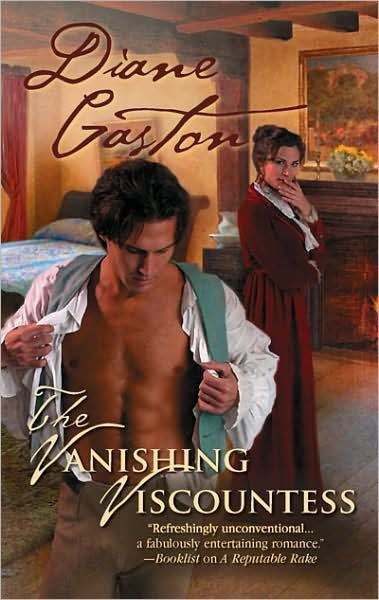
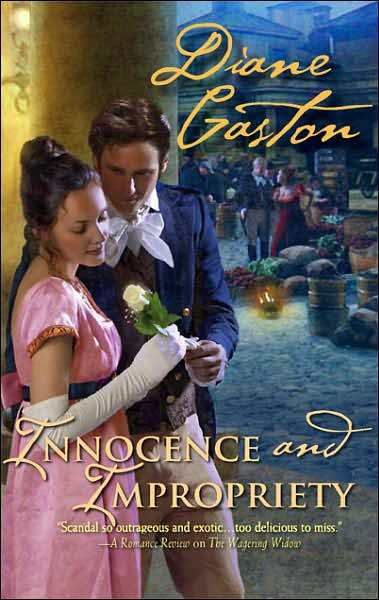
Monday, April 7th: Diane Gaston "What Michael Hauge Says about Conflict"
Tuesday, April 8th: Lee McKenzie "GMC a la Debra Dixon"
Wednesday, April 9th: Priscilla Kissinger TBA
Thursday, April 10th: Trish Milburn/Tricia Mills "Bickering Is Not Conflict"
Friday, April 11th: Q&A (Readers ask questions. Noodlers Answer.)
Be sure to post a comment if you'd like to be in the running for an autographed copy of a Jo Beverly novel!
Labels: writing conflict
This week on the Wet Noodle Posse

We want to thank our monthly coordinator Theresa Ragan for keeping the conversation going during March. We switch to the topic of Conflict April 1st. And remember, we have one more day, March 31st for you, our readers, to win that $20 gift certificate from Borders. So make sure to respond to our blog tomorrow.
Monday, March 31st: Debra Holland "Storyboarding"
Tuesday, April 1st: Lorelle Marinello "Conflict Introduction"
Wednesday, April 2nd: Delle Jacobs "Let's Plotstorm a Conflict"
Thursday, April 3rd: Janet Mullany "Love = Conflict"
Friday, April 4th: Noodler New Releases!!!
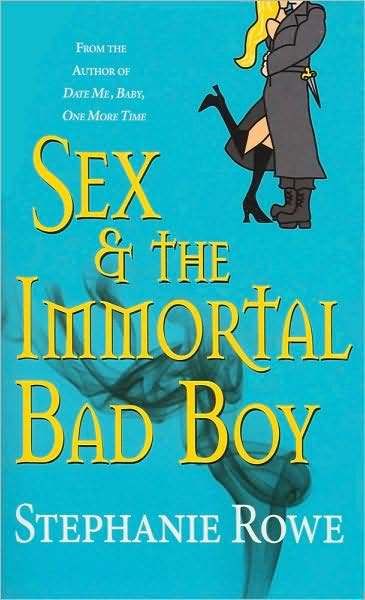
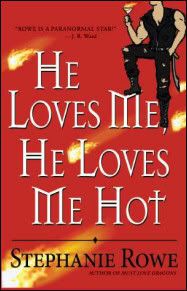
The Wet Noodle Posse would like to congratulate readers CM and Doglady and noodlers Theresa Ragan and Priscilla Kissinger for finaling in RWA's Golden Heart Contest! We'd also like to congratulate noodler Stephanie Rowe for her RITA nomination!
Labels: writing conflict