Starting a New Manuscript by Diane Gaston

I'm continuing with my September theme of New Starts (See my
blog of Sept 7). I think September is a perfect time to start a new manuscript, like starting school.
I don't have any consistent way of starting a manuscript. Sometimes I start with a story idea; sometimes, a character; sometimes, just an initial situation.
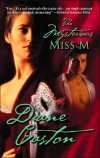
 The Mysterious Miss M
, my first book, started with a desire to sell a book. I was entering lots of romance writing contests at the time. Most contests are judged on a first chapter so I decided I needed a first chapter with a big WOW factor. What could be a better WOW factor than starting with a sex scene? From that idea the characters came to mind and then the story.


Other books started with a character. Both
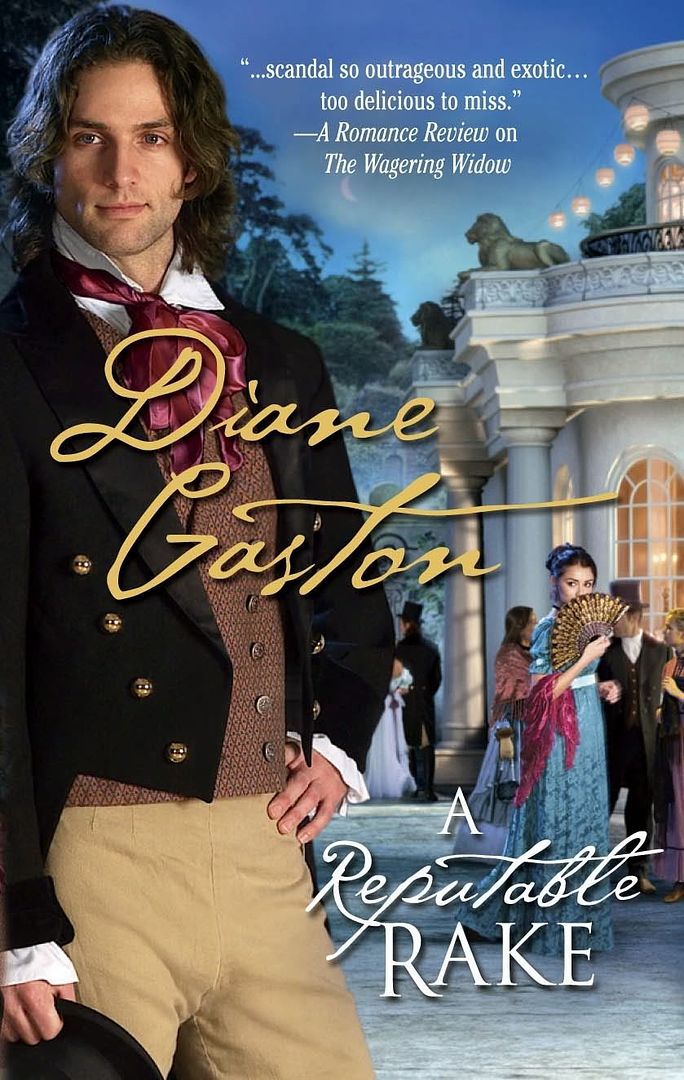
A Reputable Rake and
The Vanishing Viscountess began because the heroes in those books were secondary characters in earlier books and they simply would not stop trying to take over the book. I had to promise them books of their own.

This time I set up a trilogy involving three soldiers. The original idea grew from watching
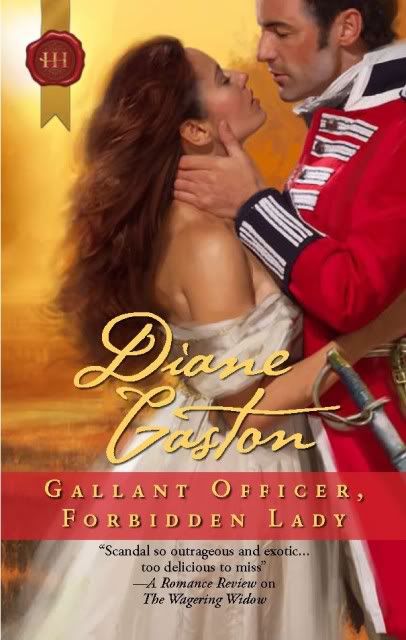
The Lives of a Bengal Lancer but all I took from that was the idea of three soldiers who all experience the same traumatic event that affects each of their lives from then on. I'm working on the third book so I had the hero and heroine who appear in the first book, only I didn't really know much about them. (shown is
Gallant Officer, Forbidden Lady, the first book in the trilogy, to be released Dec 2009)
Before I was published I started a book with whatever idea or character that gave me a beginning. I was the classic seat-of-the-pants writer and I liked discovering the story as I went along. Now that I'm published, though, I have to write a proposal. So to start a book, I have to have enough of the story to create a synopsis. No more "pantsing."
Do you start a book with a situation, a character, or something else? Do you plot out the story before writing, or do you fly by the seat of your pants?
If you like a story, what captures your attention the most-the characters? the plot? or something else?
Labels: A Reputable Rake, Forbidden Lady, Gallant Officer, How to Write, The Mysterious Miss M, The Vanishing Viscountess
Google Maps to the Rescue
View Larger MapThis is the map of Tanner and Marlena's journey across the English and Scottish countryside in my January release,
The Vanishing Viscountess. Click on the pointers to see some of the details of the trip.
When I first conceived the story for
The Vanishing Viscountess, I didn't think about the challenges of doing a Road Story. All of a sudden I had to research a dozen locations instead of one or two! What was I thinking? I needed HELP.
First of all, I needed a route for my characters to travel. Our very own Noodler,
Delle Jacobs, saved me there by giving me the coaching routes of the time period. After that it was
Google Maps to the rescue!
How did Google Maps help?
1. By showing the route.
By using the Get Directions feature, I plugged in Delle's information, and I could literally see on the Google map how my characters would travel across the country.
2. By providing the distance between places.
The Get Directions feature also provided the distance between points on the map. I needed to set a realistic pace for my characters, to make sure that each day they traveled a realistic distance for Regency times.
3. By giving names of towns, villages, rivers, streams, street names, and so on.
When I knew my distances, I also discovered the likely places my characters would stop for the night. Then I could use other search engines (like my favorite one, Answers.com) to research those places.
4. By showing me details I didn't know.
Like where bridges were, turns in the road, things like that. The satellite feature was helpful because it showed the actual terrain. I could even zoom in on buildings, which would be useful if you write contemporary fiction.
After I finished
The Vanishing Viscountess and started talking and blogging about using Google Maps, I learned of a new Google feature in
Google Earth that is ideal for historical research. I use this feature all the time now.
Google Earth is free for download
hereOn the left, under the menu “layer,” set view on “core.” Under core, click on Gallery. Under Gallery, click on Rumsey Historical Maps and then Map Finder. The maps I use are the 1790 maps of the UK and the 1843 map of London, but there are special maps all over the world.

The cool thing is, the historical maps overlay the Google Earth map and the Google Map functions still work. I can plot distances my characters need to travel in the UK and London and I am looking at the area as it would have in that historical time period.
My map of Tanner and Marlena’s trip even shows up on Google Earth and on the historical map overlaying it.
The Vanishing Viscountess is still available on
eHarlequin (at 40% off) and at
Amazon.com.
Do you use maps, Google or otherwise, to help you with your research?
Labels: Google Maps, The Vanishing Viscountess
What to Research Before You Write the Book

We’ll be doing a whole month on research, but I wanted to touch base on this subject, because we often can use the need to do research, especially historical research, to keep us from moving forward. Either we detour into spending all our time reading research material or we are so daunted by what we need to know, we sit and tear our hair out.
Guess what? You don't need to know everything. All you need is:
1. General Knowledge.
If you are writing a historical, read a general history of the era in which you are setting the book, just to make certain you understand enough about the era to make your story credible. You don’t want your Regency characters to hop on trains, for instance, or to take secret photographs in dingy gaming hells (that notorious book really made it to print!).

Writers of contemporaries have an easier time, because we all have general knowledge of our current era, but if you are writing a contemporary, you should read a little on whatever particular “world” you are using for your story. For example, if you are setting your book in a dairy farm, you ought to know a little about what a dairy farm is like. Not detailed knowledge, but enough to know if your story will work there. Or if you are writing about lawyers, you need to know a little about law firms.

For the Regency, a great overview of the era is
Our Tempestuous Day by Carolly Erickson, but you can also look in history books, on Wikipedia, or, my favorite,
Answers.com.
2. Knowledge of the events of your time period.One of the first things to research is what happened around the time you want to set the book. As a historical writer, one of the first things I do is check a historical timeline. Here’s a fairly detailed one:
http://timelines.ws/ but there are many others out there. Just do a Google search.
You want to check a timeline to take into account any historical events that would impact on your story. For example, in the book I just finished, I had to take into account that Queen Charlotte, wife of King George III, died during the time my story was set. That was a big historical event.

The Contemporary writer also needs to keep in mind important historical events. For example, if you set your story in New Orleans, you can’t completely ignore the hurricane and its aftermath. If you set your story in Boston, you have to be aware of the Big Dig.
3. A working knowledge of whatever your story is about.

When you are beginning to write a book, you really just need to know enough to know if your story will work, just enough to start. In The Vanishing Viscountess, all I needed to start was a general idea of the British legal system (very general-just enough to know if my story would work. Later I had to research in more detail), where a ship crossing the Irish Sea would embark and land, and if they ever had shipwrecks there.

That’s it!
For the rest, research as you go along. Find out the details when you need them. The information will be fresher that way and you won’t have spent time researching something you thought you needed, but didn't.
You can also use these guidelines when you are stuck in the middle of the book on some needs-to-be-researched fact. Don't get bogged down in it. Only spend time finding it if the rest of your book might be affected by it. If you know it won't, then just mark the spot, push on, and come back in a later draft to find that certain detail.
The important thing is to not let anything keep you from starting--and finishing--the book.
More on Research in May....
What sorts of research problems keep you from pushing forward?
What strategies do you have to keep the need to research from stopping your progress?
.
Labels: Diane Gaston, Research, The Vanishing Viscountess
The Call - Diane's Story

This month of holidays, happiness and hectic activity, the Wet Noodle Posse is going to gift you with our The Call stories. For some of us, The Call will be the call telling us our entry finaled in the Golden Heart; for others, we’ll tell about The Call leading to that wonderful first sale.
Why is this a gift? Well, if The Call happened for us, The Call can happen to you, too.
My journey from being unpublished hopeful to published author happened in 2003, the year I became a member of the Wet Noodle Posse (2003 Golden Heart finalists). I’d been a Golden Heart finalist in 2001 and I very well remember the call telling me my entry
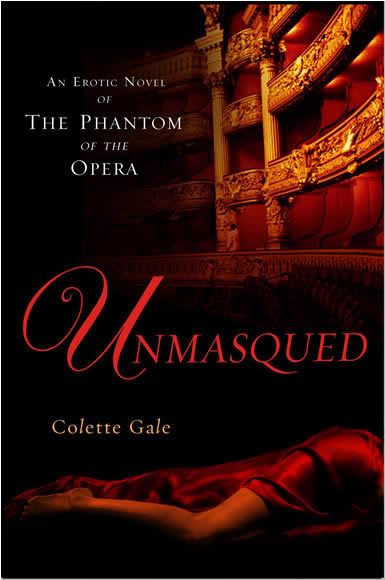
Unmasked was a finalist. I floated for days afterward. I think it was the most exciting call I ever received, and I was certain my Golden Heart status was going to sell that manuscript. I sent it everywhere, every agent I knew of, then every publishing house.
It was rejected over and over again as “unmarketable.” “Readers will not like your heroine,” the rejection letters said. (My heroine started off the book as a prostitute in a gaming hell. Such a heroine may be all the rage in today’s regency historicals, but this was 2001 and 2002, and she was before her time.)
When time to enter the 2003 Golden Heart came around, I had a new manuscript, but on a whim I entered
Unmasked again. Like buying a second lottery ticket, I figured, it would double my chances. My strategy worked, too, but when I received The Call to tell me
Unmasked finaled in the Golden Heart again, I was more perplexed than excited. What could I do with a manuscript that had been rejected everywhere?
A few weeks later, on an afternoon in May, 2003 while I waited in a dermatologist’s examining room, my husband phoned to tell me there was a message on our voice mail at home from “some editor.” Never was a wait in a doctor’s office so long! The message was from an editor in England--Kate Paice from Mills & Boon. Mills & Boon? I had never even dreamed of submitting to Mills & Boon, the UK branch of Harlequin Enterprises. Everyone knew Mills & Boon rarely bought American writers, and, besides, what British publisher would buy a Historical set in England by an American writer who had never even set foot there?

Kate’s message said she had judged my manuscript for the Golden Heart and would like to talk to me. I rose at 5:00 a.m. the next morning and phoned her. She asked me questions about my writing, said wonderful things about my GH entry, and said she would phone me the next day. That third phone call--5:00 a.m. again--was “The Call.” Kate made the offer for what is now titled
The Mysterious Miss M.
Being very well trained by RWA not to accept immediately, I agreed to talk with her the next Monday, even though I would be traveling. My husband and I had a trip planned to stay in a Bed & Breakfast in Charlottesville, Virginia, but I told Kate I would phone her on the road.
At the B&B, however, the only phone was outside the other guest bedrooms, and my cell phone did not work for an overseas phone call. So at 6:00 a.m., on my 30th wedding anniversary, at a phone booth outside a convenience store in Charlottesville, Virginia, phone card in hand, trucks whizzing by, husband watching from the car, I negotiated my first book sale!!
 The Mysterious Miss M
went on to win the 2003 Golden Heart for Best Long Historical. I accepted my Golden Heart in front of 2,000 RWA members and friends, in New York City at RWA’s annual conference, with my new Mills & Boon editors cheering me on!
The Mysterious Miss M made its debut in the UK July, 2004. It went on to be released by Harlequin Historical in November 2005. This coming January, 2008,
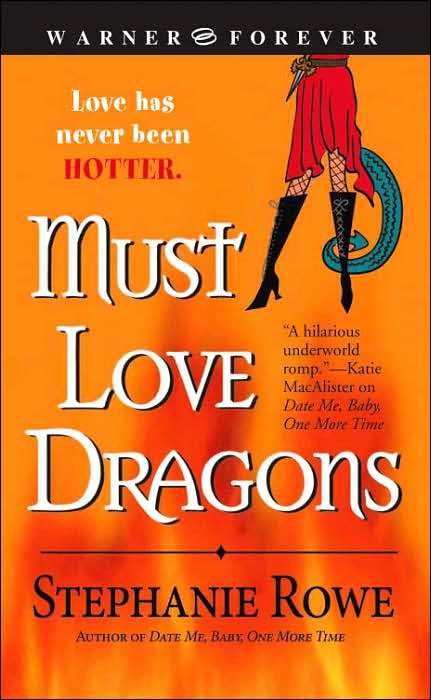
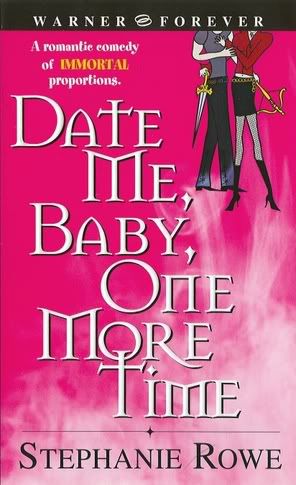
The Vanishing Viscountess will be my eighth book, including my Christmas novella and the two books I wrote for Warner Forever. My third Mills & Boon book,
A Reputable Rake, won RWA’s 2006 RITA for Best Regency Romance.

Wonderful story, huh? You can understand why I am so committed to the Golden Heart contest. I completely owe my first sale to the Golden Heart.
I wrote for eight years before selling, but I did receive The Call. And if I can do it, you can do it too.

Visit my website at
http://dianegaston.com/. Enter my new
contest, the Grand Finale in my Contest Countdown to
The Vanishing Viscountess, on sale now on
eHarlequin and
millsandboon.co.uk . The Mills & Boon edition includes a special bonus book--
The Mysterious Miss M.
The Vanishing Viscountess will be in bookstores January 1.
Labels: A Reputable Rake, Diane Gaston, The Call, The Mysterious Miss M, The Vanishing Viscountess
An attempt at historical accuracy. No lace panties in the Regency, please, and whatever the covers show, no polyester gowns or men's shirts that button all the way down.

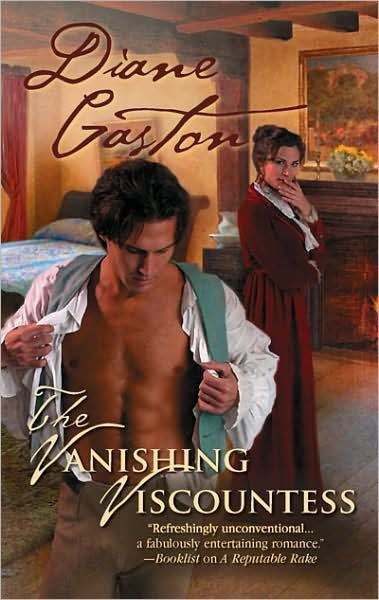
This is a quote from Janet's blog from a few days ago, discussing what she likes in an Historical. Ordinarily I would agree with her about the Regency gentleman's shirt buttoning all the way down, but I recently received the cover for my January 2008 Harlequin Historical--A Regency--
The Vanishing Viscountess.
Note the open-front shirt. Totally wrong for the time period, but I love this cover!
The shirt is wrong, but the cover is so right. It conveys the right situation and mood between the hero and heroine. And I love the sensuality of it. Plus, having a handsome man baring his chest on the cover ought to entice readers to pick up the book!
I think historical accuracy is very important in historical romance and, like Janet, I work hard at trying to make my Regency Historicals as accurate as I can. I know some other authors are not hard-and-fast about this and it doesn't seem to affect their popularity with readers.
So what is important to readers? I know what is important to me as a reader.
1. Characters I can care about--I can forgive a lot of other problems if the characters seem like real people I can care about. I want a hero I can fall in love with and a heroine I can either identify with or someone I wouldn't mind having as a friend.
2. Something interesting happening--It doesn't have to be something complicated happening, or even something with lots of inherent drama, like a life-or-death situation. Just something that keeps me turning the pages.
3. Something surprising or unexpected--I want something about the story to be different from other books I've read.
4. I want the love story to feel genuine. I want to understand why these two people fall in love and to believe that no one else would be better suited for them.
5. I want sensuality in the story. I want to be able to feel the physical attraction between the hero and heroine and I want this expressed in a way that seems right for these characters.
6. I want to suspend my disbelief and be transported to whatever time period the book is set. This inevitably means historical detail, but I want the detail to be incorporated into the story. I don't want to be thrust out of the story by feeling like the author is showing off historical knowledge.
7. I also don't want to be thrust out of the story by historical inaccuracies. Because I write Regencies, I know a lot about the time period. I would forgive minor mistakes, but not ones that would be easy to research.
8. I don't want to be thrust out of the story by historical
accuracy either. Sometimes historical accuracy is so foreign to us we cannot relate to it. I think Regency titles and names are sometimes an example of this. Use of title names instead of first names; having sons with different title names than their fathers; having surnames that are different than title names. It can get very confusing.
What is most important to me is that the mood and tone and characters feel as if they belonged in the historical time period.
This brings me back to my cover. It works perfectly for me, even with the inaccurate shirt, because it conveys the right mood, the right situation, the right sensuality for the story.
Plus it has that handsome bare-chested man on it!
What is important to you as a reader?
Visit The Risky Regencies blog this week to celebrate our second anniversary. Prizes every day and a Grand Prize for signing up for our newsletter by sending an email to riskies@yahoo.com. Just put "newsletter" in the subject line.
Visit Diane's websiteLabels: Diane Gaston, The Vanishing Viscountess

 I'm continuing with my September theme of New Starts (See my blog of Sept 7). I think September is a perfect time to start a new manuscript, like starting school.
 The Mysterious Miss M, my first book, started with a desire to sell a book. I was entering lots of romance writing contests at the time. Most contests are judged on a first chapter so I decided I needed a first chapter with a big WOW factor. What could be a better WOW factor than starting with a sex scene? From that idea the characters came to mind and then the story.

 Other books started with a character. Both A Reputable Rake and The Vanishing Viscountess began because the heroes in those books were secondary characters in earlier books and they simply would not stop trying to take over the book. I had to promise them books of their own.
 This time I set up a trilogy involving three soldiers. The original idea grew from watching The Lives of a Bengal Lancer but all I took from that was the idea of three soldiers who all experience the same traumatic event that affects each of their lives from then on. I'm working on the third book so I had the hero and heroine who appear in the first book, only I didn't really know much about them. (shown is Gallant Officer, Forbidden Lady, the first book in the trilogy, to be released Dec 2009)