Confessions of a Research Geek
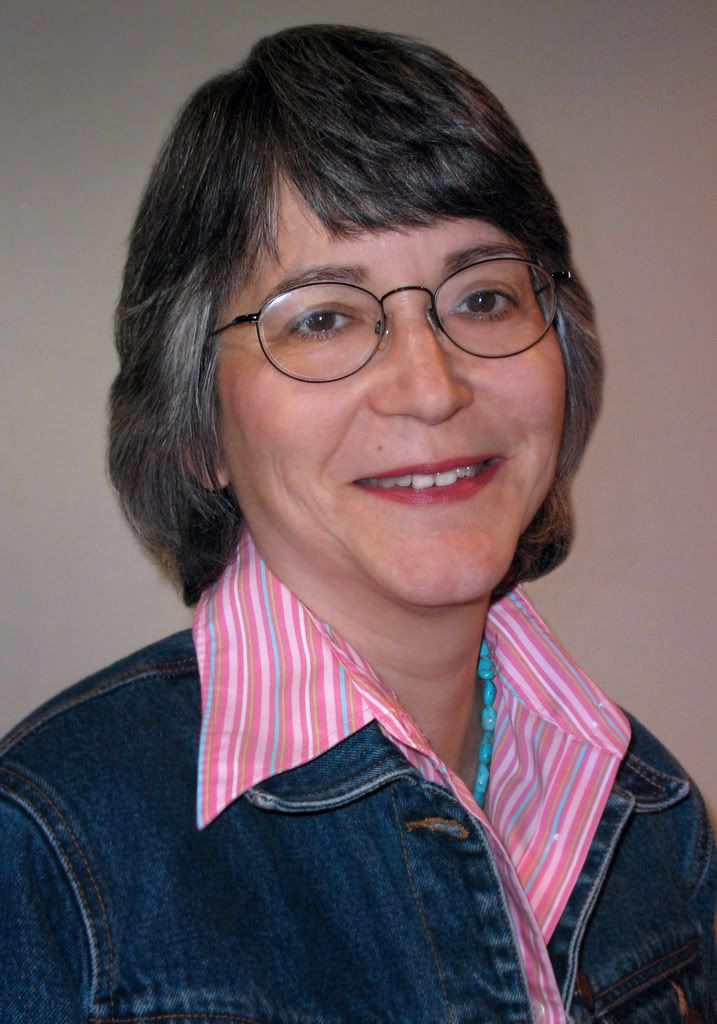 Some people think research is really, really cool. Nancy Northcott is one such person. Like the Noodlers, Nancy is a former Golden Heart finalist (twice). She's also finaled in the Orange Rose and the Maggie Award of Excellence contests and won the Put Your Heart in a Book, Molly and Emerald City Opener contests, all with books set in historical periods. Her undergraduate degree is in history, and she spent a summer studying Tudor and Stuart England at Oxford.
I love research. I really love it, and not just as a cover for procrastination. Opening a book for the first time, visiting a new place, or meeting someone with an interesting job always holds the potential to reveal some previously unknown, fascinating tidbit. I may--or, more likely, may not--ever use the tidbit, but I like knowing about it anyway.
Loving research can lead to some risky habits, like ordering unknown, out-of-print books on obscure subjects over the Internet. Sometimes those blind orders turn out to be gems, and sometimes they’re triggers for “Geez, what was I thinking?” On balance, though, the gems have outweighed the clunkers, and I try to keep such risks relatively cheap--$10 or so with shipping and handling. I also spend a lot of time reading titles on bargain tables.

The research habit can turn vacation trips into opportunities. No matter where I am, I tend to leave the local booksellers happy. It’s not as if I can get a book on slang of the Lake District here at home, right? My vacation journal doubles as a research reference, but I’ve learned not to depend on that alone. After madly scribbling notes on the Warwick Castle map while the master archer demonstrated, I resolved never to be anywhere potentially useful without a pad, one sized so I could write on it with one hand and no extra support. And extra pens in case one runs dry. And a camera. Mine doesn’t take panoramic photos, so I buy the disposable panoramic cameras before we go.
All those docents standing around in the house uniform are fountains of knowledge just waiting for someone to tap them. Ask one of them a friendly question on a day that’s not busy, and you may make an instant friend. While some of them aren’t talkative, many are. They rarely see people who show genuine interest in these sites and who seem to care what they’re looking at and why it matters, as opposed to just wanting to say they’ve “done” the places. A word of caution, though--do not, ever, under any circumstance, try to engage guards in conversation. Some of them see educating visitors as not their job or, even worse, a distraction from said job.

The downside to this fondness for research is that not everyone shares it. Have you ever tried to corner someone to discuss swordsmiths in Anglo-Saxon England? The menu at medieval banquets? The rigging of sails in the wooden navy? If so, science fiction or fantasy readers, medieval re-enactors, and ship fanatics would love to meet you. Fortunately, so would writers. Anyone else may edge warily away from you, looking for someone to fling into your path as a diversion.
Even the most devoted readers don’t want to know every single fact about, say, food preparation in the Middle Ages. If you’ve spent the afternoon reading about medieval banquets, how much do you put on the page? Probably a tiny fraction of what you’ve learned. All that reading wasn’t wasted, though. The more we know about a time and place, the better our “feel” for it, the more texture we can give our readers.
So, any lovers of research out there? If so, in what meaty area of research can you really lose yourself?
To learn more about Nancy, visit her website, www.nancynorthcott.com. She’s building reference lists there for writers and curious readers.Labels: Guest Blogger, Research
RESEARCH for IDIOTS AND DUMMIES
So many great research tools, so little time. I used to spend entire weekends in the library. Now I can do the same amount of research with just the click of a button.
Google and Wikipedia work well for me when I need a quick detail.
For instance, one of my characters in my wip referred to the voice of the Robinson Family robot on Lost in Space. To check when the show was aired to make sure my character wasn't too young to refer to the robot, I GOOGLED “robot on t.v. show” because I couldn’t remember the name of the show. Wikipedia popped up and there was all the info I could ever need about Lost in Space.
In another scene in my WIP, my heroine notices all of the lights on the police cars as she pulls up to a house. I want to get the details right so I look up “lights on police cars” and not only do I find great pictures of different police cars on Wikipedia, I see that the lights are also referred to as “beacons” and “light bars” and, of course, “emergency lights.” These aren’t the best examples, but at least you get the picture.
From my WIP:
She could see the house at the end of a cul de sac. With all the emergency lights flashing it was hard to miss. Three police cars served as a barricade and an unmarked sedan took up most of the sidewalk.Other info regarding police cars came in handy too: “Police cars have nicknames such as (police) cruiser, squad car, prowler, radio car, panda car, area car, scout car, patrol car. In some places a police car may also be nicknamed a cop car, a Black & White, a cherry top, or a jam sandwich. Depending on the configuration of the emergency lights, a police car may also be called a marked unit, RMP (Radio Motor Patrol) or slick top. Undercover cars can be called "Silver Bullets".”
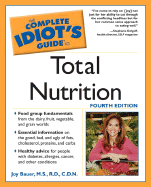
Another research tool I love to use are the Books for Dummies or The Complete Idiot’s Guide to… The con is that these books can be costly. I like to use them to learn about my character's jobs. For example, in one of my 2008 Golden Heart finaling manuscripts,
Better Late Than Never, my heroine is an award-winning nutritionist. I have her win the same award the author of the nutrition book won in
The Complete Idiot’s Guide to Total Nutrition. By the time I’ve read the book or heavily skimmed it at the very least, I have a better feel for my character and what she does. Here are two examples from my manuscript where having those extra details, IMO, added to the scene:
No wonder the NFL franchise was worried about him. The man needed serious nutritional help. She took the slices of bagel and tossed them into the garbage with the butter. Next, she reached around him for the package of hot dogs and held them in front of his face. “These frankfurters are made from muscle meat. They have all the essential amino acids, B vitamins and iron, which is good, but they’re loaded with saturated fats and cholesterol.” She shook her head. “A definite no-no.”
Max snatched the package of hotdogs out of her hand. “Frankly, my dear, I don’t give a damn.” He let out a hearty chuckle.And another scene…
He grunted. “I have a better idea. How about I write you a big fat check right now, you certify me as nutritionally sound, and nobody need ever know otherwise.”
“And jeopardize my career, my reputation?” She shook her head. “Not in this lifetime.” She was having fun now. Max Dutton obviously thrived on control and she’d bet her good standing with the National Heart Association that this was the first time in his life he didn’t have the upper hand. “Don’t worry about the little green apples. You’ll get great big juicy red ones and yellow ones, too. Lots of variety--just like you’re used to.”So what internet research tools do you often refer to? Any research books or tools you’d like to share with us?Labels: Research, writing
The obscure gems revealed by research
 Today we welcome Loucinda McGary, a great fan of research as you'll see from her post below. Like the Posse members, Loucinda is a former Golden Heart finalist. Her first book, The Wild Sight, will be out from Sourcebooks this October. She recently received her fantastic cover. Let's all pause for a moment to ooh and ahh...Okay, on to the post.
The Niall Marker
By Loucinda McGary
One of the things I love about doing research was expressed very well in the words of Forrest Gump, “You never know what you’re gonna get.”
When I was doing research for my manuscript that became my debut novel,
The Wild Sight: An Irish tale of deadly deeds and forbidden love, I immersed myself in all things Irish. I read about art, history, mythology, anything related to the Emerald Isle, and that is how I happened upon something called The Niall Marker.
Geneticists have isolated a gender-specific trait that they have traced back to a 5th century High King of Ireland, Niall of the Nine Hostages. Niall became the founding father of Clan O’Neill and gained his moniker by taking high-born hostages (not quite prisoners but not houseguests either) from the five kingdoms of Ireland, Ulster, Connacht, Leinster, Munster and Meath, plus one each from Scotland, the Saxons, the Britons and the Franks. This helped keep the peace during Niall’s reign and made his descendants the most powerful rulers of Ireland for the next six centuries.

Being the history geek and lover of trivia that I am, I decided I must incorporate this fascinating bit of obscure information into my novel. And it actually became one of the turning points in my story. Only it turns out The Niall Marker might not be that obscure after all...
A few weeks ago, I watched a fascinating program on PBS about how African-Americans are tracing their roots by studying their DNA. Scientists have perfected a technique that can tell anyone what percent of their DNA is from Africa, what percent is Native American, and what percent is from Northern Europe. The narrator of the program, a professor at Harvard, was quite surprised to learn that over 30% of his DNA came from Northern Europe. But that's not all!
Turns out that he had Irish ancestors. How did the experts know? (drum roll, please) Because he had The Niall Marker. I couldn't believe it! There was my fascinating little piece of trivia that I'd put into my book on national television!
Forrest was right, you never know. And truth IS stranger than fiction!
To find out more about Loucinda and her book, visit www.loucindamcgary.com. Or you can find her hanging out daily at the Romance Bandits blog.Labels: Loucinda McGary, Research
Research: A Love Story
By guest blogger Pam Rosenthal.My husband Michael has always participated in my writing. He’s done some writing and editing himself, and before I began writing historical romance, I was glad to have him as first and most astute reader of my reviews, essays, and erotica.
Michael's a bookseller. An old-school, independent, brick-and-mortar bookseller, he reads what he sells, sells what he loves, and could no sooner accept money from a publisher for front-of-the-store display space than commit grand larceny. He's the kind of bookseller who remembers what his customers have read last, and knows -- sometimes better than they do -- what they might want to read next.
So if my husband’s been my most astute reader, I've been among his most eager customers -- and even better, I get home delivery. Which made it more or less inevitable, I suppose, that when Michael suggested I might be interested in Robert Darnton's
The Forbidden Best-Sellers of Pre-Revolutionary France, I fairly grabbed the book out of his hands.

Reading this brilliant and entertaining account of how French booksellers sold smuggled works of Enlightenment philosophy and erotic entertainment to a readership hungry for social change was like discovering a hidden history, both of my husband's trade as a socially-committed bookseller and mine as an erotic writer. A world opened up, exciting me so profoundly that I found myself moved to write (of all things) a romance novel,
The Bookseller's Daughter, about a bookseller (she) and an erotic writer (he).
Michael was astonished, amused, and helpful as ever. He’d never read a romance novel, but throughout the writing of
Bookseller’s Daughter and
Almost a Gentleman he proved a tough and honest critic – especially of my synopses (you can read his wry, sly observations about synopsis writing
here).
It was only when I began
The Slightest Provocation, and tried setting a book in the British countryside during the dark, tumultuous, famine-ridden years after Waterloo, I realized that I needed help with more than my synopses.
Because the political situation in Post-Waterloo Britain is a tough nut to crack, especially if you take on domestic espionage as I did. My first try at a spy hero wasn't working; I needed to figure out why. And I needed to figure out a few more things as well, like:
Who were the spies, anyway, that the Home Office was sending out to infiltrate the reform societies that were springing up over the countryside and to foment rebellion?
What did the reform societies want?
And, for that matter, what exactly was the Home Office hoping to accomplish by suspending the venerable principle of habeas corpus and thereby giving themselves leave to imprison British citizens without charges?
I needed to embark upon a systematic study of a confused historical period and the confusing policies of the fierce, frightened faction that held government power at the time. Gulp.
"Michael?" I called softly.
"Help!" I bellowed.
And so, ungracefully, we became a research-and-writing partnership.
And although you can probably guess which of us made more thorough use of the library catalogs, together we collected an impressive set of borrowing privileges. We got our other best-beloved involved in the project as well.
England's Last Revolution: Pentrich 1817, by John Stevens seems only to exist in two libraries in the Western hemisphere. But with his sharp bookseller's eye, Michael knew that this was the book we most needed. He located one of those copies, and our graduate student son Jesse was able to borrow it for us.
All of this research into the political situation helped me rethink my hero. Kit Stansell was no longer a spy, but a veteran of the Napoleonic wars who hopes to work in the Home Office, just when the Home Office was sending provocateurs to the countryside. Witnessing the real events of 1817, Kit and his estranged wife Mary begin to realize what’s going on and do what they can to stop it. (Well, they stop the made-up part of the events in my book, anyway -- since sadly, my made-up characters and I couldn't stop real historical tragedies from happening). And as my contentious hero and heroine battle their way to reconciling their marriage, I allowed them to try to make sense of some of the real correspondence cited in the Stevens book, which Michael and I read on microfiche during our trip to the British National Archives in Kew, just outside of London.

Which brings me to the best part of keeping research in the family: the research vacations... or holidays, as you'll call them if they take you to Britain. The day we spent reading the Home Office correspondence at the Archives remains a cherished memory, which you can read more about in my post at the wonderful
History Hoydens blog.

And you can also
read more here, about our walks through field and forest and over stiles in the part of Derbyshire where
The Slightest Provocation is set. We'd planned to rent a car, but we wound up hiking and taking buses because the Derbyshire bus drivers were so chatty and helpful and it was so nice not to have to worry about driving on "that" side of the road -- plus we didn't quarrel, as we usually do when it turns out I've been reading the road map upside down.
Actually, we almost did quarrel, one sunny day when we couldn't find the walking path trail to Pentrich, when I thought Michael might have asked for more directions... as though a man ever asks for directions when he gets lost. But that was good too, because it served as the inspiration for the dark and rainy night when Kit and Mary get lost, and Kit doesn't ask directions... but you can read all about it in
The Slightest Provocation.

While as for my next book,
The Edge of Impropriety, forthcoming in November?
Well, this one's a romance between another of my brainy pairs of lovers, a popular novelist of the late 1820s and a scholar/adventurer/collector of classical antiquities. Which demanded I learn quite a bit about the Elgin Marbles, the British Museum, and the themes of eros, esthetics, and empire... a process that began in earnest (but by now you see how this goes), the evening Michael brought home a wonderful, provocative book called
Erotikon: Essays on Eros, Ancient and Modern.Anyway, I hope you enjoy
Edge it when it comes out in November. Isn't the cover lovely?
And thanks for having me, Noodlers, and for allowing me to share my gratitude to my lifetime partner in creating love stories.
Labels: Pam Rosenthal, Research
Traveling for Research
I love to travel, so traveling to do research is twice as fun. There are two kinds of traveling research that I've used. The first type of research is the kind I do when I'm going to make a trip for a vacation or to visit family or friends. On these trips, I may not have a specific story in mind, but I make observations and take lots of pictures that may be valuable for a future story. For instance, one of my daughters lives in Baltimore, Maryland. Whenever we go to visit her, she plans little excursions to nearby places of interest. Of course, there is Baltimore itself. One year we took the Duck Tour around Baltimore. We have also gone to Gettysburg, Annapolis and the Naval Academy, taken a sailing ship out of the harbor and back, toured Evergreen, a house listed on the National Register of Historic Places.
Here is a picture I took in Bar Harbor, Maine. Even if I never set a book in Bar Harbor, this is a great gazebo scene that could take place anywhere my imagination might set it.

Besides taking pictures, I always collect any free brochures or maps that are available. I put these things in magazine files. Sometimes, I will buy a book, especially if it has a lot of photographs in it. Now I have all this information handy if I decide I want to set one of my novels in these places. I can also use this information if a character should visit there. I have brochures and maps that I've collected from nearly every state I've visited, and I've been to all fifty states.
Then there is research travel that involves going to a specific place to look for specific things that I need to know for a book I am writing or a book I plan to write. Three of my books are set near Spokane, Washington. I went to high school there, so I am familiar with the area. But things have changed since I went to high school, so when I visited, I took particular note of the changes I saw. Before I wrote the third book in the series I went back to take a tour of Pend Oreille County, which is north of Spokane and found a place where my hero and heroine go on a picnic. Here is a picture I took of a sunset that I describe in each of the three books in that series.

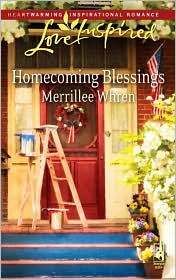
Recently I took a trip to the North Georgia mountains, the setting for my book,
HOMECOMING BLESSINGS, which comes out in April 2009. I was nearly finished with the book, but I felt that I needed to make a trip there to get a better idea of the small towns in the area, even though I had visited there many years ago. I was certainly glad I made the trip. Besides reaffirming some of my memories, it also reminded me of the hilly terrain, even in the towns. In the story, I have my hero and heroine stop for lunch in the little tourist town of Helen, Georgia. It is filled with all kinds of shops. I have my hero buy the heroine a small gift. While I was writing that scene, I had no idea what he was going to buy her, even after perusing the shops on the internet. So when I visited Helen with a friend, we went through the shops with the specific mission of finding something the hero could buy. The trip was worth finding the perfect gift. The story revolves around a mission that is restoring old houses in the area. So I took pictures of some old houses. Here's one.

I like to combine an in-person visit along with the information I find on the Internet. Many times I research the area on the Internet to find places I want to visit. For instance, for this last trip I checked out all the tourist information on the North Georgia mountains and discovered that a trip to Amicola Falls was a must. So before you go, make a list of places you want to visit and things you want to learn.

When I travel for research, if at all possible, I try to combine it with a vacation or a visit with friends or family. Even though I may not be able to do that, I still find that actually visiting a place can be helpful in making the story setting come alive in my own mind as well as on the pages of a book. Traveling for research can even trigger ideas for future books. Take pictures, collect all the free stuff and save it for a future book, and don't dismiss any opportunity to do research, even if the trip involves visiting relatives or going to a wedding. Make the most of any trip you make.
Labels: books, Research, travel, writing
This week on the Wet Noodle Posse Blog


We'd like to wish all our readers who are moms, "Happy Mother's Day!"
This week we continue with our month-long topic of Research.
Monday, May 12th: Diane Gaston "Using Google Maps"
Tuesday, May 13th: Delle Jacobs "Write What You Don't Know"
Wednesday, May 14th: Merrillee Whren "Traveling for Research"
Thursday, May 15th: Guest Blogger Kalen Hughes "Historical Research--Clothes"
Friday, May 16th: Q&A (Readers ask questions about research. Noodlers answer)
Post a comment and get into the drawing for a gift certificate!
Labels: Delle Jacobs, Diane Gaston, Kalen Hughes, Merrillee Whren, Research
National Parks—Research Treasure Troves for Writers
 National Parks are a great resource for writers, particularly those writers interested in history, like me. My family and I have spent many a vacation touring a variety of national park battlefields—Vicksburg , Gettysburg (my daughter lasted one hour into the audio tour before meltdown occurred), Chalmette, Yorktown and King’s Mountain—and visiting sites registered with the National Trust for Historic Preservation. http://www.preservationnation.org/
Not only do most national parks offer short films that provide perspective on the historical significance of the park, some also have re-enactments, walking trails or maps with audio tapes or CDs, exhibits that include period clothing, armaments, and information on what the soldiers ate and what daily life entailed. One of the best national battlefield parks we visited was Yorktown. Visitors there can see how the soldiers cooked, how doctors treated their ailments, what tools they used, and how they fired cannons.
While you’re visiting a national park, don’t skirt around the gift shop. The gift shops carry maps that might prove useful, money samples, paperdolls (source for clothing) and a huge selection of non-fiction books, including published diaries of the people who lived nearby, cookbooks, and pamphlets that you might not find elsewhere. Some even carry books or pamphlets that share local legends and ghost stories—a personal favorite.

Diaries, in particular, are a great resource for how people of a certain time thought, what was important to them and what sort of language they used. Here’s a sample of journals I’ve picked up
at national parks: Laurel Thatcher Ulrich
A Midwife’s Tale: The Life of Martha Ballad Based on Her Diary 1785-1812, Frances Anne Kemble
Journal of a Residence on a Georgian Plantation in 1838-39, Richard N. Coté
Mary’s World: Love, War, and Family Ties in 19th Century Charleston. Pamphlets I’ve purchased: Patricia B. Mitchell
Civil War Plants and Herbs, Leonard V. Huber
The Battle of New Orleans As It Was in 1814-1815,
The Life of Jean Lafitte, the Famous Pirate of the Gulf of Mexico (The Nora Anglia Press), and Kay Moss
A Backcountry Herbal of Plants Both Wild and Cultivated Likely to Be Found in Dooryards and Kitchen Gardens in Frontier Communities of the 18th Century.
Additional Suggestions:
While on vacation, look for small museums. They tend to have publications you might not find elsewhere like Nanette M. Bahlinger’s
It Is a Wonderfully Lovely Place: Jekyll Island as Seen Through Kate Brown’s Fresh Eyes. The Letters of Kate Brown, February-March 1917 at the Jekyll Island Museum and Sister Xavier’s
“Value of Herbs” at the Old Ursuline Convent in New Orleans.

Also, take the time to visit places with live history exhibits like Williamsburg or the Rural Heritage Museum in Somerset, PA, where you can get a more realistic feel of what life was like in the time period and how people made things from bricks to wigs, shoed horses, and what the people planted in their gardens. The advantage to live history is that the people who work there are steeped in the history. I spent forty-five minutes asking the tailor in Williamsburg questions that would have taken me days to research.
Share any additional tips you might have! I'd love to hear some of yours.
Labels: national parks, Research
It's so difficult to get good (research) help

I've been interested in servants for years, and when I started writing historicals was always very conscious of how the masters of the house interacted with the servants. As an essentially lazy person, I figured out quite early on that servants were tremendously useful to fix plot devices--as the ears and eyes of the house they learned a lot about the people "upstairs." And they weren't always tremendously discreet, although of course employers wished they were.
I was also a little alarmed to read in NYT bestsellers about Regency households where the front door of the house was opened by a female servant (
wrong!) wearing a late Victorian uniform (
wrong! wrong! wrong!).
So I started reading, and before I go any further, let me mention that I'm presenting my workshop
Doddering Butlers, Pert Housemaids, and Faithful Retainers: Busting the Servant Myths at Nationals at San Francisco (on Saturday August 2). If you have any specific questions, ask and I'll do my best to answer, here or off list.

One book I found tremendously useful--it is, in fact, one of those books that make you think you've died and gone to heaven--is
The Complete Servant by Samuel and Sarah Adams, originally published in 1825. It has all sorts of amazing information like how many servants a household would employ, what they were paid, what their duties were, how to clean various things, recipes, menus, what vegetables were in season each month, and so on. Wow.
Everything you'd need for the Georgian/Regency household, right?
The Complete Servant is a fine example of how a book should be taken with a pinch of salt. The Adamses were career servants whose vision of the ideal household probably was not based on fact--as perfectionists who had risen to the top of their profession, they knew how things
should be done and this is what the book is about, not how things actually were.
From other reading, I found that households, job descriptions, and master-servant relationships varied tremendously. The Adamses themselves gave some household "rules" that I'd hesitate to use in a book:
- The kitchen maid should make the stablemen's beds (well, I suppose someone has to do it)
- The housekeeper was summoned to carve the meat at dinner
- The valet waited at table behind the master's chair (dinner, according to the Adamses, is all hands on deck)
- One of the butler's tasks was to convert white wine into red
 The Complete Servant
is a fabulous resource, but you can't rely on just one book. In my presentation I use a lot of its material, but I also use other sources to balance it out: cartoons, for instance, like this typically rude one by Rowlandson. (There is a site, searchable by keyword, of Georgian prints and cartoons, at Yale's
Lewis Walpole Digital Collection.)
I've also found servants' memoirs and servants' portraits very useful--the National Portrait Gallery in the UK had an
exhibit on servants a few years ago and published a wonderful book of paintings and essays. Many of the historic houses in England are now featuring exhibits on servants and if you're planning a trip you'll be able to visit below stairs. And read between the lines in favorite books to see what roles the servants play--Mrs. Fairfax the housekeeper in
Jane Eyre, for instance or the brilliant choreography of servants/masters in
Mansfield Park.
Questions, comments?
Labels: Janet Mullany, Research, servants
This Week on the Wet Noodle Posse

Monday, May 5th: Terry McLaughlin "Setting--A Quick Trick"
Tuesday, May 6th: Janet Mullany "Researching and Using Information on Servants"
Wednesday, May 7th: Maureen Hardegree "National Parks--Treasure Troves for Research"
Thursday, May 8th: Esri Rose "Your Town as a Book Setting"
Friday, May 9th: Q&A (Readers post questions. Noodlers answer)
Don't forget each post this month provides you with a chance to win an Amazon gift certificate!
Labels: Esri Rose, Janet Mullany, Research, Terry McLaughlin
May is Research Month!
 Research.
Does the word fill you with
dread?

Or does it fill you with wild joy because you love research so much you don't actually have to write while you're doing it--are you in fact a research junkie? Do you find that you look up one fact online and come back to consciousness hours and many mouse clicks later, dazed and confused?
We can help.
This month, Noodlers and their friends will talk about their areas of expertise--not only what they know but
how they found it out, with tips on how to research what you need to know.

And the range of topics is mindboggling--everything from places, jobs, travel, genealogy, horses, and clothes to disposal of dead bodies. (Well, heck, it's something everyone should know...)
Our guests this month include
Darlene Gardner,
Pam Rosenthal,
Loucinda McGary,
Kalen Hughes,
Jeanne Adams, and
Nancy Northcott.
As usual, there's a prize offered to a random commenter--an Amazon gift certificate. So we hope you'll visit often, make yourself at home, and ask as many questions as you like.
Let's share our knowledge and research experiences!
Labels: Darlene Gardner, Jeanne Adams, Kalen Hughes, Loucinda McGary, Nancy Northcott, Pam Rosenthal, Research
What to Research Before You Write the Book

We’ll be doing a whole month on research, but I wanted to touch base on this subject, because we often can use the need to do research, especially historical research, to keep us from moving forward. Either we detour into spending all our time reading research material or we are so daunted by what we need to know, we sit and tear our hair out.
Guess what? You don't need to know everything. All you need is:
1. General Knowledge.
If you are writing a historical, read a general history of the era in which you are setting the book, just to make certain you understand enough about the era to make your story credible. You don’t want your Regency characters to hop on trains, for instance, or to take secret photographs in dingy gaming hells (that notorious book really made it to print!).

Writers of contemporaries have an easier time, because we all have general knowledge of our current era, but if you are writing a contemporary, you should read a little on whatever particular “world” you are using for your story. For example, if you are setting your book in a dairy farm, you ought to know a little about what a dairy farm is like. Not detailed knowledge, but enough to know if your story will work there. Or if you are writing about lawyers, you need to know a little about law firms.

For the Regency, a great overview of the era is
Our Tempestuous Day by Carolly Erickson, but you can also look in history books, on Wikipedia, or, my favorite,
Answers.com.
2. Knowledge of the events of your time period.One of the first things to research is what happened around the time you want to set the book. As a historical writer, one of the first things I do is check a historical timeline. Here’s a fairly detailed one:
http://timelines.ws/ but there are many others out there. Just do a Google search.
You want to check a timeline to take into account any historical events that would impact on your story. For example, in the book I just finished, I had to take into account that Queen Charlotte, wife of King George III, died during the time my story was set. That was a big historical event.

The Contemporary writer also needs to keep in mind important historical events. For example, if you set your story in New Orleans, you can’t completely ignore the hurricane and its aftermath. If you set your story in Boston, you have to be aware of the Big Dig.
3. A working knowledge of whatever your story is about.

When you are beginning to write a book, you really just need to know enough to know if your story will work, just enough to start. In The Vanishing Viscountess, all I needed to start was a general idea of the British legal system (very general-just enough to know if my story would work. Later I had to research in more detail), where a ship crossing the Irish Sea would embark and land, and if they ever had shipwrecks there.

That’s it!
For the rest, research as you go along. Find out the details when you need them. The information will be fresher that way and you won’t have spent time researching something you thought you needed, but didn't.
You can also use these guidelines when you are stuck in the middle of the book on some needs-to-be-researched fact. Don't get bogged down in it. Only spend time finding it if the rest of your book might be affected by it. If you know it won't, then just mark the spot, push on, and come back in a later draft to find that certain detail.
The important thing is to not let anything keep you from starting--and finishing--the book.
More on Research in May....
What sorts of research problems keep you from pushing forward?
What strategies do you have to keep the need to research from stopping your progress?
.
Labels: Diane Gaston, Research, The Vanishing Viscountess
Research in Williamsburg by Diane Gaston
Next month in The Wet Noodle Posse ezine, I write about using the internet for research. I’ve also written about using
travel for research In that article, I talk about how advantageous it is to travel to the place where your story is set, but wherever you travel, you can learn something that helps in your writing.

This past week I went to Jamestown and Williamsburg, Virginia, with my writing friend, Amanda McCabe (
A Notorious Woman, in bookstores this month). I write Regency Historical Romance, stories which take place in the early 1800s, in the time of Jane Austen, of Byron, of the Napoleonic War, so visiting a 1607 settlement or a Colonial city was not entirely relevant to my writing.
But I learned useful things anyway. Here are some of them:

1. (from Jamestown) Ships didn’t sail directly across the Atlantic Ocean from England to America. They had to sail south to the Canary Islands, to follow the wind to carry them across the ocean. It took them five months. The return trip to England had more favorable winds and a shorter northern route. This is something I’d never thought about. Now if I have a character sailing across the ocean, I’ll know to research the route!

2. (from Jamestown) John Smith could be a model for a romance hero. He had an exciting history even before Jamestown. He fought duels, was captured, enslaved, escaped. He was considered such a troublemaker Christopher Newport wanted to execute him. He was instrumental in befriending the Algonquian tribe, even though Pocahantas may not really have thrown herself across his body to save him. John Smith wrote extensively about his exploits, but he did have a tendency to embellish.
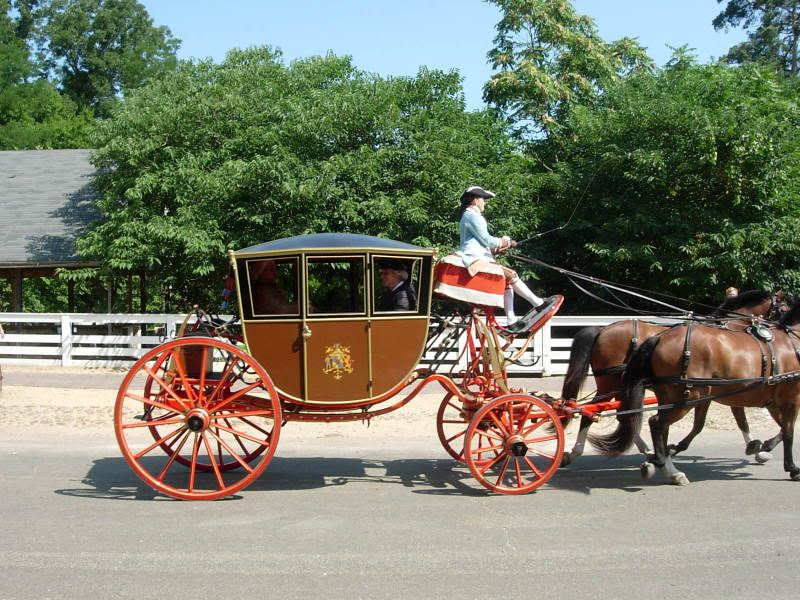
3. (from Williamsburg) I heard the sound of the horses and carriage, a rhythmic sound on the packed earth of the streets. I’ll know I’ll use that sound.
4. (from Williamsburg) We visited the
Printing Press and the pressman was willing to answer lots of questions. One thing about printing newspapers in that time period and even as late as mine, the ink on the papers needed to dry. I had never thought of this and I needed to know it for my latest book which has a printing press in it.

5. (from everywhere) Just watching people can give you ideas. For example, in Williamsburg I noticed a somewhat bratty little girl of about five years who said no to everything. I thought of how unhappy the child seemed. There is a germ of an idea for a character in that little girl, I think.
That’s what we do as writers. Keep our eyes, ears, and noses open wherever we are. You never know when an idea will strike.
Where do your best ideas--about anything--strike you?
Labels: Amanda McCabe, Diane Gaston, Jamestown, Research, Williamsburg