Creating Your Villain Using Facts About Real Men

By Dr. Debra Holland
I teach an online class for romance writers called "Understanding Men." I thought posting about "bad" men might be helpful.
In cultures worldwide, the things that trigger male violence in abusive relationships are surprisingly consistent.
1. Women disobeying
2. Women arguing
3. Her questioning him about money
4. Her questioning him about girlfriends
5. His belief that his meal isn't ready on time
6. Her refusing to have sex
7. He suspects her of infidelity
Violent men often have low self-esteem, feel insecure about their relationships, and use intimidation and anger as a way to control their partners. They feel victimized by others/society/government/the boss/women and don't take responsibility for their problems. Alcohol is often a problem, and the violence escalates when he is intoxicated.
A good book for developing both villains/ex-husbands/boyfriends you don't want the heroine to keep is Why Does He Do That? Inside the Minds of Angry and Controlling Men, by Lundy Bancroft. This is also a good general knowledge book because if you haven't dated a man like this in your past, one of your friends or relatives has. And I sincerely hope you're not with one now.
I was halfway through the book when I picked up a category romance by a friend of mine. To my dismay, the hero was EXACTLY like the men in the book. I couldn't finish reading the romance. If this had not been a friend's book, I would have vowed never to read another of this author's books again. Be careful of perpetuating the myth that angry, controlling men change out of love for the heroine. They don't.
Have you read romances where you felt disturbed by the hero's attitude and behavior?
Labels: angry and controlling men, Debra Holland, understanding men, villains
Villains: How Much Insanity Is Too Much by Diane Gaston

A reviewer of one of my early books said that my villain was stereotypical. She was right. He was just too over the top. Too insane. Too cliche.
As a former mental health therapist, I took the criticism to heart and rethought my depiction of villains. Maybe it wasn’t a good idea to make them too insane.
Most villains are at least sociopathic. (another word—psychopath; technically—antisocial personality disorder). Look
here for a great site describing a sociopath.
Briefly, a sociopath is a person who has no regard for right and wrong, who may often violate the law and the rights of others, lands himself in frequent trouble or conflict. A sociopath may lie, behave violently, have drug and alcohol problems, and may not be able to fulfill responsibilities to family, work or school. (
Mayoclinic.com)
This is a good foundation to craft a villain. The temptation is to stick only to the symptoms. This makes the villain more of a caricature rather than a three dimensional person.
So here’s my fix.

Put the villain under the same scrutiny as the hero and heroine. Give him his own Goal, Motivation, Conflict. Create a backstory for him. Give him some redeeming features. Make him like a real person. Three dimensional.
In reality sociopaths can look like the rest of us. They can enter reputable professions, attend church, marry, have children. But within a normal looking life they can be highly egocentric; they can lie, steal, betray.
So, what do you think? What do you think makes the best fictional villain? How much sociopathy is too much?
(Come back Wednesday, Mar 25, to read my take on Heroes—How Much Damage Is Too Much?)

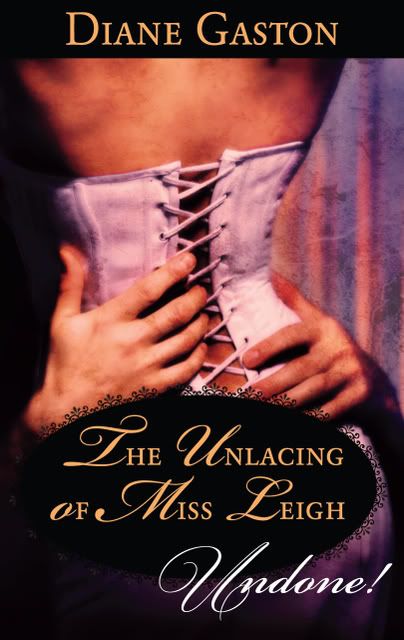
 Visit Diane’s website for a sneak peek of her eShort Story, The Unlacing of Miss Leigh, and her novella, Justine and the Noble Viscount, in THE DIAMONDS OF WELBOURNE MANOR. Diane’s contest is still on, too!
Labels: Diane Gaston, villains
This Week on The Wet Noodle Posse

March Madness continues with the following blogs:
Monday, March 23rd: Diane Gaston Villains: How Much Insanity Is Too Much?
Tuesday, March 24th: Lee McKenzie The Mad Writer’s Tea Party
Wednesday, March 25th: Diane Gaston Heroes: How Much Damage Is Too Much?
Thursday, March 26th: Delle Jacobs TBA
Friday, March 27th: Q&A
Labels: Delle Jacobs, Diane Gaston, heroes, Lee McKenzie, mad writers, tea parties, villains
Bad on Paper -- Writing Good Villains, by Esri Rose

I can’t count the number of times I’ve been reading a book, enjoying it reasonably well, when all of a sudden the villain enters and the story takes off with a jet-engine roar. Villains give the protagonist a clear obstacle and the readers something to root against, whether it’s a murderous loon or the corporate soul-grinding of Bill Lumbergh in Office Space. (“Riiiiight…”)
Of course, one of the scariest villains is the implacable psychopath. We don’t know what drives him. We can’t hope to reason with him or predict his behavior. But I think that for the seriously unbalanced villain to work well, he has to be the main focus of the book; always behind the door or on the other side of the page. I’m going to focus on the non-horror-genre villains in plots that don’t involve power tools.
An interesting villain avoids the following: clichéd dialogue, no clear motivation for his/her actions, and a character so unrelievedly black, it’s the shade of cartoonist’s ink. A villain can be funny, sympathetic, even sexy. So what makes him bad? The answer is absolute selfishness. A true villain does not put anyone before his own desires -- not his mother, or the fluffy dog, or the curly-haired child. You can reason, you can plead, but a villain acts solely in his own interest. The worst villains know they should take others into account, but (sigh), it’s just not handy. The rest of us depend on the fact that most folks have altruistic tendencies – it’s an evolutionary benefit for a social species. Take that trait away and the villain is as alien as something with tentacles and six eyes.
What has cut the villain loose from the rest of humanity? It should be something the reader can comprehend, maybe even relate to. Almost as scary as meeting a villain is wondering if we could become one. Lack of love during childhood, abuse, fanatical beliefs, brainwashing, and willful ignorance are all great fodder. I find the latter particularly terrifying. If you could just explain things, you might be able to stop the bad thing from happening... Bang, you’re dead. Either the villain knew his ignorance served his purposes, or your explanation was going to cut into his favorite show.
Your villain’s motivation and goal are as important as those of your protagonists. I have to confess that I don’t find revenge a powerful motivation, in and of itself. “You messed with my father, so now I’ll mess with you.” Meh…it’s too abstract. It’s not easy to kick over the traces and be bad; you run a lot of risks. Now, if the revenge is an excuse for concrete benefits – the will is changed to enrich the villain, the dead hero’s wife can now be had – then I’m on board. Only a real slimeball justifies selfish behavior by saying the victims deserved what they got. That’s what you’re shooting for – slime. And remember, a determined villain is a scary thing. Don’t make his badness a kind of hobby. Your villain should risk terrible retribution. If the stakes aren’t serious, your reader won’t take him seriously.
Once you’ve developed the motivation of your villain, it’s time to jerk your reader around a little. We fear people who are absolutely selfish. We also fear not being able to tell who those people are. Make your protagonist question her judgment. “Is he as bad as people say? I find him kind of charming.” When the mask slips, the truth will be that much worse. It’s the creepy feeling you get while watching the neighbor scratch his head and say, “He seemed like such a nice guy.” The killer’s mom tearfully insisting, “My son would never do that.” This is also the reason traitors are so loathsome. They once believed what we believed – validated our life choices. Now they’re willing to betray us for something we can’t even comprehend. And we were fooled? Traitors make your protagonists powerfully angry – at themselves.
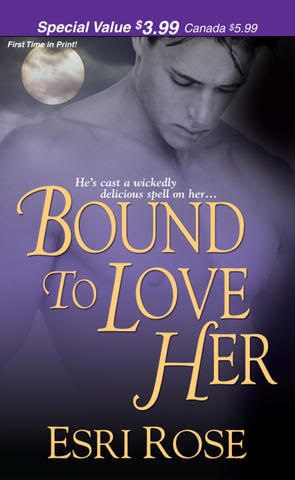
Finally, dialogue is key to keeping your villains real. Effective villains believe they are the good guys, and they do their best to come across that way -- otherwise, they’d have trouble doing what they do and not getting caught. If they can woo people to their point of view by sowing doubt or getting sympathy, they will. Here are three dialogue snippets from Fellseth, my villain in Bound to Love Her.
1: “Elves don’t just wither up like the Wicked Witch of the East, you know. When your people broke ground for luxury homes on my land, I knew it was going to be a long, drawn-out death.”
2: “The irony is, all the elves in existence could survive just fine off dark energy. It’s going to happen anyway. Humans can’t be denied. You could think of dark elves as a kind of evolutionary offshoot. In the end, we’ll be the only ones left.”
Sounds reasonable, even persuasive -- right up until he shows his true colors.
3: “One more outburst like that, and I’ll shoot her ear off as a friendly warning.”
One last word about villains. If you make them both selfish and sympathetic, the reader will feel conflicted about their necessary destruction. Your narrative tension will shoot through the roof, and everyone wins – except the bad guy.
Who are some of your favorite villains, either to read/view, or to write?
Esri Rose’s upcoming elven romance, Bound to Love Her, will be available May 8th.

Labels: Bound to Love Her, Esri Rose, villains, writing