This Week on the Wet Noodle Posse

Congratulations to all those readers who've finished their Golden Heart entries!!!
Here's what we have planned this week as we complete our Writing Challenges month:
Monday, November 24th: Theresa Ragan "It's Time to Brainstorm!"
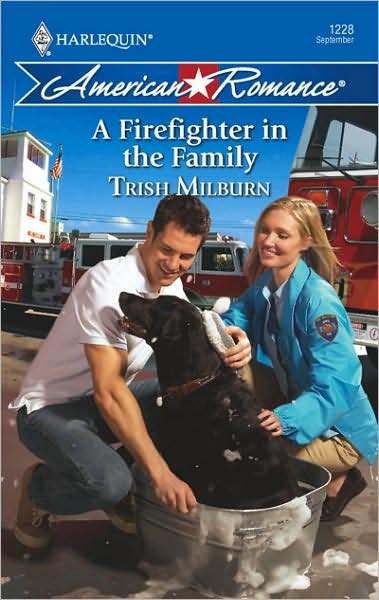
Tuesday, November 25th: Trish Milburn "Writing While on the Road"
Wednesday, November 26th: Guest blogger Paul Bigler "Phoebe on Writing Fast and Furious"
Thursday, November 27th: Happy Thanksgiving
Friday, November 28th: Q&A (Readers ask questions; Noodlers answer)
Labels: Paul Bigler, Phoebe, Theresa Ragan, Trish Milburn, writing challenges
Feedback: Five Steps to Separate the Wheat from the Chaff

Yesterday, Dianna wrote about the speed bumps that challenge us. Today, I’m focusing on the challenge of feedback. What advice should you listen to? What should you ignore? How do you even make those determinations?
Take a Little Time
First and foremost, you must distance yourself from the feedback. Don’t do anything to your manuscript until you feel you can read the feedback objectively. For some people, that’s a week, for others it’s twenty-four hours, for some it’s a whole month.
Easy Does It
Start with the easy stuff—grammar and mechanics or making your opening hook more powerful. If someone providing feedback about your work has marked errors or has made suggestions that make you nod your head in agreement, it would behoove you to fix them. Before doing so, however, make sure those mechanics corrections are in fact correct. Every writer should have a dictionary and handbook that provide basic instruction on grammar and mechanics. If you haven’t saved your handbook from Freshman English, Strunk and White’s Elements of Style or Browne and King’s Self-Editing for Fiction Writers are good choices. Get in the habit of checking for these sorts of mistakes prior to mailing out queries or contest entries. Make your own personal check list. For example, if you have a tendency to use fragments indiscriminately, you should review the section on writing complete sentences and check your sentences for subjects and verbs. If you have used a fragment for stylistic purposes, does it fulfill the guidelines for appropriate use? Have you used it to add emphasis, speed up the rhythm or create realistic dialogue? If your openings tend to be lukewarm, spend some time reading openings that are engaging, then try to apply what you’ve gleaned to your opening hook.
Ignore the Snide
Some people will tell you to sift through rude comments. I’m not one of those people. Maybe that comes from living in the south for much of my life, or maybe I’ve reached an age where I don’t want to waste my time on negativity. Besides striking a blow against your self-esteem, rude comments can sometimes steer you in the wrong direction. If someone cannot be professional while providing feedback, then he or she has a problem. That problem hinders his or her ability to see your work objectively. I’m not talking about a tough critique where someone explains why they weren’t able to connect to your heroine; I’m talking about a snarky one where the person critiquing your work tells you your heroine is stupid and implies that you are, too.
Isolate Patterns in the Comments and Focus on Them When Revising 
If one person claims that you have a plotting problem, yet four others praise your plotting ability, you most likely do not have a problem with your plot. If half of all the people reading your romance novel tell you that they’re having difficulty sympathizing with your heroine, that’s a pattern you can and should address. If several people tell you your chapter hook needs a little more oomph, add some.
Weigh the Credentials of your Critiquers
Everyone who reads your work (other than the snide one) has the potential to provide valuable feedback. A reader who is not a writer or editor or agent can tell you whether your characters are likeable, whether the pace is too slow, and whether or not the story makes sense. This person, however, may not be as reliable when it comes to suggesting how to fix something that isn’t working. Experienced writers, agents, and editors have their pitfalls, too. Their comments are most likely valid, but these professionals may see your work through the filter of their own writing, what is currently selling, or what they tend to buy for their publishing house. So ask yourself, did you intend to create a story that would sell to this house or make this agent want to represent you? If the answer is yes, then you should listen. If the answer is no, then you need to ask yourself if the suggestions ring true to your voice and vision of the story. If yes, then fix. If no, then submit to other agents or houses or contests.
What are your thoughts about dealing with feedback? What are some other steps we can add to the list?
One of the most popular writing challenges writers get excited about is Book in a Week. Tomorrow April Kihlstrom will be joining us to blog about BIAW and the Power of Fun. Don’t miss it!
When Maureen Hardegree isn’t blogging for the WNP, you can usually find her working on her latest work-in-progress, sewing, or writing the occasional press release for the Northeast Atlanta Ballet. Her humorous stories with a southern accent are included in the BelleBooks’ Sweet Tea collections and Mossy Creek series. http://www.maureenhardegree.com/
Labels: contest feedback, writing challenges
Writing Past Speed Bumps by Dianna Love

Book in a month, three months or a year…anything is possible. Success depends on if you let speed bumps slow you down or not.
What’s a speed bump? That moment when you run into something you can’t figure out and stop writing. When you spend more time fingering your keyboard than actually typing until you finally get up and walk away to…make a mad dash into the kitchen to load those three dirty cups into the dishwasher or decide you really have to go retrieve today’s mail this minute or you’re sure a really important email has just popped up in your inbox.
In other words, it’s whatever causes you to lose momentum and stumble on your story. We all stumble on stories, but it’s what you do next that will determine if it is just a speed bump or an all out road block. I’m a plotter by nature, or probably more of a hybrid since I don’t clear a wall in my home to create a flowchart and tend to start typing on a story the minute it begins to flow while I’m plotting. I do like to have an idea where the story is going when I start just to keep me from stalling out when my creative juices are flowing. But even with a plot developed, the process of writing is a creative and changing one.
You can be a plotter or pantser and still hit that point where “something doesn’t feel right” or you’re all of a sudden “not happy with what how characters are behaving.” Even if you know where your story is going surprises jump out of nowhere as wonderful gifts that enrich your story, but they can also cause a kink down the road.
Try a couple simple exercises. The easiest way to continue being productive is to jump ahead to the next scene you know and continue writing, but I realize this really plays havoc on linear writers who can only continue writing in an orderly way. Even so, we normally know one or more scenes further into the book that will need writing at some point. Open a new file – away from all that orderly writing – and just type the scene. One thing that will probably happen is new ideas will pop into your mind as you’re typing that may break your mental log jam on an earlier scene. If not, when you finish the scene, think backwards on what would be the set up for that scene and consider more than one way to get to that point.
If something just doesn’t feel right or if you’ve hit a current scene that is starting feel like “filler” look at the three prior scenes and ask these questions of each one:
~ What is the purpose of this scene (the answer should be something significant that affects the character and/or the plot)?
~ What changes in each scene from the opening line to the last paragraph?
If you have a hard time answering that about any of these three scenes this is likely the point when your story started to jump track. Consider pulling that scene out of sequence, going back to the last one that “worked for you” and write down three possible ways you could move ahead to reach the next unwritten scene you have in mind. Consider using a different setting that would create more problems or conflict for the characters, or throws at least one character out of his/her comfort zone.
If your character is not being active or not getting the job done in the story, try the quickest fix of switching POVs (if it is in third person). Yo u’d be surprised at how many times that solved scene problems for me.
If there are more than three characters in a scene, try writing it without one of them. If there are only two, try bringing in another character – especially an unexpected one – that will up the conflict, because “lack of conflict” is at the center of most scene and story issues. One common "type of scene" that loses story momentum – which leads to speed bumps – is when two people are driving somewhere to basically put them together for a bit to talk (and dump information), but with no real purpose beyond the dialogue. If this is the case, cut it and make the drive “off stage” then find a better place to weave in that information in a more active way. Or sometimes it’s a meal where the only obvious purpose is to bring people together in one spot, but again – no real conflict or point to the scene.
Keying in quickly on the problem you’ve run into gives you the power to fix it and move on. The idea to being productive at writing is to continually “brainstorm” as you write. A speed bump is a sign you are not allowing your creative side freedom. You can fix a problem if you can identify it, because you ARE a writer. All you have to do is allow yourself the leeway to recreate something that truly is not set in stone unless you let it be.
Speed bumps are when we get in our own way. When we are so focused on everything unfolding only one way in the story that we prevent our creative lobe to function at optimum level.
So give yourself a writing challenge for at least a week to just burn through some pages and you’ll probably be surprised at how much you can do when you open the valve to those creative juices. And when you do push through the tough times, don’t forget to do something really nice for yourself…because you deserve it!
In the meantime, what do you find helps you stay on track the best and do you reward yourself for writing past those speed bumps? If so, what is your reward? :)
Don’t miss Maureen Hardegree's “Feedback: Five Steps to Separate the Wheat from the Chaff”on Tuesday, November 18th.

NYT Best Seller Dianna Love writes romantic thrillers and urban fantasy.
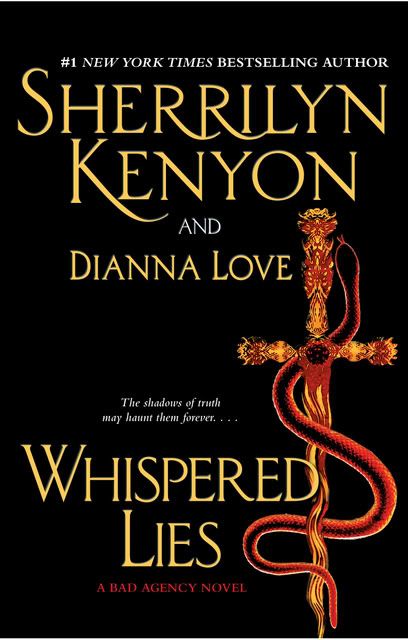
Her next release is an urban fantasy novella - MIDNIGHT KISS GOODBYE - in the Dead After Dark Anthology (December 2, 2008). Dianna's upcoming thriller is WHISPERED LIES (Pocket/May 2009). And watch for the nonfiction book she and Mary Buckham have coming out June 2009 - Break Into Fiction®: Power Plot Your Novel.
For more on Dianna visit www.AuthorDiannaLove.com
Labels: Dianna Love, novel writing, Sherrilyn Kenyon, writing challenges
This Week on the Wet Noodle Posse

Congratulations to all those readers and noodlers adding to their word count or revising last week (revising counts, too!). We continue our discussion of Writing Challenges this week with the following blogs:
Monday, November 17th: Dianna Love "How to Write Past Speed Bumps"
Tuesday, November 18th: Maureen Hardegree "Feedback: Five Steps to Separate the Wheat from the Chaff"
Wednesday, November 19th: April Kihlstrom "Book in a Week--The Power of Fun"
Thursday, November 20th: Shirley Karr "Plotting as a Team"
Friday, November 21st: Q&A (Readers Ask Questions, Noodlers Answer)
Labels: April Kihlstrom, Book in a Week, Dianna Love, Maureen Hardegree, Shirley Karr, writing challenges
Mini challenges

So, you're ready for a writing challenge, but for whatever reason Book in a Week or NaNo is too overwhelming. Does this mean you have to give up the idea of writing challenges? No!
I'm a fan of the mini-challenge, just like I'm a fan of breaking up big projects into small, manageable chunks. If you have limited time, a short attention span or just want to dip your toe into the world of writing challenges, try some of these ideas on for size.
1. Get a kitchen timer, and set it for 15 minutes. Then write as much as you can (without stopping to edit) before the timer goes off. You can do this for bigger chunks of time too -- 30 minutes, an hour.
2. Call or e-mail a writing friend and challenge her to a writing duel. Set a start time and say you'll write for 30 minutes, an hour, whatever. Then you check back in with each other to see who got the most pages. You might even want to involve a friendly wager, like the one with fewer pages/words has to send the winner a box of her favorite cookies or chocolate.
3. Challenge yourself to write only one page per hour on a day when you're home all day. Once you've written that one page, you can do anything else you want until the beginning of the next hour. If you write fast, you can get in a page and an episode of your favorite show each hour! :) At the end of a normal, eight-hour work day, you'll have eight new pages. And you might have cleared off your TiVo and cleaned the house too.
4. Ever wonder how much you could write in a day if you had nothing else to do and you really put your nose to the grindstone? Why not find out? Clear your schedule for one full 24-hour period. Send the hubby and kids off to spend the day/night with Grandma and Grandpa. Check into a hotel room for a day. Whatever you have to do to be truly alone. Then literally sit at the computer and do nothing but write. No e-mail, no YouTube vids, no reading the Internet at all. Have your day be all about writing except for hourly breaks to go to the bathroom, stretch, eat, get some water to drink. We don't want anyone getting a bloodclot in her leg from sitting too long, but it's an interesting challenge to see how much you can really do if you clear everything else away.
You might be surprised how much you can write using these and other self-challenging methods. Most people love to rise to a challenge and win, even if the challenge comes from within.
So, anyone try these methods before? What were the results? Have any other ideas for mini challenges?
Labels: writing challenges
This Week on the Wet Noodle Posse

Please join us as we explore the topic of Writing Challenges.
Monday, November 10th: Priscilla Kissinger "Setting Personal Goals/Challenges"
Tuesday, November 11th: Trish Milburn "Mini-Challenges"
Wednesday, November 12th: Delle Jacobs "Why Can't We Stop Procrastinating?"
Thursday, November 13th: Karen Potter "100 Words for 100 Days Challenge"
Friday, November 14th: Q&A (Readers ask questions; noodlers answer)
Have a productive writing week!
Labels: Delle Jacobs, Karen Potter, Priscilla Kissinger, Trish Milburn, writing challenges
Q&A

Since we don't have any November releases, I'd like to get Q&A going by asking readers and noodlers alike how they're doing with NaNo?
Labels: NaNo progress, writing challenges
Making Non-Writing Time Work for You

I don’t know about the rest of you, but my biggest writing challenge, even though I am a stay-at-home mom is lack of time. I’m always wishing there was one more hour in each day for writing. If only I could get hold of some of that high speed internet juice our local cable company uses as an advertising gimmick, I’d be churning out the novels in record time. Sad but true, I cannot make a day longer nor can I approach superhero speeds as I go about my routine. But there are some things I can do to milk each minute for its optimal writing potential.
Exercise
A couple of years ago, I made a commitment to exercise five times a week to improve my health and keep the width of my butt from expanding exponentially, which it would do if left on its own. While I walk, if I’m not socializing with the other ladies (yes, I do that on occasion), I’m working out the next scene in my WIP, contemplating why my plot hit a brick wall, or I’m storing sensory details for future use. Some writers who exercise even attach their laptops to their treadmills and write while burning calories. It can be done.
If you do nothing else while you exercise, take in the details around you in the gym or on the walking path at your local park. What do the runners sound like as they lap you yet again? Do they huff and puff up the hill, but their stride and breathing evens out on the flat stretches? What are the bird and insect sounds you hear? They’ll be different depending on the time of year due to bird migrations and insect life cycles. In Georgia, this morning, the temperature hit the low fifties, the sun was bright in a deep blue sky, and I heard crickets in the tall grass. This summer, when I was sweltering in the heat and humidity, I heard cicadas in the trees. What about the squirrels scrambling up tree trunks? One had a scraggly tail. Was that the scree-ee of a hawk? Brown leaves crunch and crackle underfoot, but the bright yellow ones, newly blown off a nearby tulip poplar crush with barely a sound. While walking, you can use a digital recorder so you won’t forget the details you might want to use at some point in some book. Don’t worry about people thinking you’re weird as you speak into your recorder. I cannot tell you how many people I see with Blue Tooth gear in their ears looking like they’re talking to themselves while walking, shopping, or driving. No one thinks they’re insane.
One advantage to thinking through the scenes I plan to write while I’m walking is that when I get home to my office, I’m ready to make the most of the time I do have to type uninterrupted.
Carpool Lane
Ahh, the joys of picking a child up from middle school and having to arrive forty minutes prior to the bell, so as to be near the front of the line. Achieving a spot at the front not only ensures that I get dancer daughter to ballet on time, but it also gives me a block of minutes that I can use in a writing related activity. Often, I print out a scene or chapter that I need to revise. Revising hard copy is great in the car. If I don’t have hard copy to work on, I take out my spiral notebook and work on the next scene in my WIP. Other writing moms I know use alpha smarts or laptops to do the same thing. Do turn off the cell phone, though! Make the most of this windfall.
 Bedtime
Most of us go through some sort of ritual before hitting the sack. Why not add in writing one more page or one more paragraph to your WIP, after flossing your teeth and moisturizing your face? I have to credit writer Stephanie Bond for this suggestion. She mentioned it in one of the workshops she gave at the Moonlight and Magnolias Conference, and it made sense to me. Plus, it helps eliminate the guilt you might be experiencing if you have a day where you had to be away from the computer. You can console yourself with writing a little something before going to sleep.
How about you? Are there places in your day where you can eek out more writing time? What are they? Any tips you’d like to share?
Maureen Hardegree writes southern short stories for Belle Books' Mossy Creek and Sweet Tea series. Look for her newest short story, A Tale of Two Kitties in the seventh Mossy Creek book out this winter Critters of Mossy Creek.
Labels: Maureen Hardegee, time management, writing challenges
NaNoWriMo
It’s November and I’m excited. Why?

National Novel Writing Month (http://www.nanowrimo.org/). This is my third year to participate and each year I’ve completed a bare bones novel, the second of which I will finish revising in December.
Why do I like National Novel Writing Month?

It’s an excuse to write something new, a story idea I’ve been excited about for a bit, or maybe a story that’s a departure. The first year I wrote what was supposed to be more action adventure, less romance, but it turned out to be the most romantic of all the books I’ve written. This year, after plotting a romantic suspense, I changed my mind. Now I’m writing my first historical. If I write it in a month and decide I don’t like it, what’s been lost? 30 days.

It’s an excuse to put writing first. Granted, November isn’t the best time for this, with the holidays around the corner, and you emerge in December in a kind of “What day is this?” fog, but you commit to the story, to the challenge, and everyone sees how important this is to you.

It feeds your competitive soul. You can add friends to your page on the NaNo website and track your progress against theirs. My friend Natalie kicks my butt every time, but I hold my own.
How do you survive NaNoWriMo?
1) Clear the decks. Reduce your outside commitments as much as possible. However, the first time I did NaNo, my dad and stepmom came for five days at Thanksgiving. I managed to win that one early, and that was stopping to clean house and entertain. I told them what I was doing and I got up early to do it, so I would still have time to visit. This year I think I have 2 night activities, not including my local chapter meeting.
2) Find your prime writing time. Mine is around 5 AM. No one’s up wanting the computer, no one’s emailing, no one’s calling. I write for an hour, sometimes two before work.
3) Plan it out. The only way I got through NaNo last year was that I’d plotted the story out at plotting bootcamp. Otherwise, I’d still be hung up on that book.
4) Break it down. 1,667 words a day is all you need. I find it so much easier to go by word count than page count, because every word is progress. Every word counts.
5) Remember this is a fast draft. Get it down. Perfect it later.
6) Join the community. Different regions have community gatherings, where local Nano-ers meet face to face. My community activity has all been online, but I enjoy setting up my page and adding friends and checking on their progress. I also download the WriMo Radio podcasts and listen to them on the way to work.

What do you say? Want to NaNo with me?
Labels: Nano, writing challenges
This Week on the Wet Noodle Posse

Monday, November 3rd: "Writing Challenges Overview" Delle Jacobs
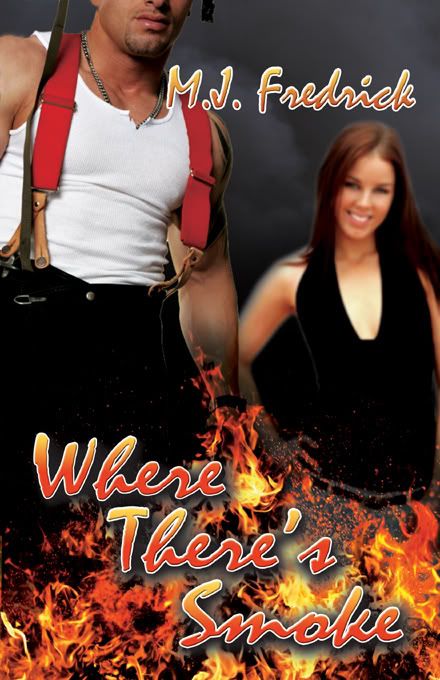
Tuesday, November 4th: "Why I Love Nano" MJ Fredrick
Wednesday, November 5th: "Making Non-Writing Time Work for You" Maureen Hardegree
Thursday, November 6th: "Unleash Your Story Challenge" Diane Gaston
Friday, November 7th: Noodler New Releases
Have a productive writing week!
Labels: Delle Jacobs, Diane Gaston, Maureen Hardegree, MJ Fredrick, Nano, writing challenges