Writing Past Speed Bumps by Dianna Love

Book in a month, three months or a year…anything is possible. Success depends on if you let speed bumps slow you down or not.
What’s a speed bump? That moment when you run into something you can’t figure out and stop writing. When you spend more time fingering your keyboard than actually typing until you finally get up and walk away to…make a mad dash into the kitchen to load those three dirty cups into the dishwasher or decide you really have to go retrieve today’s mail this minute or you’re sure a really important email has just popped up in your inbox.
In other words, it’s whatever causes you to lose momentum and stumble on your story. We all stumble on stories, but it’s what you do next that will determine if it is just a speed bump or an all out road block. I’m a plotter by nature, or probably more of a hybrid since I don’t clear a wall in my home to create a flowchart and tend to start typing on a story the minute it begins to flow while I’m plotting. I do like to have an idea where the story is going when I start just to keep me from stalling out when my creative juices are flowing. But even with a plot developed, the process of writing is a creative and changing one.
You can be a plotter or pantser and still hit that point where “something doesn’t feel right” or you’re all of a sudden “not happy with what how characters are behaving.” Even if you know where your story is going surprises jump out of nowhere as wonderful gifts that enrich your story, but they can also cause a kink down the road.
Try a couple simple exercises. The easiest way to continue being productive is to jump ahead to the next scene you know and continue writing, but I realize this really plays havoc on linear writers who can only continue writing in an orderly way. Even so, we normally know one or more scenes further into the book that will need writing at some point. Open a new file – away from all that orderly writing – and just type the scene. One thing that will probably happen is new ideas will pop into your mind as you’re typing that may break your mental log jam on an earlier scene. If not, when you finish the scene, think backwards on what would be the set up for that scene and consider more than one way to get to that point.
If something just doesn’t feel right or if you’ve hit a current scene that is starting feel like “filler” look at the three prior scenes and ask these questions of each one:
~ What is the purpose of this scene (the answer should be something significant that affects the character and/or the plot)?
~ What changes in each scene from the opening line to the last paragraph?
If you have a hard time answering that about any of these three scenes this is likely the point when your story started to jump track. Consider pulling that scene out of sequence, going back to the last one that “worked for you” and write down three possible ways you could move ahead to reach the next unwritten scene you have in mind. Consider using a different setting that would create more problems or conflict for the characters, or throws at least one character out of his/her comfort zone.
If your character is not being active or not getting the job done in the story, try the quickest fix of switching POVs (if it is in third person). Yo u’d be surprised at how many times that solved scene problems for me.
If there are more than three characters in a scene, try writing it without one of them. If there are only two, try bringing in another character – especially an unexpected one – that will up the conflict, because “lack of conflict” is at the center of most scene and story issues. One common "type of scene" that loses story momentum – which leads to speed bumps – is when two people are driving somewhere to basically put them together for a bit to talk (and dump information), but with no real purpose beyond the dialogue. If this is the case, cut it and make the drive “off stage” then find a better place to weave in that information in a more active way. Or sometimes it’s a meal where the only obvious purpose is to bring people together in one spot, but again – no real conflict or point to the scene.
Keying in quickly on the problem you’ve run into gives you the power to fix it and move on. The idea to being productive at writing is to continually “brainstorm” as you write. A speed bump is a sign you are not allowing your creative side freedom. You can fix a problem if you can identify it, because you ARE a writer. All you have to do is allow yourself the leeway to recreate something that truly is not set in stone unless you let it be.
Speed bumps are when we get in our own way. When we are so focused on everything unfolding only one way in the story that we prevent our creative lobe to function at optimum level.
So give yourself a writing challenge for at least a week to just burn through some pages and you’ll probably be surprised at how much you can do when you open the valve to those creative juices. And when you do push through the tough times, don’t forget to do something really nice for yourself…because you deserve it!
In the meantime, what do you find helps you stay on track the best and do you reward yourself for writing past those speed bumps? If so, what is your reward? :)
Don’t miss Maureen Hardegree's “Feedback: Five Steps to Separate the Wheat from the Chaff”on Tuesday, November 18th.

NYT Best Seller Dianna Love writes romantic thrillers and urban fantasy.
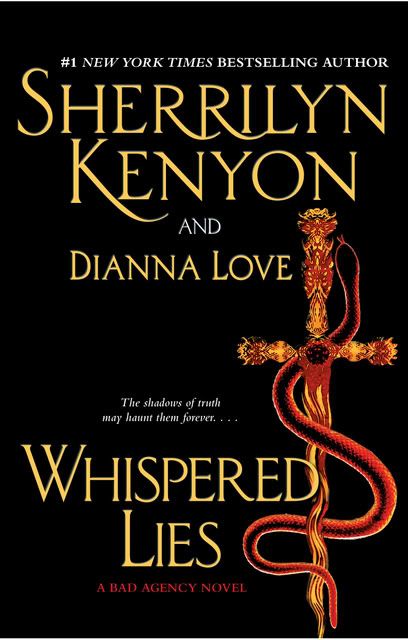
Her next release is an urban fantasy novella - MIDNIGHT KISS GOODBYE - in the Dead After Dark Anthology (December 2, 2008). Dianna's upcoming thriller is WHISPERED LIES (Pocket/May 2009). And watch for the nonfiction book she and Mary Buckham have coming out June 2009 - Break Into Fiction®: Power Plot Your Novel.
For more on Dianna visit www.AuthorDiannaLove.com
Labels: Dianna Love, novel writing, Sherrilyn Kenyon, writing challenges
Marketing Your Locally Set Book - Esri Rose

You might think this topic is geared toward published writers, but the best time to start marketing a locally set book is before you finish the manuscript.
Unless you live in a very small town, newspaper and other media are fairly disinterested in the release of another fiction book, even it’s set on the steps of city hall. Fiction is not news to them. On the other hand, many of the general populace are still pretty excited to be featured in a book. Not all of them, however, and some of them are still going to pooh-pooh romance – sad but true. And if your book has a lot of sex, well… The local marketing angle may or may not work for you.
All that said, here are some things you can do.
- Feature local businesses and landmarks. Don’t pick the latest, trendy restaurant or the brand-new oxygen bar. Chances are, those will be long gone by the time your book is out. Go for longevity. More people will recognize local icons of business, too.
- Feature well-attended, enthusiastic groups. Does your town have a greyhound rescue organization? Breed-dog lovers can be loyal readers if you feature their favorite pup in a book.
- Market to gender when picking what groups to feature. Your town may be noted for its Civil War re-enactment group, but how many of those guys read romance?
- Look for tie-ins. If you feature a woman-oriented business, they may be willing to promote your contest or host a book-release party. Now is the time to feel them out about it, but be diplomatic. “I was thinking of featuring your salon/jewelry store/chocolate shop in my book. Wouldn’t it be fun to have a joint party?” If you know the owner, are a good client, or have a good friend who is willing to pitch for you, you’re in better shape.
 Look for communication vectors. The greyhound group that has an active Yahoo Group and a nationwide email list is better than the knitting store that puts a stack of newsletters out twice a year.
Get the idea? Great! Now get cracking on that book about the lingerie-shop owner who owns a lovable rescued greyhound and gets proposed to at your local fancy restaurant.
Esri Rose’s paranormal romance, Bound to Love Her, is available right now!
Labels: book promotion, Bound to Love Her, Esri Rose, novel writing, writing
WRITING BEGINNINGS
By Norah WilsonWhen I signed up to write a blog about beginnings in the context of plot, I was thinking about story structure – beginning, middle and end. The beginning is probably the toughest part of a novel to write, because so much is riding on it. It will take up prob

ably 20-25% of your story, yet it has to establish tone and setting, introduce the main characters, and introduce the major dramatic question (story set up/situation). In those pages, you have to build a world the reader can believe in, peopled with characters whose actions are well motivated and make sense in the context of their own world views.

If that isn’t pressure enough, you have to do worry about your story’s literal beginning, the first line, first paragraph, page, chapter. The fact is, all that wonderful work you’ve done—the lovely character arc(s) you’ve designed, the intricate weaving of plot and subplots, the fabulous scenes you have in mind—will be all for naught if you don’t hook the reader early and draw them in to your story. I know, I know. Scary!
So how do you begin a novel in a way that will hook the reader and draw her in? That’s a darned good question, and one I struggle to answer every time I start a book. You can have the world’s most exciting inciting incident, but if the reader hasn’t bonded with your characters, they may just shrug and say, “Why should I care?”.
Let’s talk a moment about inciting incident. That’s the thing that happens to your protagonist to radically upset the balance of his or her life. It is the event that starts your story rolling and raises the major story question. To paraphrase Robert McKee, it arouses a desire in the protagonist to put things right, causing him to conceive his object of desire, his goal, the thing that will put things back into balance. For those of you who subscribe to the hero’s journey as your plotting companion, this is the Call to Adventure. The hero can resist the call initially, but eventually will answer it, launching an active pursuit of his goal (the quest).
Some authors hit the ground running with an explosive opening, plunging us

right into the inciting incident. That can certainly work; heck, I've done it. But for the most part, I prefer to try to establish empathy for my characters first. For hero’s journey fans, this would equate to showing your hero in the Ordinary World, before he gets the Call to Adventure. But don’t linger in the ordinary world too long! Today’s readers are primed for a fast start. As McKee puts it, “Bring in the inciting incident as soon as possible but not before the moment is ripe.”
Okay, back to making the reader identify/empathize with your characters so that they’ll give a hoot. For me, one of the keys is authenticity. You have to make that character feel real. You have to research the milieu until you can make me believe your police detective is the real deal, slouched at his desk in the detective’s bullpen, re-reading his report. Make me feel the knot in his gut, which he blames on the rotgut coffee, not the victim interview he just did. When I’ve really started to feel for this guy, who no doubt just wants to get home after an extended shift, hit him with that inciting incident.
If you’ve judged contest entries, you probably know quite a few things NOT to do in your beginning. For instance, do not try to jam too much information into the first few paragraphs or pages. I want to be oriented in a setting fairly quickly, but I don’t want to be inundated with so much detail that the pace drags. I want to get to know the characters, but I don’t want to have their backstory dumped on me all at once. I want to form a picture of the H&h, but not necessarily through long passages of detailed physical description.
Another key to great beginnings, I think, is to write loose and easy. Confident. That will show in the first paragraphs, and the reader will immediately relax, believing they are in capable hands.
“But I’m NOT confident!” you wail. Fair enough. But here’s another tip: You know that expression, “Fake it until you can make it?” Well it works in fiction, too. Once you’ve mastered basic craft, you just have to remind yourself no one knows you’re terrified. Relax, take a deep breath, and start writing as though you believe your reader will follow. That’s what I do! In fact, you be the judge. Here’s the opening of my current WIP.
This is not the inciting incident. It contains minimal setting information, and has no physical description of the characters. But does it work to draw you in? I’m not really going for empathy here (that comes later when we learn why he’s doing what he’s doing), but I’m starting to paint one dimension of my hero. Would you read further to learn who these people are and what’s happening?
Aiden Affleck hummed to himself as he lifted the brass doorknocker to summon St. Cloud Police Chief Weldon Michaels to the front door of his Carrington Place residence. Rapping twice, he stepped back.
What
was that tune running through his head? It had been with him since he’d risen this evening.
Audioslave? Nope.
Queens of the Stone Age? Un-uh.
Collective Soul? Yeah. Yeah, that was it. Definitely. He cricked his neck one way, then the other and felt the satisfying crack.
Ooh, I’m feeling better now.
The curtain in the bay window twitched, but Aiden feigned obliviousness. From inside, he clearly heard Michaels jam a clip into an automatic weapon. Aiden rolled his eyes. Nobody trusted anyone anymore.
“Who are you and what do you want?”
The voice came through the door. A cautious man indeed.
“I’m a friend of your wife’s,” Aiden called. “Well, more a friend of a friend, actually, but I have a personal message for you, from her.”
“Nice try. Now move on, before I call the cops.”
Aiden thought about knocking the door in. It was solid oak with a good deadbolt on it, but it could be made from cardboard and paperclips for all the challenge it would present. On the other hand, there was no reason to get messy.
He cleared his throat, did his best to summon a puzzled tone. “Well, hell, I thought you were the cops. Do I have the wrong address? I’m looking for Chief Weldon Michaels. Got a message for him from his wife Lucy. Pretty woman, ‘bout an inch over five feet, brown hair and eyes? Oh, and a real cute little daughter. What’s her name? Devon? Any of this sounding familiar?”
Silence for a few heartbeats. “What kind of message?”
“She wants to come home, but before she can see her way clear to doing that, we need to have ourselves a talk.”
Another pause, then the sound of the deadbolt retracting. The door cracked open, and Weldon Michaels peered out past a security chain.
Oh, God save me from fools. Growling, Aiden pushed the door open. The hardware anchoring the security chain tore free from the wall. Before Michaels could cry out, Aiden stepped inside and closed the door behind him. In the next heartbeat, he seized Michaels’ right wrist and squeezed until the other man screamed and dropped the pistol. It hit the hardwood floor with a clatter but didn’t discharge.
“A gun?” Aiden released the other man’s hand. “Now I ask you, what kind of a reception is that?”
Labels: beginnings, inciting incident, novel writing, plotting