It's Time to Brainstorm!

Last Thursday Shirley Karr blogged about Plotting Retreats. Shirley and her friends get together for a weekend and talk about their new books, asking “what if” questions and planning out their GMC and HEA. When I brainstorm with my writer friend, Caroline Fyffe, we quickly explain what our newest book is about. Usually we already have the first few scenes figured out but then we ask one another, “What comes next?” For instance the book she is working on is a western historical so we brainstormed all the things that could go wrong on the trail to their destination: Meet with Indians, Snake bites, Lose all their water, They get lost, Someone gets sick, Bad guys come, etc.
See! It’s easy. Anything goes. Nothing’s too crazy. Who wants to give it a try? Give me a paragraph setting up your book. Tell us where you’re at and where you want to go and we can all throw out Next Scene Ideas. There’s nothing better than having a long list of possibilities!
I will start. I’m thinking about writing a YA and the new girl at school is a freshman in high school. What special power does she have? What family problems does she have? What boy will she hook up with? Okay, throw out some ideas! Help Me or give me one of your own!Come on, let’s brainstorm!Labels: brainstorming, plotting
USING STORY BOARDS AND FRIENDS TO HELP YOU PLOT
By
Debra HollandI wrote my first historical romance because a scene came to me as I was trying to take a nap--a couple riding along a river. Then I had to figure out what the story was. I wrote about ninety pages before I discovered RWA and my wonderful writing teacher, Lou Nelson and REALLY learned to write fiction. (Active verbs, who knew?)
Thanks to Lou, that book,
Wild Montana Sky, didn’t end up under my bed, but instead won a Golden Heart.
After I finished WMS, writer friends told to have a second book ready, so if an editor asked me for another book, I’d have one to offer. I started writing,
Starry Montana Sky, this time with more of an idea of the story.
Then I became sidetracked into writing Science Fiction and Fantasy. I tend to reread my favorite fantasy series about every other year. Five years ago, I’d just finished about my 10th round of Mercedes Lackey’s Companions/Valdemar books.
I was driving to work thinking about her work, and I said out loud, “I could never write like that!” Being a psychotherapist, I had to challenge myself on my negative attitude. I responded by saying “How do you know? You’ve never tried. Don’t say you can’t until you’ve given it a good try.”
So I took up my own challenge and started to think about a fantasy world. By the time I arrived at my office, I had the bare bones of
Twinborne Trilogy, Lywin’s Quest. I scribbled down my notes and mentioned the ideas at my next critique group. Everyone liked the story and encouraged me to explore it more. Two months later I described the story to my writer friend, Elda Minger. She also encouraged me to write the book.
For each book I write, I buy a small notebook with pockets. I carry the notebook with me and scribble down anything that pertains to the story. The need for pockets came from the times I didn’t have the notebook with me, and I’d jot notes on a napkin or the back of a business card. These got tucked into the pocket of the notebook.
For Twinborne Trilogy, I bought a notebook with three sections because I had wanted room for each book of the trilogy.
During the time I constructed
Lywin’s Quest, in my critique group, Lou embarked on lessons about plot structure. In every session, she lectured about a different part of the Three Act Structure.
As Lou lectured, I’d dutifully take notes, then a scene for LQ would hit me. I’d pull out my notebook, open it next to the paper I was using to take structure notes, and scribble the scene down.
Soon, I had a vague outline in my notebook, but it was incomplete. Because I was building such a complicated book, I wanted a more visual way of seeing my story, and I knew I’d need some help.
I consulted Elda, who had plenty of practice with plotting in groups. Using her suggestions, I invited three of my writer friends, including Elda, to a plotting retreat at my cabin in Big Bear Lake, California. We drove up for the weekend, and each of us planned to take half a day to share the plot of our story and get help from the others in fleshing it out.

We brought the following supplies to help us plot:
· One large cardboard backdrop. (If you think of a three-sided backdrop to a science project, you get the idea.)
· A stack of sticky notes/Post Its in various colors.
· Markers
· White poster paper
· A roll of tape
· Various baked goods, candy, and other snacks
On Friday night, we each took three sheets of large poster paper, one for each act. Then we filled out a sticky for every scene (that we knew of) in our books. On the sticky, we briefly wrote in big letters what took place in the scene.
We used different colors for the hero, heroine, and villain. We also used a second sticky, on which we’d mark various plot points (like DM for darkest moment) and place it next to the sticky that described what happened. We’d post blank stickies (in still another color) on any scenes where we didn’t know what was to happen.
Once we filled out all the stickies, we lined up the scenes on the paper, until all the scenes in the act could be seen, a colorful, giant chart. So although we didn’t have pictures of our scenes like are used in making movies, we had our own form of storyboards.
The next day, one of us taped her three charts to the cardboard backdrop and propped it on the end of the dining table. Then she explained each sticky in the story. Everyone could see her weak areas and empty spaces, and we’d brainstorm ideas to strengthen or add to the story.
As the writer changed or added to her plot, she moved stickies around and added new ones. We didn’t stop until we finished each writer’s whole book, but we managed to keep to our half a day per person deadline. It helped that the other writers had simpler stories that they intended to submit to one of the Harlequin/Silhouette lines.
At the end of the weekend, we had four tightly plotted books. Tired, but satisfied with our work, we rolled up our papers and took them home.
Over the next months and years (I veered back to writing the historical and another fantasy series,) when I wanted to work on LQ, I’d take out my charts to make sure I stayed true to what I’d plotted. I added a LOT more scenes to the book than I’d originally plotted, keeping track of my ever-expanding outline in my notebook. But the threads of the plot stayed fairly true to my chart.
I finally finished LQ. (At 125,000 words, it’s a BIG book.) Afterwards, I unrolled my tattered charts, spreading them across my bed. I stared at them for a long while, remembering. The storyboard process had given a structure to my dream of a story and made it real. And because of that realness, I could write and finish the book. What a wonderful feeling! (I’m not sure I’d have finished it if I hadn’t spent that weekend in Big Bear.)
Lywin’s Quest was the last fiction book I wrote. I’ve since turned my attention to nonfiction, although I’ve done some revising my other books. But I have new story ideas clamoring for my attention, and one of these days I’m going to head up to Big Bear with a group of writer friends. Want to come along?
Labels: plotting, writing
Avoiding the Dreaded Info-Dump with guest blogger Kendra Leigh Castle

I’ll never forget the day I found out I had a problem. I’d just received my scores from the very first contest I’d ever entered, and sat eagerly parsing the comments for direction on my beloved WIP. It was the standard three chapter contest, and I knew, just knew, that I had a great opening. Even if chapter two had always seemed a little…bloated. Didn’t matter, right? Chapter two was necessarily chock full o’ crunchy goodness, and probably the judges would love it best of all. I mean, who wouldn’t love the entire tale of how my spunky heroine had come to own her romance-centric bookshop, complete with amusing flashback? Yeah, yeah, so the wounded werewolf hero was staggering toward her doorstep even as she did her detailed reminiscing. So what?
I will now summarize for you the general opinion of those three wonderful, insightful judges: “This is a great story. It’s probably going to sell. But you really need to do something about the glacial pace of chapter two. Do you really need to tell us quite so much?”
As I thought about it, the revelations came quickly: the 420-page failed manuscript living in a box in my closet, the fact that anyone with eyes and a pulse would be able to ace a complete biographical quiz on my heroine after her very first chapter…yeah, it all came together at that moment.
Hi, my name is Kendra, and I’m an info-dumper. Well, recovering info-dumper, if you want to be specific. Because even pantsers like me have a method to our madness, and I’ve learned to recognize certain signs that mean I’m doing my usual and stuffing too much backstory into one of my first three chapters. The things that tell me, “Uh, Kendra, you’re going to want to stop, go back about four pages, and start using the delete key now. Because unless I’m mistaken, no one will ever need to know the name of the dog your heroine had when she was four.” Among the warning signs:
1. I’ve gone more then two pages with almost no/no dialogue
2. Something cool is about to happen, and yet my character is thinking. And thinking. And thinking…
3. It’s early in the story, and I’m focusing on the past instead of moving the action forward in the present
4. All the pertinent parts of my character’s life story have emerged in the space of one or two chapters
I know I’m not alone. As writers, we love our characters, and we love their stories. Their whole stories, from start to finish, all of what made them who our hero or heroine is going to fall madly in love with. The difficult part, for me at least, was realizing that quite a bit of that backstory is only pertinent or interesting for me. It adds nothing to the book itself, and slows the pace rather than spicing things up. It was a hard lesson, leading me to educate myself (with no small amount of agony) in the art of “killing my darlings.” I must have cut five pages of fat out of that much-maligned chapter. Surprisingly, though, once I did, I found I had a tighter chapter with a snappy pace, and that there was even a cathartic aspect to editing down my own work. The amusing flashback and lengthy rumination on the past? Gone, baby, gone. And no one, save me, would ever miss them, which was most telling of all.
That said, and in the interest of helping other closet info-dumpers like myself (oh, the secret shame!), I have a few tips that have helped me write the kind of story I want to read, instead of the kind of story wherein I suddenly hit a wall of words and start skimming to get back to the action. Everyone has their own process, of course, but I’ve found that these things help me:
1. Write that backstory before you even start. Probably a good idea anyway, but like I said, I’m a pantser and am often guilty of, um, bad planning behavior. Write the whole thing, everything you want to know and can come up with about your characters. You want to talk about your hero breaking his wrist when he was twelve? Go for it. But do it in a separate file, or in a notebook, not right in your story. And if you suddenly think of some new twist to that character after you’ve begun writing in earnest? Avoid the temptation to wedge it into your current chapter and add it to that original file to use later. Let it settle. It may fit in better somewhere else.
2. Take a good hard look at what you do and don’t need in that voluminous backstory. What will reveal character and motivation? And what, though you might love it, is just extra? Make a list. Cross stuff out. Yes, it might hurt. Do it anyway.
3. Make a solemn promise to yourself to dole out the backstory in small amounts, no matter how great the urge to do otherwise (some small voice inside of me still screams, “No! They have to get to know him/her NOW!”).
4. Formulate a plan of action, and stick to it. This is a rub for pantser like me, who is sloppy about whatever sort of list I might make, but I haven’t found a better way around it. Divvy the backstory up into layers: what needs to be known up front, what can be revealed later, and best, things that can be hinted at and then revealed for maximum impact at a later time. This part can include paper and a marker, which makes me happy. I mentioned I’m messy, right?
Writing a chapter, or even a whole manuscript (like the one in my closet) that needs to go on a diet is no big deal if you’re willing to accept that diagnosis, then come up with strategies for circumventing counterproductive impulses and avoiding those dreaded pockets of info-dump. It’s amazing what we writers can do with willpower and the digital hatchet of the delete key. As for me, I’m eternally grateful to those three anonymous judges for both their encouragement and their criticism. I took their advice and trimmed my backstory, much as I loved what I had to lose. The end result? First a wonderful agent, and not long after, a book deal for me and the romance-loving heroine who thinks she’s helping a wounded dog and ends up with…well, quite a bit more than she bargained for.
 Call of the Highland Moon
 comes out May 1st from Sourcebooks Casablanca, and if you like sexy Scottish werewolves and sharp, funny heroines, I hope you’ll take a peek.
Thanks for having me as a member of the Posse for today, I love it here. Now go forth and whip those backstories into shape! Happy writing!
Kendra
www.kendraleighcastle.com Kendra also blogs twice a week at Sourcebooks Author Blog at:
www.wickedlyromantic.blogspot.comLabels: plotting, writing
WRITING BEGINNINGS
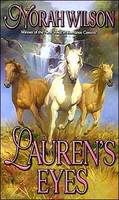
By Norah WilsonWhen I signed up to write a blog about beginnings in the context of plot, I was thinking about story structure – beginning, middle and end. The beginning is probably the toughest part of a novel to write, because so much is riding on it. It will take up prob

ably 20-25% of your story, yet it has to establish tone and setting, introduce the main characters, and introduce the major dramatic question (story set up/situation). In those pages, you have to build a world the reader can believe in, peopled with characters whose actions are well motivated and make sense in the context of their own world views.

If that isn’t pressure enough, you have to do worry about your story’s literal beginning, the first line, first paragraph, page, chapter. The fact is, all that wonderful work you’ve done—the lovely character arc(s) you’ve designed, the intricate weaving of plot and subplots, the fabulous scenes you have in mind—will be all for naught if you don’t hook the reader early and draw them in to your story. I know, I know. Scary!
So how do you begin a novel in a way that will hook the reader and draw her in? That’s a darned good question, and one I struggle to answer every time I start a book. You can have the world’s most exciting inciting incident, but if the reader hasn’t bonded with your characters, they may just shrug and say, “Why should I care?”.
Let’s talk a moment about inciting incident. That’s the thing that happens to your protagonist to radically upset the balance of his or her life. It is the event that starts your story rolling and raises the major story question. To paraphrase Robert McKee, it arouses a desire in the protagonist to put things right, causing him to conceive his object of desire, his goal, the thing that will put things back into balance. For those of you who subscribe to the hero’s journey as your plotting companion, this is the Call to Adventure. The hero can resist the call initially, but eventually will answer it, launching an active pursuit of his goal (the quest).
Some authors hit the ground running with an explosive opening, plunging us

right into the inciting incident. That can certainly work; heck, I've done it. But for the most part, I prefer to try to establish empathy for my characters first. For hero’s journey fans, this would equate to showing your hero in the Ordinary World, before he gets the Call to Adventure. But don’t linger in the ordinary world too long! Today’s readers are primed for a fast start. As McKee puts it, “Bring in the inciting incident as soon as possible but not before the moment is ripe.”
Okay, back to making the reader identify/empathize with your characters so that they’ll give a hoot. For me, one of the keys is authenticity. You have to make that character feel real. You have to research the milieu until you can make me believe your police detective is the real deal, slouched at his desk in the detective’s bullpen, re-reading his report. Make me feel the knot in his gut, which he blames on the rotgut coffee, not the victim interview he just did. When I’ve really started to feel for this guy, who no doubt just wants to get home after an extended shift, hit him with that inciting incident.
If you’ve judged contest entries, you probably know quite a few things NOT to do in your beginning. For instance, do not try to jam too much information into the first few paragraphs or pages. I want to be oriented in a setting fairly quickly, but I don’t want to be inundated with so much detail that the pace drags. I want to get to know the characters, but I don’t want to have their backstory dumped on me all at once. I want to form a picture of the H&h, but not necessarily through long passages of detailed physical description.
Another key to great beginnings, I think, is to write loose and easy. Confident. That will show in the first paragraphs, and the reader will immediately relax, believing they are in capable hands.
“But I’m NOT confident!” you wail. Fair enough. But here’s another tip: You know that expression, “Fake it until you can make it?” Well it works in fiction, too. Once you’ve mastered basic craft, you just have to remind yourself no one knows you’re terrified. Relax, take a deep breath, and start writing as though you believe your reader will follow. That’s what I do! In fact, you be the judge. Here’s the opening of my current WIP.
This is not the inciting incident. It contains minimal setting information, and has no physical description of the characters. But does it work to draw you in? I’m not really going for empathy here (that comes later when we learn why he’s doing what he’s doing), but I’m starting to paint one dimension of my hero. Would you read further to learn who these people are and what’s happening?
Aiden Affleck hummed to himself as he lifted the brass doorknocker to summon St. Cloud Police Chief Weldon Michaels to the front door of his Carrington Place residence. Rapping twice, he stepped back.
What
was that tune running through his head? It had been with him since he’d risen this evening.
Audioslave? Nope.
Queens of the Stone Age? Un-uh.
Collective Soul? Yeah. Yeah, that was it. Definitely. He cricked his neck one way, then the other and felt the satisfying crack.
Ooh, I’m feeling better now.
The curtain in the bay window twitched, but Aiden feigned obliviousness. From inside, he clearly heard Michaels jam a clip into an automatic weapon. Aiden rolled his eyes. Nobody trusted anyone anymore.
“Who are you and what do you want?”
The voice came through the door. A cautious man indeed.
“I’m a friend of your wife’s,” Aiden called. “Well, more a friend of a friend, actually, but I have a personal message for you, from her.”
“Nice try. Now move on, before I call the cops.”
Aiden thought about knocking the door in. It was solid oak with a good deadbolt on it, but it could be made from cardboard and paperclips for all the challenge it would present. On the other hand, there was no reason to get messy.
He cleared his throat, did his best to summon a puzzled tone. “Well, hell, I thought you were the cops. Do I have the wrong address? I’m looking for Chief Weldon Michaels. Got a message for him from his wife Lucy. Pretty woman, ‘bout an inch over five feet, brown hair and eyes? Oh, and a real cute little daughter. What’s her name? Devon? Any of this sounding familiar?”
Silence for a few heartbeats. “What kind of message?”
“She wants to come home, but before she can see her way clear to doing that, we need to have ourselves a talk.”
Another pause, then the sound of the deadbolt retracting. The door cracked open, and Weldon Michaels peered out past a security chain.
Oh, God save me from fools. Growling, Aiden pushed the door open. The hardware anchoring the security chain tore free from the wall. Before Michaels could cry out, Aiden stepped inside and closed the door behind him. In the next heartbeat, he seized Michaels’ right wrist and squeezed until the other man screamed and dropped the pistol. It hit the hardwood floor with a clatter but didn’t discharge.
“A gun?” Aiden released the other man’s hand. “Now I ask you, what kind of a reception is that?”
Labels: beginnings, inciting incident, novel writing, plotting
Q and A Friday #2

It's Good Friday, a busy day and the start of the busy Easter weekend, so there may not be many Qs today or many As , but here we go!
Do you have any questions about this week's plotting topics?
We've talked about subplots, about making lists of events, about troubleshooting, and about making collages.
Or do you have a plotting problem you'd like to discuss?
We may not get to it all right away, but go ahead and ask!

And
Happy Easter to everyone!
Labels: plotting, Q and A
Collaging
All this plot talk has me jittery ;) I am a pantser, absolutely. I start with an idea and run with it, until I hit a wall, then I stop. I’ve tried the index cards, but once I write them, I never look at them again.
So to focus, I make a collage.
I know some people use the organic method, where they just go through a stack of magazines and rip out whatever appeals, then see how things can relate to their stories. They claim to find ideas in this manner, twists to the story that they didn’t expect, as if their muse prompted them to tear out those pictures.
I do my collage about half way into the story. By then I have a pretty good idea of who my characters are, but the story needs focus, needs connections, and where the pictures go gives it that connection, gives deeper meaning to the objects I place in the collage. It also helps me sequence the story – what should happen when, what needs to happen before something else can happen.
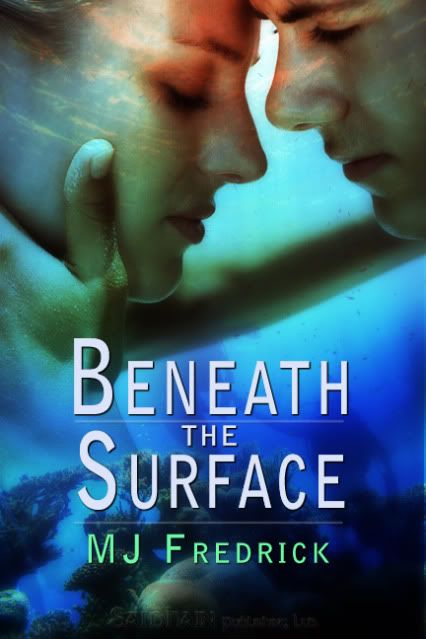
I always start my story with a physical picture of my hero and heroine, usually based on actors. I print out those pictures, as many as I feel I need, ones I feel fit my characters. For example, I wouldn’t get a picture of my heroine/actress in an evening gown unless that character wears an evening gown on some occasion. Gerard Butler in Tomb Raider fit my hero in Beneath the Surface, but his appearance in Reign of Fire fit my hero in Don’t Look Back.
Then I think about what’s important to the character. Does my heroine have a cherished piece of jewelry? Does my hero have something that reminds him of his family, his past? I google images and print.
I think about what kind of house they live in and search for that. I think about what they drive, where they are. If it’s a real place, I find a map so I can reference it while I’m writing. If it’s not, I find pictures of what I think the place will be like. I’ve not yet created my own maps because, well, my class could tell you I can’t draw at all.
Once I have my pictures, I buy those science fair display boards (JoAnn Fabric has them for reasonable prices.) I get my glue stick and my scissors and I cut and arrange, then glue. Then I prop my board up to look at while I’m writing.
I’ve also made some digital collages, though to be honest, I wouldn’t know how to do it on a Windows machine. I used to use AppleWorks before the dh upgraded to Leopard, and now I use Pages. Again, I find the pictures, but drag them onto the document. These actually do work well as “book covers” on my notebooks. (I buy the binders with the clear covers and insert my collage, then print out the story to put within – easier to keep track of.)
I prefer the scissors and glue collage, because you have different parts of your brain working on the story as you physically put it together.
Do you collage? How do you do it?
More articles on collages:
Jennifer CrusieVision WorkshopMy digital collage for my Wayback Rodeo story.

My digital collage for my WIP.
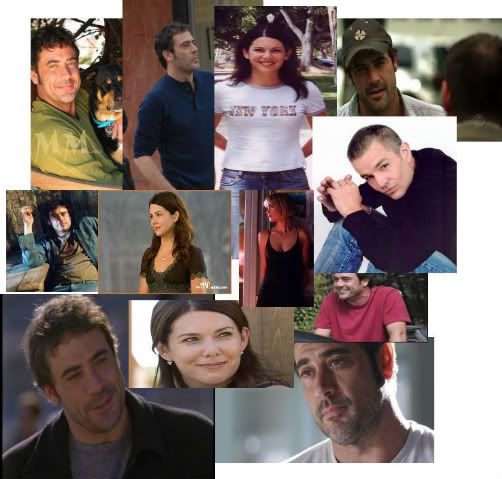
My physical collage for my WIP.
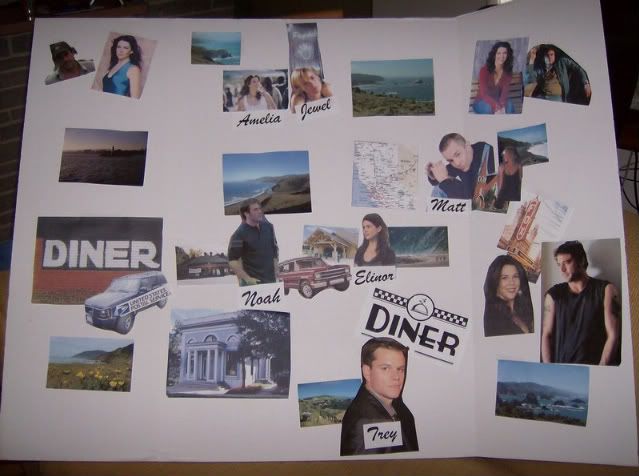
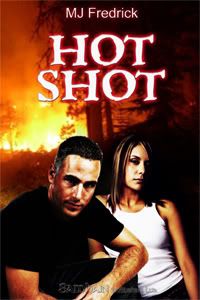
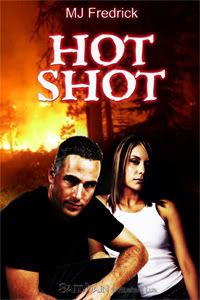
My collage for Hot Shot. I used maps and pictures of Montana and fires to help me focus.
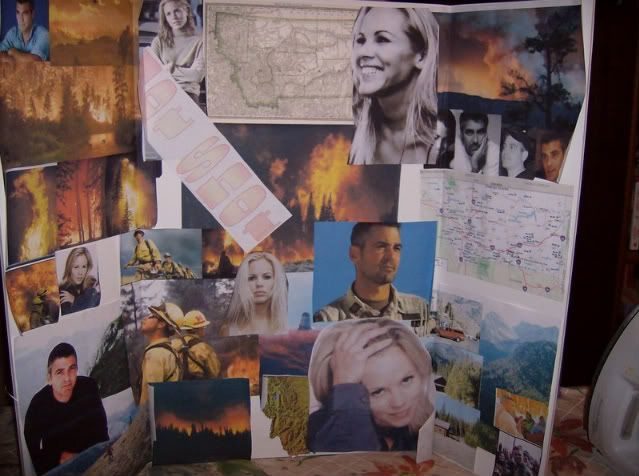
My collage for my 2006 Nano book. I’m hoping it will help me revise. It certainly helped me change who the hero was.
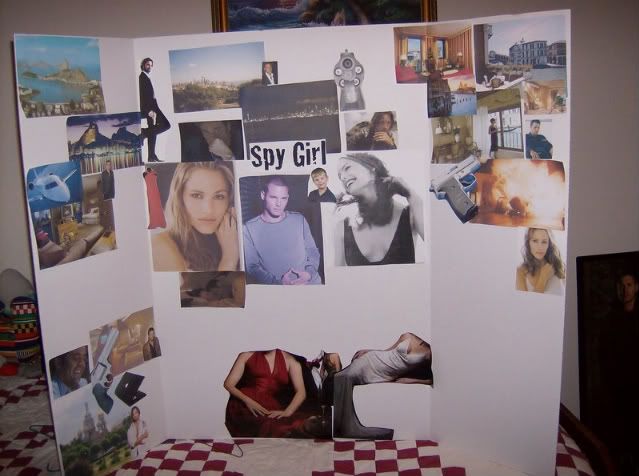
Labels: character development, collage, plotting, writing
This Week on the Wet Noodle Posse Blog

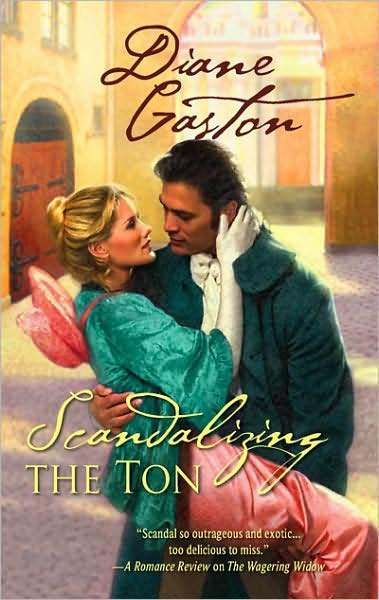
Monday, March 17th: Diane Gaston "Crafting Subplots"
Tuesday, March 18th: Lorelle Marinello "List of Possible Events"
Wednesday, March 19th: Dianna Love and Mary Buckham "Plotting"
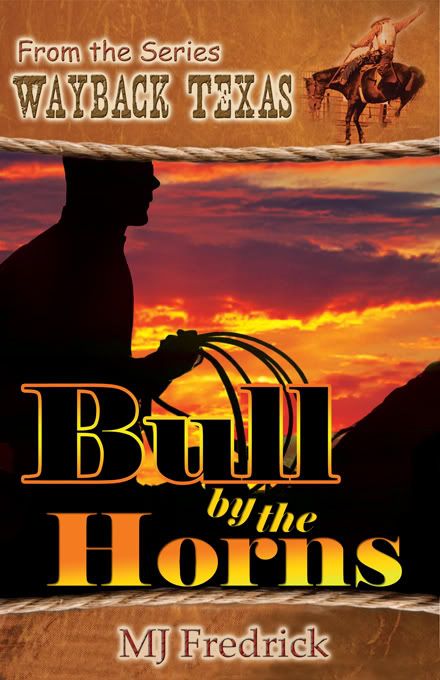
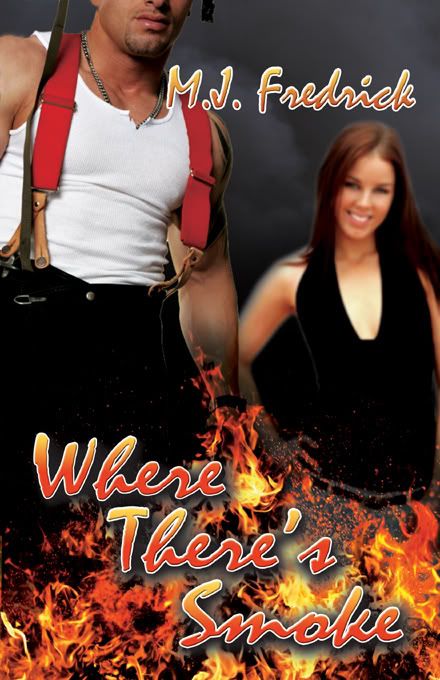
Thursday, March 20th: MJ Frederick "Collages"
Friday, March 21st: Q&A (Readers ask questions. Noodlers answer)
Labels: plotting
Guest blogger Katey Coffing on Plotting

Hello from the guest blogger! My name is Katey Coffing, Ph.D., and I was fortunate to be a 2007 Golden Heart® finalist along with several of the 2003 Noodlers. (Since the Wet Noodle Posse led the way by choosing such a memorable name, we in the '007 GH crew call ourselves "Licenced to Sell." ;-) )
I'm delighted to have a fantastic day job: I'm a certified life coach who helps writers succeed. Because of that, I've seen just about every kind of roadblock our fertile, writerly minds can throw at us. You've probably experienced a few of them yourself. Perhaps you were zooming along on a manuscript, only to be become inexplicably stuck. (Or even sideswiped by a writer's block so vicious you gave up and hid the manuscript under the floorboards.)
That block may not be the product of a fickle muse or of a recalcitrant idea generator. Your subconscious may have been trying to tell you something's amiss in the structure of that story--in the plot and how your characters react to it.
Structural flaws aren't always obvious to your conscious mind. But your subconscious realizes a great many things, many of which it has trouble communicating to its more articulate roommate.
This can result in a block of colossal proportions as your mute subconscious tries to get you to stop building on shaky ground. The translation: There's something seriously wrong here. Don't add anything until you figure out the problem. So if you're feeling stuck and you're not sure why, put on your Building Inspector's hardhat and dig in.
What kind of structural problems should you look for? Well, it's an unfair truth that there are as many ways to botch a good book as there are to write one! But here's an example from my own experience, and the solution I created.
Years ago while nearing the end of my second romance manuscript, my momentum dribbled through those aforementioned floorboards. Instead of writing the story, I found myself testing new ways to organize my drawer of binder clips and rubber bands. After a few weeks of this (it was a large drawer), I needed answers. I re-read many chapters and realized the scenes after the midpoint of the book felt unfocused, and so did my characters. Seat-of-the-pants writing had worked great for my first manuscript, but pantsing the second had become a miserable experiment. My story needed a major overhaul.
To get a feel for the necessary repairs, I consulted several of my favorite advisors: Dwight Swain's Techniques of the Selling Writer
http://www.amazon.com/Techniques-Selling-Writer-Dwight-Swain/dp/080611197/ref=sr_1_1?ie=UTF8&s=books&qid=1205391373&sr=8-1, Debra Dixon's Goal, Motivation and Conflict
http://www.gryphonbooksforwriters.com/si/1.html, and Carolyn Greene's Prescription for Plotting
http://www.theplotdoctor.netfirms.com/workbook.html.
With their help, I created a template--a master list of key ingredients for can't-put-it-down scenes. These included (among other things) a "ticking clock" to propel the pace, crafty opening and closing hooks, unique scene strategies and obstacles for each main character, plot (and character) surprises, and a meaningful symbol that would enhance the emotion for my reader. (My template included things I felt I already did well AND things that could stand improvement, so a list customized for your writing might differ from mine.)
Wow--just a simple list, but having it put me back in control. Now I had a template to help me think through each scene of my novel! And I could easily tweak which ingredients I used from one scene to the next. (By the way, pantsers who would rather chew tacks than plot can use this technique for revisions.)
I tested my solution by looking at scenes I'd already written but seemed flat. With the list in hand, I was able to brainstorm new plot twists and sharpen my characters' goals, sparking life and energy in the manuscript! And new scenes flowed easily because I knew from the very first sentence what that scene needed--and I had the road map to make it happen.
So next time you get stuck, consider whether there's a structural problem that has jammed your writer brain. If so, be willing to bring in the jackhammers, welding tools, and cement trucks. (Of course, don't forget the studly construction crew.) And whether you plot or "pants", I'm wishing you a finished novel that brings you (and your readers!) joy.
--
Goalmeister Katey Coffing, Ph.D. helps her clients complete and polish their manuscripts, create kick-ass queries and synopses, and get The Call from agents and publishers. Discover more at Women-Ink.com.
http://www.women-ink.com/Labels: Kate Coffing, plotting, Women-Ink
This Week on the Wet Noodle Posse Blog
We continue this week with our focus on Plotting. Please join us.
Monday, March 10th: Terry McLaughlin "The Organic Approach (Or I Have No Idea What I'm Doing)"
Tuesday, March 11th: Maureen Hardegree "Outlines or Index Cards?"
Wednesday, March 12th: Jill Monroe "Get a Notebook and Get Organized"
Thursday, March 13th: Guest Blogger Kate Coffey
Friday, March 14th: Q&A (Readers Ask Questions, Noodlers Answer)
Labels: organization, plotting, writing
A Month of Plotting!
This month the Noodlers will be noodling about plotting. And who better to start off talking about plotting than a writer who doesn’t plot!
Don’t worry--there will be plenty of published authors blogging about plotting later on in the weeks to come--talented, multi-published authors who actually know what they’re doing. But hey, I have finished seven novels and every single one of them has a beginning, a middle, and an end. So, even though I don’t write an outline or fill out character sheets before writing “chapter one,” I do brainstorm as I go along and I thought it would be fun for all of us to share how we get from the first chapter to the last.
Before I begin a story, I know both my heroine and hero’s goal and motivation. I also spend some time playing with characters’ names and finding the right research books. I love using Football for Dummies or Nutritionists for Dummies…whatever Dummy book will work, depending on what my characters do for a living, etc.
And then I start writing.
If I get stuck, usually around page 100, I brainstorm right there on the screen…everything that comes to mind. I don’t waste time making another file or jotting down notes on paper. I don’t want to stop the creative process. When I’m done brainstorming, I scroll back to where I left off in the scene and continue on with my story. Here’s an example that I pulled from my current WIP:
Derek can buy lots of baby stuff, swings, toys, etc. the next day he sets all the stuff up.
Go to first pediatrician appt. together. Art festival? Look up things to do in Los Angeles.
Jill comes to visit at the apartment. Need this to happen before they go to barbeque.Then it comes out what Sandy said and she can tell that he is afraid of leading her on.
Need to have a BARBEQUE! Meet his family.
Sandy will notice that Derek has a thing for Jill. Jane won’t think too much of it.
Jane goes to Derek’s place late at night when her baby is sick with a fever. He takes her to the emergency room and they talk and he is very sweet and helpful
Need to look up recipes. Have a theme each month for cooking magazine. That’s it! This sort of brainstorming gets my creative juices flowing again. Sometimes I meet with a writer friend and we make long lists of possible events.
Knowing my character’s goals and motivations is what keeps my fingers clicking away. I know what my characters want…I know their goal(s) and their motivation for wanting it and that is the ultimate driving force of every book I write from beginning to end. This is what I think about every step of the way: What does my heroine want? How far will she go to get it? What does my hero want, and so on. Every scene should have a purpose, and how can a scene have a purpose if you don’t know what the characters want?
Many times I am writing a scene and suddenly the story comes to a halt. I used to worry for days about what might have gone wrong. But now I cut and paste the scene to another file and start the scene over. I no longer waste time angsting over what went wrong because 99% of the time, the problem is a) I wasn’t ready for that particular scene yet (i.e. too soon for h/h to kiss, or b) the scene was bad or boring or both and had to go. Either way, I no longer waste time over-analyzing. Starting a scene over usually does the trick and once again my fingers are tapping away at the keyboard and I feel happy again. (Note: never delete these scenes because you might be able to use them later.)
And that’s how I write a book from beginning to end. Sounds easy, doesn’t it? As most of you know, it’s not. And every time I start a new book I find myself wondering how I wrote the last one.
Now tell me your method of madness. How do you get from chapter one to The End? Do you start with names, setting, gmc? Do you write chapter one and then start typing?On Tuesday and Thursday we will be brainstorming and the Noodlers would love to help! Give us a problem that you’re having with a scene and let’s brainstorm ideas of where you can go from there. All you need to do is give the basics of your story and where you’re stuck. Then we can all toss in ideas (crazy or not) of where the scene could go next. It’s quick, fun, easy, and it can’t hurt. Be ready to join in and brainstorm with the Noodlers on Thursday.
For the month of March, I will be putting a ticket with your name on it into a box every time you comment. If you comment five times in one day, then five tickets go into the box. On March 31st I will blindly reach into my box and pick a name. The winner will receive a $20 gift card to Borders! Labels: brainstorming, plotting, writing
This Week on The Wet Noodle Posse

Here's what we have planned for our readers:
Monday, March 3rd: "Introduction to the March Topic--Plotting" Theresa Ragan
Tuesday, March 4th: "Brainstorming Your Next Plot Idea" (Noodlers brainstorm with readers)
Wednesday, March 5th: "What Michael Hauge Has to Say about Plot" Diane Gaston
Thursday, March 6th: "Brainstorming Continued" (Noodlers brainstorm with readers)
Friday, March 7th: "Noodler New Releases"
Welcome to plotting month!
Labels: plotting, sit down and write; writing; getting started

 Last Thursday Shirley Karr blogged about Plotting Retreats. Shirley and her friends get together for a weekend and talk about their new books, asking “what if” questions and planning out their GMC and HEA. When I brainstorm with my writer friend, Caroline Fyffe, we quickly explain what our newest book is about. Usually we already have the first few scenes figured out but then we ask one another, “What comes next?” For instance the book she is working on is a western historical so we brainstormed all the things that could go wrong on the trail to their destination: Meet with Indians, Snake bites, Lose all their water, They get lost, Someone gets sick, Bad guys come, etc.