Collaging
All this plot talk has me jittery ;) I am a pantser, absolutely. I start with an idea and run with it, until I hit a wall, then I stop. I’ve tried the index cards, but once I write them, I never look at them again.
So to focus, I make a collage.
I know some people use the organic method, where they just go through a stack of magazines and rip out whatever appeals, then see how things can relate to their stories. They claim to find ideas in this manner, twists to the story that they didn’t expect, as if their muse prompted them to tear out those pictures.
I do my collage about half way into the story. By then I have a pretty good idea of who my characters are, but the story needs focus, needs connections, and where the pictures go gives it that connection, gives deeper meaning to the objects I place in the collage. It also helps me sequence the story – what should happen when, what needs to happen before something else can happen.
I always start my story with a physical picture of my hero and heroine, usually based on actors. I print out those pictures, as many as I feel I need, ones I feel fit my characters. For example, I wouldn’t get a picture of my heroine/actress in an evening gown unless that character wears an evening gown on some occasion. Gerard Butler in Tomb Raider fit my hero in Beneath the Surface, but his appearance in Reign of Fire fit my hero in Don’t Look Back.
Then I think about what’s important to the character. Does my heroine have a cherished piece of jewelry? Does my hero have something that reminds him of his family, his past? I google images and print.
I think about what kind of house they live in and search for that. I think about what they drive, where they are. If it’s a real place, I find a map so I can reference it while I’m writing. If it’s not, I find pictures of what I think the place will be like. I’ve not yet created my own maps because, well, my class could tell you I can’t draw at all.
Once I have my pictures, I buy those science fair display boards (JoAnn Fabric has them for reasonable prices.) I get my glue stick and my scissors and I cut and arrange, then glue. Then I prop my board up to look at while I’m writing.
I’ve also made some digital collages, though to be honest, I wouldn’t know how to do it on a Windows machine. I used to use AppleWorks before the dh upgraded to Leopard, and now I use Pages. Again, I find the pictures, but drag them onto the document. These actually do work well as “book covers” on my notebooks. (I buy the binders with the clear covers and insert my collage, then print out the story to put within – easier to keep track of.)
I prefer the scissors and glue collage, because you have different parts of your brain working on the story as you physically put it together.
Do you collage? How do you do it?
More articles on collages:
Jennifer CrusieVision WorkshopMy digital collage for my Wayback Rodeo story.

My digital collage for my WIP.
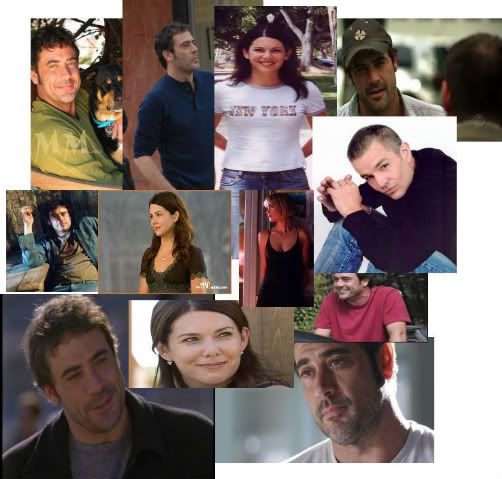
My physical collage for my WIP.
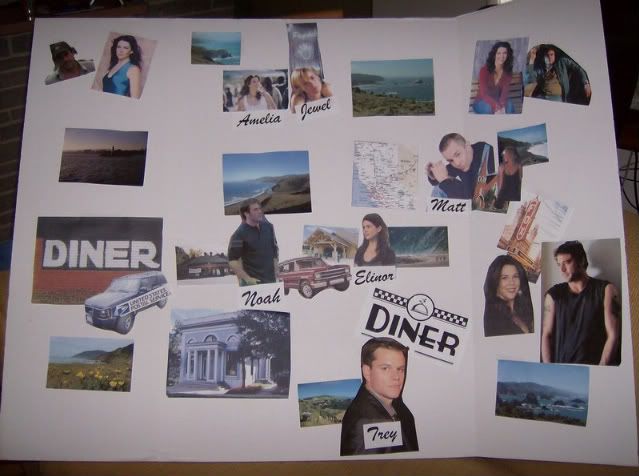
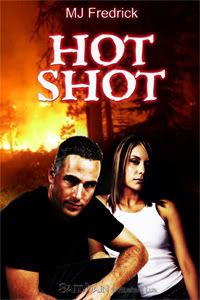
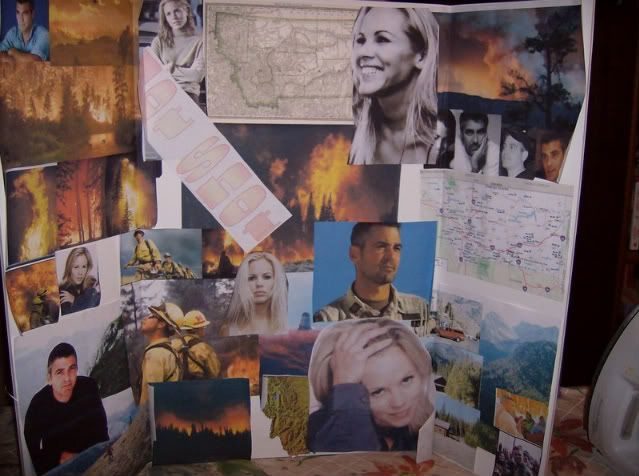
My collage for Hot Shot. I used maps and pictures of Montana and fires to help me focus.
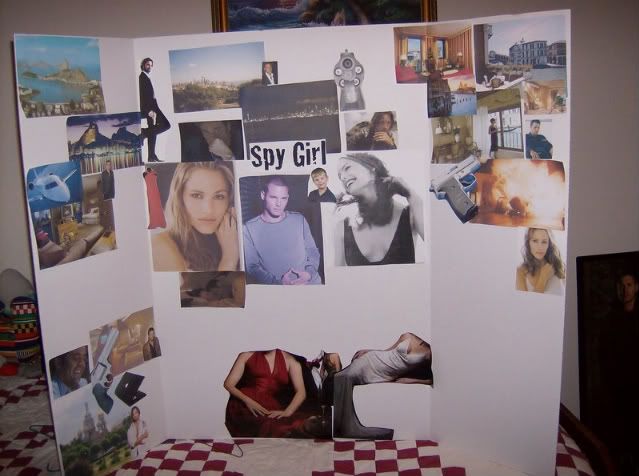
My collage for my 2006 Nano book. I’m hoping it will help me revise. It certainly helped me change who the hero was.
Labels: character development, collage, plotting, writing
Writing Multi-Heroes While Keeping them Heroic
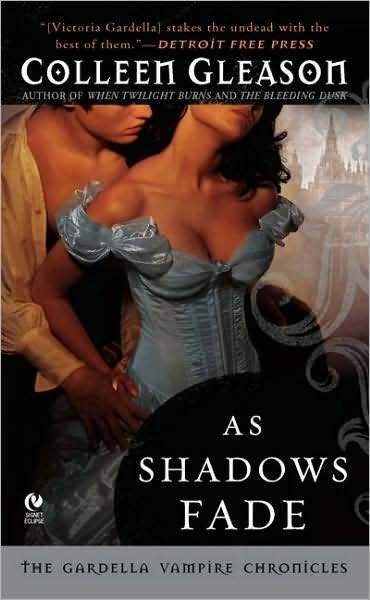
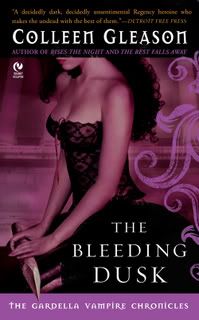
The third book in my
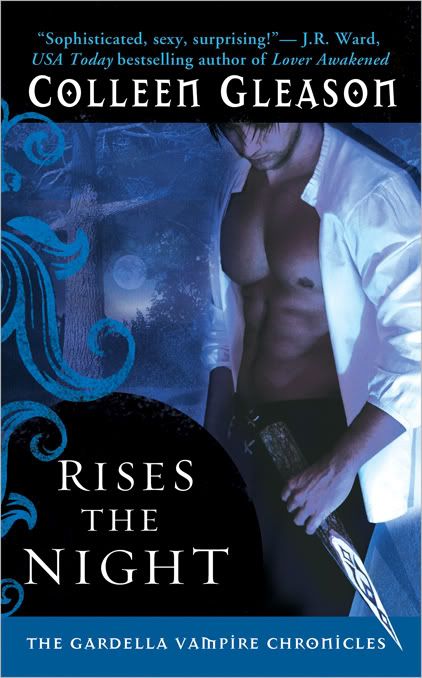
Gardella Vampire Chronicles,
The Bleeding Dusk, has just been released. And I love the fact that readers are really taking sides about which of the two/three men in Victoria Gardella's life that they want her to end up with.
I take it as a compliment that there are people firmly on Team Max, and just as firmly stationed with pom-poms on the Team Sebastian side too. That must mean that both guys are hero material--'cause we all know that romance readers read for the heroes. Right?
So I thought it would be fun to write a little about how I've gone about creating two--really, three--distinct hero characters for my Regency-era vampire hunter, Victoria.
In a way, writing a parnormal series made it a little easier to create three different men. It allowed me to give each of them a different background.
One of them was a member of the peerage, and would have been a fine, very fine, hero in any other Regency-era novel. He was handsome, polite, had a history with our heroine, but was, in no way, a "lesser" man, or a boyfriend--or, worse, a villain--as often happens in romances when the heroine has more than one guy to choose from. Rockley is definitely hero material, and he acts like a hero.
Then there's Max, who's also a vampire hunter and who thinks Victoria, who's just learned of her own calling as a slayer, is nothing but a frivolous young girl who has no idea what she's getting into. And, really, he's not too far off--at least at the beginning. So he acts accordingly toward her: disdainful, arrogant, and critical. A friend of mine says that Victoria brings out the third-grade boy in Max. LOL.
And then there's Sebastian. He's a mystery all his own, and we don't know who he is, or where his loyalties lie. But we do know that he would love to get his hands down Victoria's gown, or worse. ;-) And he also has a self-deprecating attitude--borne out by his own secrets.
So as I began to place these men through out the book(s), I had to think about several things for each one:
- What he wants (or doesn't want) from Victoria
- How he would speak toward her
- How he would act toward her
- What is his secret (if any)
And as I wrote each scene, I made sure that Max always spoke shortly and grimly and sharply. I made certain that Sebastian turned everything into a double entendre, or an attempt (subtle or overt) at seduction. And I had Rockley speak politely as a man would, neither short and sharp, nor flirtatious and bold.
Even now, I test myself--and my characters. When I write a scene with one of the men, I stop and sit back and think how a different one would react or speak. What would Max say? How would Sebastian turn this into a flirtatious conversation? What is driving him?
A fun thing I do for myself is sometimes end a chapter with one of the men speaking--without the reader knowing which one. Or I even have their first appearance in a scene be them arriving unexpectedly and speaking to Victoria...but not telling the reader who they are for several paragraphs.
It's a little game I play with myself and my readers--and my critique partners are the ones who get to play it first. They tell me if they can tell who it is by what he says and how he says it. And if they can tell, just by his speech, then I know I'm doing my job and staying true to character.
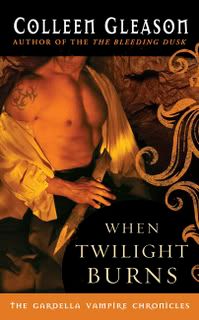
Here's an example from
When Twilight Burns, coming in August:
Victoria came awake sharply.
She didn’t move, kept her breathing easy and regular, and slitted her eyes a crack. Someone or something was in the bedchamber with her.
The room was all shapes and shades of dark gray, any detail that might be discernable in the pre-dawn light distorted by her narrow view. She’d have to turn her head….
“Good God. You might as well open your eyes, Victoria. A gnat could do a better job feigning sleep than you.”
And here's another example:
“Where’s Verbena?” Victoria demanded. She didn’t attempt to turn toward him.
“Sleeping quite soundly, I believe,” he said. “A comely girl, but repose is definitely not her most attractive state. Her snores are like to rattle the windows from their frames, and would be fairly off-putting to a gentleman who might wish to…er…lie…with her…though I’d venture to say that the poor beleaguered Oliver would seize the opportunity if offered.
So, I won't tell you who's who...but feel free to guess or comment in the...er...comments. Or ask questions. Or share your own feelings about multi-heroes.
Labels: character development, Colleen Gleason, the Gardella Vampire Chronicles
This Week on the Wet Noodle Posse Blog

We continue our focus on character with the following line up:
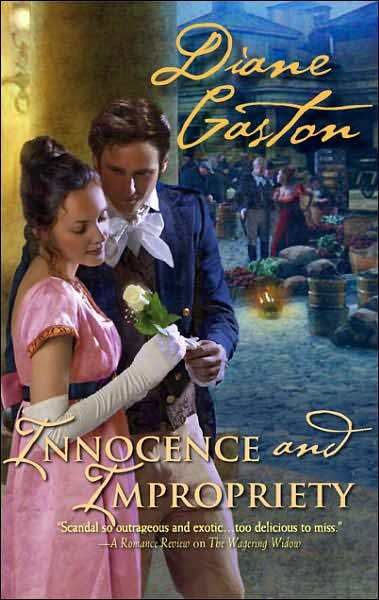
Monday, February 11th: Diane Gaston "Michael Hauge's Concepts of Identity and Essence"
Tuesday, February 12th: Colleen Gleason "Differentiating Heroes While Keeping Them Heroic"
Wednesday, February 13th: Jill Monroe "Alpha Heroes"
Thursday, February 14th: Janet Mullaney "Historical Characters and Their Problems"
Friday, February 15th: Q&A (Readers ask questions. Noodlers answer.)
We'd like to wish a productive writing week and a Happy Valentine's Day to our readers!
Labels: character development, heroes, historical characters, writing
Character Q and A Day

Ask away!
Here is your chance to ask the Wet Noodle Posse anything you desire about Character.
We'll start out with me (Diane) trying to answer doglady's (aka O Doggy One) questions from our first day:
(doggy question 1)
Is it better to establish a character up front or is it better to reveal them slowly in layers?(diane answer 1) Yes. hahahahahaha.
Seriously, it is (in my opinion) important to do both, at least for your hero and heroine. In your very first scene with the character, you want to give the reader a strong impression. You want to give enough so that the reader will know whether she is likely to enjoy these characters, whether she is going to fall in love with the hero and 'see herself' in the heroine. If you open with, say, the hero acting dark and dangerous, you have to show at least a hint of him also being heroic--or that there is more to him than this dark and dangerous moment. If you show the heroine, say, acting selfish and self-centered, you want to also show the hint that there is a reason for this.
But you don't want to dump the whole backstory on the reader in Scene One. That's what you filter in.
I think Pris's imagery of 'peeling back the outer layers to get at the juicy parts' is a good analogy here, too. You peel away a little at a time, but don't hold out too long so that the answer to why a character does what he does is only mentioned in the last chapter -- although you could build up to that final surprise....
I'm sure other Noodlers and our lovely commenters have more to say on this issue!
(doggy question 2)
How do you keep the conflict between the hero and heroine going without making either of them look bad?
(diane answer 2) Sigh. Now you have hit upon my exact worry about the book I just turned in (the one I stayed up all night checking the copy edits and can no longer change)--did I make the heroine look bad?
I think the answer to your question, though, lies in Motivation. Can the reader understand
why the hero and heroine are acting the way they do? Have you made something happen in the plot that they are reacting to in understandable ways, and ways that the reader now knows are characteristic of them? (Did I establish the situation between my hero and heroine well enough that the reader
understands why my heroine act the way she does?)
It is hard to avoid the kind of conflict between a hero and heroine that could be resolved with an adult conversation, but that's what we must aspire to do. If heroine can't tell hero X, there has to be a reason for it. If hero does X to heroine, there has to be a reason for it.

I am sure there are other questions out there about character.

It seems to me that this week has focused on ways to make our characters seem real and to act in ways that seem real.
Any more questions about that?
Ask away!!!!
Labels: character development, Conflict