Q and A Friday - Last on Conflict
Sorry, Everyone! My internet was down again and I'm now at the Washington Romance Writers Retreat---luckily there is internet access! Hope you saved up some questions for us!--Diane

Here's one more chance to ask your questions on Conflict. We Noodlers will try to answer.
♥ Do you have any questions on finding the proper size of conflict for your story?
♥ Or making certain that your conflict isn't impossible to resolve?
♥ Do you have any question on Christie Kelley's use of GMC to find the internal and external conflict?
♥ Or Jo Beverley's idea of conflict as barrier?
Ask any of these or any other nagging questions you have about conflict.


And, remember, commenting gives you a chance to win a signed Jo Beverley book. We'll pick a winner after midnight on April 30. For one lucky person it will be a great May Day present!
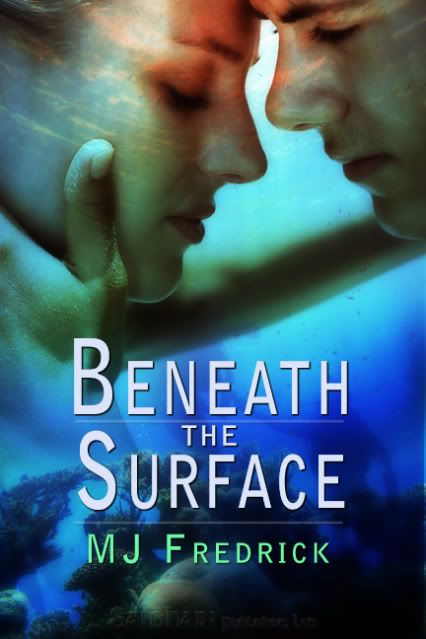
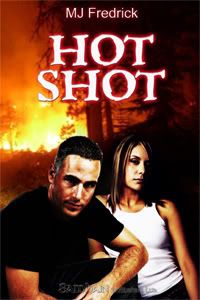
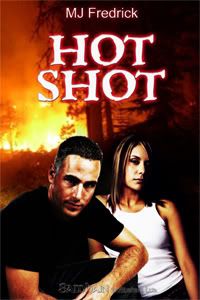
Also don't forget to order your copy of MJ Fredrick's
Hot ShotLabels: Conflict, Q and A
Conflict, Conflict, Conflict by Jo Beverley
Let's give a big Noodler welcome to guest blogger, Jo Beverley, member of RWA's Hall of Fame and winner of five--count 'em FIVE--RITA awards. And there's more! Read on.
Hi everyone.

You'll have to forgive me if I seem a bit ditzy, but to use a good old English term, I'm discomnockerated -- but in the best possible way -- to report that
A Lady's Secret will be on the print
NYT for a third week. And it'll be up! 10.
You know the old saying -- you have to be crazy to work here? That sums up the writing biz. We get pushed down and boosted up, and sometimes there's no logical reason for one or the other. Sure, A Lady's Secret is a great book. I know that's boastful, but sometimes things come together, and we know it.
I liken it to making bread (and if you've never done that, you should.) As we work the dough we know if it's good or not, because we can feel beneath our hands whether it's alive or not. Good dough reacts to the warmth of our hands.If we dimple it, it rises back up like a chuckling baby. It's a lovely thing, and it's what we want when we're writing a book.
In my opinion, there's no such thing as a bread recipe, and no rules or structures for a good book, but there's two that come close.
1. Cut the boring bits.
2. Conflict, conflict, conflict.
Back about 25 years ago (yikes!) one of the first writing talks I went to was about conflict and how it was key to a good romance. Took me years to accept it properly and a lot longer to really understand it. If I do.
I'm half way through a new book and I've just gone back a few scenes and given my plot a dislocating twist which will probably mean that about 20,000 of my precious words after that are heading for the misty never-never land. But the tone and pace of my book had become too tranquil. Something had to happen. Why did it take me so long to realize the dough was dying?
You're probably stuffed to the eyebrows with wisdom about conflict, but so was I. I still didn't get it until I began to grasp that it's not really the plot, it's the spark that fires the plot engine. It's what makes things happen. When things aren't happening - boring bits, saggy middles - it's because that spark isn't there or is weak.
So put it in! And in a nutshell, that means make the characters' lives difficult -- very difficult. Another excellent word for conflict is "barrier."
What stands between the characters and what they want? Does it truly challenge them? Low barriers, or barriers that can be sidled around don't provide a spark, and we can't fool the reader on that one. We can try to say that Cinders can't go to the ball because she doesn't have the right shoes, but unless you've set it up right the reader can see a dozen ways around that. When Cinders finally decides to steal her sister's, paint shoes or her feet, or go barefoot the reader is saying, "Well, duh!"
The key here is the conflict hinges on the character not being very smart or ingenious, and that's hard to pull off for a hero or heroine.
On the other hand, powerful barriers can rise from human nature. For one character, walking into a party of strangers is no big deal; for another it's Mount Everest. As can be finally revealing a shameful secret, or calling a family member on an old wrong. Done right, readers will empathize with that completely because they know they would fight not to have to do that, or because they know people like that. That can even be a key plot driver for a long time - an inability to face a particular situation or reveal a buried secret.
Let's talk about conflict/barriers/uncomfortably and stressed characters.
Jo
Remember, at the end of the month we're giving away a signed Jo Beverley book to one lucky commenter. And that book will be......A Lady's Secret! So comment away.Labels: A Lady's Secret, Conflict, Jo Beverley
This Week on the Wet Noodle Posse Blog

Monday, April 21st, Maureen Hardegree “Size Does Matter; How Big Is Your Conflict”
Tuesday, April 22th, Terry McLaughlin “Can This Love Affair Be Saved?”
Wednesday, April 23th, Guest Blogger Christine Kelley
Thursday, April 24th , Guest Blogger Jo Beverly
Friday, April 25th : Q&A. (Readers ask questions. Noodlers answer.)
Don’t forget--Responding to one of our blogs gives you a chance to win a Jo Beverly novel! The more comments, the more chances.
Labels: Christine Kelley, Conflict, Jo Beverly, Terry McLaughlin
Q and A Friday #2

TGIQAAD. (that's Thank God it is Q and A day) You ask the questions and we Noodlers attempt to answer.
This week we've learned even more about Conflict. We've learned the difference between External and Internal Conflict from Noodler Theresa Ragan. Anna Campbell shared helpful quotations about Conflict. Susan Gable taught us to write mottos for our characters. And Noodler Charity Tahmaseb taught us to throw our manuscripts on the floor (and to look for conflict on every page).
Surely we have some questions about all this new information.
Or share your difficulties with Conflict in your manuscripts. We'll all try to help!
Remember, if you ask a question or make a comment this month you will have a chance to win an autographed Jo Beverley book
And don't forget that Noodler MJ Frederick has a new release.
Hot ShotLabels: Conflict, Q and A
Hey, What's a Motto With You??? by Susan Gable

Okay, look, I’m from Jersey. You wanna make sumpin of it? Whazza motto with you??
Better yet, whazza motto with your characters? You want them to have conflict, dontcha?
Conflict, conflict, conflict!
Editors love conflict. Readers love conflict. Writers should love it, too.
Because let's face it, fiction without conflict is about as interesting as watching paint dry. And almost as bad is the bickering-that-pretends-it's-conflict. So we need to dig deep.
I'm a character-driven writer, which means I go heavier on the inner conflicts than I do on the external conflicts. Good fiction always has both, but some of us rely more on one or the other. There's nothing wrong with either choice -- it's the kind of writing you do.
I've discovered that I tend to use character motto as the basis for my conflict, as well as for help in plotting.
Character motto is your protagonist's life philosophy. Their core value, the way they view the universe. Mottos tend to come from your character's backstory. The things they've gone through before have shaped their view of life.
For example, in the book I'm racing to deadline now (A Real Comic Book Hero, w.t., Superromance, early 2009), the heroine's motto could well be termed, "Life is a catch-and-release program." She doesn't believe anything or anyone is permanent. Naturally, this stems from things she experienced as a child. (I'm fascinated by character psychology.) She thinks she's very Zen about life, enjoying things for the moment and then letting them go. (And none of that crap about them coming back to you and being yours to keep, either. Once it's gone, it's gone. Deal with it. Nothing to see here, move along.)
The hero of the story believes "Anything worth having is worth fighting for." That puts them in immediate conflict, especially when she's granted custody of her young nephew, who watched his father murder his mother. The boys' grandparents sue for custody, so she's forced to learn...how to fight. The idea of falling in love with this woman scares the pants off my hero -- whose parents have been married for forty-six years. He's not looking for someone who's going to let him go -- he wants someone who's going to keep him. (This answers that dreaded question editors like to ask -- What keeps them apart? What makes them All Wrong for one another?)

In my last book, The Pregnancy Test, the heroine's motto was "Life's short, eat dessert first." She was all about living life to the fullest and squeezing every last drop of fun out of it. My hero's motto was "Do the Right Thing." You can see how those two would (and did) clash. He's Mr. Responsible, she's Ms. Have a Good Time. That didn't work too well for him when she got pregnant -- at the same time he was struggling to deal with his teenage daughter's accidental pregnancy. Two hormonal women in his life who at first liked each other a lot -- until his teen daughter realized he'd been sleeping with a woman she counted as her friend first -- until he had to go and screw things up by knocking her up.
Mottos impact choices your characters make, which drives the plot. They impact setting and detail choices. A woman who believes everything in life is temporary lives a certain way, far different from my hero who fights for what he wants. Interestingly enough, this heroine likes really wonderful lingerie. (Why? Because nobody makes you give your UNDERWEAR away!) She also has fine taste in foods. Why? Foods are "disposable" items. Food isn't intended to be kept in the first place. She can indulge herself with those items without any guilt.
In Star Wars, we can look at character motto and conflict using Luke Skywalker and Han Solo. In the original first movie (A New Hope for those who go by the
new titles ) Han's motto is "What's in it for me?" Luke's more of a "Do the Right Thing" kind of guy. He wants to save the princess and the universe because it's the right thing to do. Han's in it for the reward money. (Of course, he's also got the motivation that he needs that reward money to save his good-looking behind.) The two characters have differences of opinion throughout the movie because of their two different outlooks on life.
But when push comes to shove, Han flies to the rescue, proving his character growth.
By the end of your book, your character's motto may change. The heroine in Comic Book Hero has to learn that sometimes you DO have to fight for what matters to you... or you spend your life very lonely. The hero has to learn that sometimes fighting isn't the right option, and sometimes you have to let go. And you cross your fingers and hope that what you love boomerangs back to you.
Character's mottos don't have to be diametrically opposed to provide conflict. You could team up a "You'll never be happy with more until you're happy with what you've got" character with a "Success is the best revenge" character, and get plenty of conflict. It all depends on how your one character defines success, right?
Mottos are a lot of fun. I'm going to offer a list of a few more. Then I want you to think about your WIP, or a book you've read recently. Can you give the main characters' mottos? And can you see how those viewpoints turned into conflict between them?
More Mottos:
♥ Life's fatal.
♥ You'll never be happy with more until you're happy with what you've got.
♥ Success is the best revenge.
♥ Lace up your boots tighter and carry on.
♥ Go hard or go home. (That one belongs to a Diana Duncan hero. YUM! I borrowed it from her for this blog because I loved it. If you love it -- read Diana's books. LOL!)
♥ Do unto others before they do unto you. (Pair this character up with a believer in the REAL Golden Rule. Ding, ding, instant conflict.)
♥ Trust no one. (This character's arc will teach him or her to trust. And what's going to happen on the way? Oh, he's going to get burned all right.)
♥ Fool me once, shame on you, fool me twice, shame on me.
♥ If you can't dazzle them with brilliance, baffle them with bull.
♥ Those of you who think you know everything are annoying to those of us who do.
♥ It's my way or the highway.
♥ Service to others before self.
♥ Beauty is as beauty does.
Susan Gable's The Pregnancy Test reached #9 on Waldenbooks Romance Series Bestseller List and won the 2005 Readers Choice Award for Best Long Contemporary. Learn more about Susan at susangable.comLabels: Character mottos, Conflict, Susan Gable
Conflict from the heart

Hiya, Noodlers! Thanks for asking me back to your fantastic blog!
Ah, conflict in a romance novel! What a sticky wicket that can be!
It’s at the heart of what makes a great romance and because it’s so intrinsic to writing a great book, it’s one of the hardest things to get right. As Trish so wisely pointed out last week, it’s NOT bickering. It’s something that touches the deepest part of who these people are.
There are two great quotes I remember when I talk about conflict. One I heard at our Romance Writers of Australia conference back in 2004. The other I only heard recently.
Kate Walker, who writes for Harlequin Presents, said the conflict in a romance novel must come from something at the most essential level of the characters. People generally talk about conflict in connection with the protagonist’s goal. That’s because a really compelling conflict is created when the other person is what stands in the way of that goal. And the goal has to be something they would do anything to achieve.
As Kate said – and this was the punch line for me – they have to be willing to sacrifice the love of a lifetime in order to achieve their aims. The goals need to be big and meaty and important. Stakes need to be high. Then you get the kind of conflict in a book that keeps your reader up all night.
The other great quote about conflict comes from wonderful Aussie Desire author
Bronwyn Jameson. Bron was talking about external and internal conflict. Her definition of the two is that, “External conflict is what drives the characters together. Internal conflict is what pushes them apart.” It’s fabulous, isn’t it? Simple yet so true.

To give you an example of conflict in action, I thought I’d talk about my debut novel, Claiming the Courtesan. (You can read an excerpt
here). The Duke of Kylemore wants to marry his mistress, the notorious courtesan Soraya (hero’s goal). She wants to escape her decadent life and retire to obscurity and freedom (heroine’s goal). External conflict emerges because their goals are diametrically opposed and that’s where the events of the plot come from.
But at a much deeper level, both these people have survived horrific pasts only by completely expunging emotion from their lives. Love is the enemy and love is what the other person represents. That’s the internal conflict – they’re fighting themselves and they’re also fighting what the other person means to them. Obviously the internal and external conflicts here overlap in various ways. But you can see what I mean by the stakes being high – to both Soraya and Kylemore, surrendering to love threatens their very survival. In a metaphysical sense, it’s a life or death situation.
I’d love you to share your analysis of the internal and external conflict in your work in progress or the most recent romance you’ve read. My favorite take on a story wins a $15 Amazon voucher!
Labels: Anna Campbell, Conflict, Guest Blogger
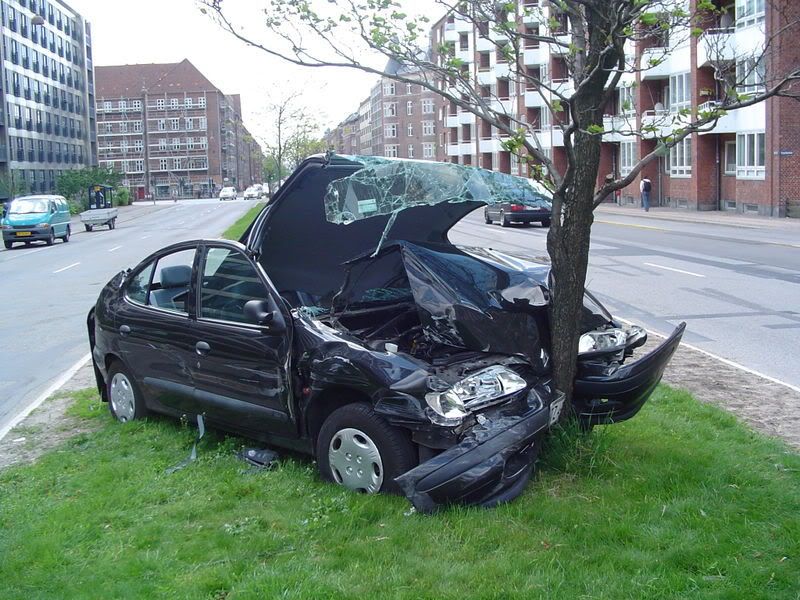
Is a Car Crash Conflict?
 External Conflict is what happens outside of the physical body: The obstacles your characters face throughout the story. Internal Conflict is emotion—what your characters feel inside (unresolved life problems usually stemming from childhood or past relationships).
The best stories are ones where the character(s) must face past unresolved issues. Example:
After the accident that killed two children while she was babysitting at the age of fifteen, heroine refuses to let herself fall in love with this man who has two young children.
Your characters should learn something by the end of the story. If they don’t grow and learn, there is no story.
In the example above, the heroine needs to learn to forgive herself. The fire the kids started when she was babysitting was not her fault. She received third degree burns trying to save them, but in the end, she couldn’t. By the end of the book, she should learn a new life lesson: To forgive herself. She will learn this by being around hero’s children. The conflict/obstacles throughout the story should allow her to grow. Hopefully new conflicts will arise as she faces old ones.
Find your characters’ flaws and/or fears and then force them to face these demons throughout the story until the black moment that ultimately forces them to face that fear once and for all and learn something about themselves.
Ask yourself questions as you move from scene to scene:
Are the characters actions logical or realistic?
Is your story moving forward?
Are you spending too much time describing unimportant events as you move the characters from Point A to Point B?
Is the conversation between your characters interesting?
Is your reader going to empathize with your characters?
Is your reader going to want to turn the page to find out what happens next?
About the question: Is a car crash conflict? Does the crash move the story forward? Does it make the reader want to read on? Probably not. Unless it happens to the hero/heroine while he or she is running from the bad guy, it's just trouble.
Now tell me: What do your characters need to learn? Compassion? Gratitude? Forgiveness? Acceptance? What are their flaws and/or deepest fears?Labels: Conflict, writing
Q and A Friday

Today is Q and A Friday, your chance to ask the Noodlers all your niggling questions about our topic of the month - CONFLICT
What questions about Conflict do you have so far?
It could be about Michael Hauge's ideas about what makes for good conflict, or using Debra Dixon's Goal Motivation and Conflict.
You might want to try out Pris's fill in the blanks, or use us to figure out whether your hero and heroine have true conflict or are just bickering.
Ask away! One of the Noodlers is bound to help. (Or at least have a strong opinion :-))
Remember, if you ask a question or make a comment this month you will have a chance to win an autographed Jo Beverley book
And don't forget that Noodler MJ Frederick has a new release.
Hot ShotLabels: Conflict, Debra Dixon, Jo Beverley, Michael Hauge, MJ Frederick
GMC—Goal, Motivation & Conflict

Beginning writers often hear that their stories need more conflict, but they’re not always told how to create it. Experienced writers understand the complexities of conflict, that it’s more than misunderstanding, petty bickering, and dialogue that’s laced with sarcasm.
Debra Dixon, in her book
Goal, Motivation & Conflict: The Building Blocks of Good Fiction, breaks down those complexities into interconnected components that are manageable and easy to understand.
I don’t often read or recommend how-to books, but I read this one from cover to cover in one sitting and I highly recommend it, especially for new writers.
Dixon defines the components as the who, what, why, and why not or our stories.
Who = the character
What = the character’s goals (the things he wants,
needs, or must have to be a whole person)
Why = the character’s
motivation for wanting to achieve those goals
Why Not = the conflict
that prevents the character from reaching his goals
Writers use many different methods to develop their characters. Whatever method we use, it’s critical that the goals fit the character. For our purposes, I’ll use a couple of examples from my 2003 GH romantic suspense finalist, In Harm’s Way. The tag line I wrote for that story gives a brief summary.
A convicted serial killer is on the loose and seeking revenge. His targets—an ER
doctor and a Vancouver City Police detective—need to set aside their personal
feelings long enough to keep themselves out of harms’ way.
To work out the hero and heroine’s GMC, I used the chart format in Dixon’s book.


I didn't fill in the whole the chart for you, but I encourage you to try one for your work in progress.
Keep in mind that characters can have both immediate and long-term goals, and their motivations for achieving those goals are often tied to backstory. Even though we might not want to include a lot of backstory in our books, it’s still important that we know what that backstory is.
I always come up with several goals—external and internal—for each character. Each goal can then be written as a simple GMC statement.
(Character) needs (goal) because (motivation) but (conflict).
The following two statements are from my GMC charts.
Jack needs to apprehend the killer because he’s gone on another killing spree,
but he can’t let innocent people, especially Sally, get hurt.
Sally wants to get back to work at the hospital because it’s the one place where she
feels most in control, but she has to stay with Jack until the killer is caught.
The charts may be all you need, but I find statements are easier to work. I even print them and post them by my computer because referring to them helps me stay focused as I write. This information is especially useful for revisions. For each scene, I ask myself if that scene captures one of my character’s GMC. If not, how do I fix it? Or do I need the scene at all?
I also use GMC statements to help me a write a short synopsis, which is useful for contest entries and submissions to editors and agents. Here’s my 175-word synopsis for In Harm’s Way.
Jack Hamilton trusts his instincts, and it always pays off. It’s when he follows
his heart that he gets into trouble. His instincts led to the conviction of a
horrific serial killer. They also led him straight into the arms of a gorgeous
woman, and that’s when he made the mistake of letting his heart take over.
Sally Griffith was every inch the woman Jack imagined spending the rest
of his life with. Intelligent, capable, beautiful. A lot like the woman he
married, the woman who died before he understood what she needed. The woman he
failed to protect.
Aaron Harms had been a respected emergency room
doctor. That many of his patients didn’t survive seemed, at first, like a simple
run of bad luck. Jack Hamilton recognized the pattern to Harms’ apparent
misfortune, and Sally Griffith provided the evidence.
Two years after his conviction, Aaron Harms escapes from prison, and he wants revenge. Jack knows instinct will lead him to the killer, but will his heart get in the way of keeping Sally safe?
I received a lot of favorable comments for this synopsis, and I owe it all to Debra Dixon's GMC. The tagline I gave at the beginning also came from the GMC charts and statements.
If you struggle with conflict, Dixon’s method of breaking it down into components might work for you.
Questions? Ask away.
If you’d like to play around with a GMC statement for something you’re working on, feel free to post it and the other Noodlers and I will pop in with comments.
Happy writing!
Lee
Lee's website
Lee's blog
Labels: Conflict, Debra Dixon, Goal, Lee McKenzie, Motivation
Michael Hauge on Conflict


Michael Hauge is a screenplay consultant, lecturer and acclaimed author of
Writing Screenplays That Sell. His ideas about what makes a good screenplay have captured the interest of romance writers making him a very popular speaker at RWA and its chapters. I attended a Hauge workshop last fall and loved what he said. This little blog not going to substitute for attending a workshop, reading his book or purchasing a CD or DVD. See his
website for details on ordering and his speaking schedule.
My two previous blogs on Hauge:
Michael Hauges’s Concepts of Identity and EssenceMichael Hauge on Plotting
Now for Hauge’s ideas about Conflict.
Hauge says that all screenplays (and stories) have Character, Desire, and Conflict. Stories are about “a character pursuing a visible desire facing visible conflict.” As the main character, the “hero,” pursues his (or her) goal, obstacles are thrown in his path. The obstacles are the external conflict of the story, and the pursuit of the goal is the “Outer Journey.”
In the most satisfying stories the hero also has an “Inner Journey,” a journey Hauge would say takes him from his “Identity” into his “Essence.”
Hauge says a character’s Identity is the system of beliefs and behavior he has developed to shield him from pain, the unhealed pain of an early wound. Identity is who he thinks he
must be. The hero’s Essence is who he
really is; who he needs to become, his “true self.” (see my
earlier blog for more explanation).
Here, then, is the hero’s internal conflict. He cannot become his true self, cannot come into his Essence, unless he faces the pain that blocks his path.
Hauge recommends making the external goal something big and important to the hero, but making it one that he cannot achieve unless he faces that early pain and comes into his Essence. Even if the hero's goal changes in the story, at the end the hero gets what he really needs in order to be his true self.
In Hauge’s view, a good love story is one in which the lovers “see beneath the other’s identity and connect at the level of essence.” This is the glue that keeps them connected to each other. In your story, then, you have to show glimpses of each character’s Essence, to show why they are meant for each other. The two lovers also need to put each other in the situation of facing the pain that blocks them from achieving their Essence.
Let’s see if this works.

Take Darcy from Pride & Prejudice (Darcy of Janet’s wet shirt last week!). Darcy’s goal in the story is to prevent his friend Bingley from marriage to a woman Darcy believes is unsuitable; we can infer that Darcy himself desires to avoid an unsuitable marriage. Darcy, the “Pride” in P&P, is wary of those whose status is beneath his own. Being proud and rather snobby at the beginning of the book is Darcy’s “Identity;” it is who he thinks he needs to be in order to avoid pain.
What does Darcy fear? What is the source of his pain? Well, his sister was almost the victim of gold-digging Wickham, so perhaps Darcy fears people professing to care about him only because he is rich. Mrs. Bennett makes Darcy believe she is out to snare wealthy husbands for her daughters, but Lizzie shows him she is bright, witty, caring, loyal, unintimidated by him or Lady Catherine de Bourg, and not interested in currying his favor. He falls in love with her, which is a big obstacle in his effort not to make an unsuitable marriage.
Another obstacle is that she refuses him! (Remember Darcy’s proposal? It is the battle between his identity and his essence, played out right in front of Lizzie)
Lizzie’s identity, of judging people too quickly (Prejudice) prevents her from seeing Darcy’s worthiness, until he shows her glimpses of his essence in his letter and in his behavior toward her at Pemberley.
Then, big external conflict, Lydia runs away with Wickham. This time, however, Darcy uses his wealth and status to help Lizzie. He has changed into his Essence. Lizzie alone knows it, and, of course, the end result is a very satisfying marriage.
Hauge’s formula works!
Can you see using Hauge’s concepts of Identity and Essence to help you develop your character’s conflicts? In other words, does any of this make sense to you?


Remember to check
Michael Hauge’s website to learn more about his products and appearances. While you are at it, check my
website, too. It will tell you how to find my eHarlequin short story,
The Diamond, how to get a copy of
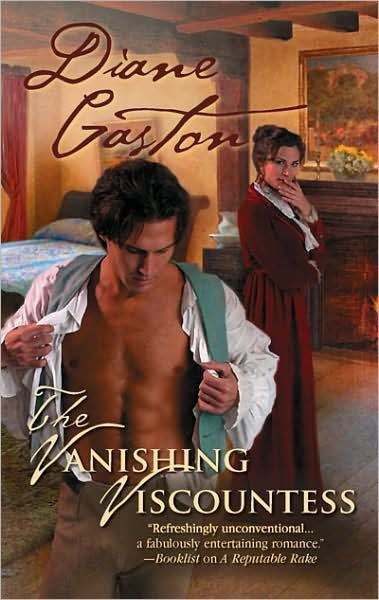
The Vanishing Viscountess for
free, and how to enter my new contest. The prizes? A signed
Nora Roberts book and a copy of
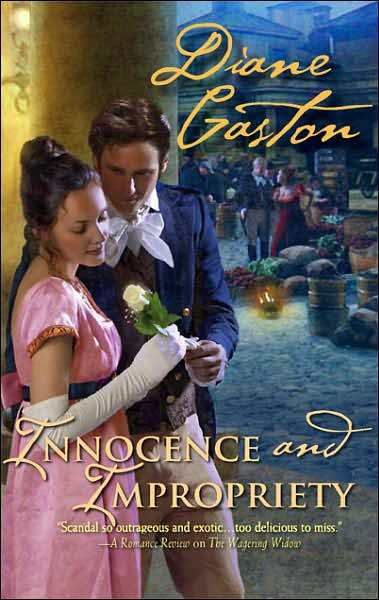
Innocence and Impropriety.
Labels: Conflict, Diane Gaston, Michael Hauge
Character Q and A Day

Ask away!
Here is your chance to ask the Wet Noodle Posse anything you desire about Character.
We'll start out with me (Diane) trying to answer doglady's (aka O Doggy One) questions from our first day:
(doggy question 1)
Is it better to establish a character up front or is it better to reveal them slowly in layers?(diane answer 1) Yes. hahahahahaha.
Seriously, it is (in my opinion) important to do both, at least for your hero and heroine. In your very first scene with the character, you want to give the reader a strong impression. You want to give enough so that the reader will know whether she is likely to enjoy these characters, whether she is going to fall in love with the hero and 'see herself' in the heroine. If you open with, say, the hero acting dark and dangerous, you have to show at least a hint of him also being heroic--or that there is more to him than this dark and dangerous moment. If you show the heroine, say, acting selfish and self-centered, you want to also show the hint that there is a reason for this.
But you don't want to dump the whole backstory on the reader in Scene One. That's what you filter in.
I think Pris's imagery of 'peeling back the outer layers to get at the juicy parts' is a good analogy here, too. You peel away a little at a time, but don't hold out too long so that the answer to why a character does what he does is only mentioned in the last chapter -- although you could build up to that final surprise....
I'm sure other Noodlers and our lovely commenters have more to say on this issue!
(doggy question 2)
How do you keep the conflict between the hero and heroine going without making either of them look bad?
(diane answer 2) Sigh. Now you have hit upon my exact worry about the book I just turned in (the one I stayed up all night checking the copy edits and can no longer change)--did I make the heroine look bad?
I think the answer to your question, though, lies in Motivation. Can the reader understand
why the hero and heroine are acting the way they do? Have you made something happen in the plot that they are reacting to in understandable ways, and ways that the reader now knows are characteristic of them? (Did I establish the situation between my hero and heroine well enough that the reader
understands why my heroine act the way she does?)
It is hard to avoid the kind of conflict between a hero and heroine that could be resolved with an adult conversation, but that's what we must aspire to do. If heroine can't tell hero X, there has to be a reason for it. If hero does X to heroine, there has to be a reason for it.

I am sure there are other questions out there about character.

It seems to me that this week has focused on ways to make our characters seem real and to act in ways that seem real.
Any more questions about that?
Ask away!!!!
Labels: character development, Conflict

 Here's one more chance to ask your questions on Conflict. We Noodlers will try to answer.

 And, remember, commenting gives you a chance to win a signed Jo Beverley book. We'll pick a winner after midnight on April 30. For one lucky person it will be a great May Day present!